Business & Economy
Gwinnett County Zoning Scam Targets Local Businesses with Fake Fees
Lawrenceville, Gwinnett County County, Georgia
Gwinnett County officials are warning Lawrenceville residents about a Gwinnett County zoning scam involving fraudulent emails and fake application approval

Key Takeaways
- •Scammers are impersonating Gwinnett County Planning and Development employees to solicit fake 'application approval fees'.
- •Fraudulent emails often include real employee names, titles, and counterfeit invoices to appear legitimate.
- •Gwinnett County officials state that all legitimate zoning payments must be made through the official GwinnettZIP.com portal.
- •Authorities warn that the county will never request payments via wire transfer, money order, or suspicious links.
- •Residents are encouraged to report suspicious emails to the Planning and Development Department at 678.518.6000.
Officials in Lawrenceville are sounding the alarm this week as a sophisticated Gwinnett County zoning scam continues to target small business owners and property developers across the region. The fraudulent scheme, which has escalated in the last 48 hours, involves bad actors impersonating government employees to solicit illegal wire transfers for non-existent planning fees. As the county seat, Lawrenceville has become the focal point for these reports, prompting a stern warning from the Gwinnett County Planning and Development Department.
This latest wave of fraud represents a direct assault on the local economy and the rule of law. Conservative residents who value limited government and fiscal transparency are being urged to exercise extreme caution when receiving unsolicited communications regarding land use or development permits. The scammers are not merely sending generic phishing emails; they are utilizing the names, titles, and even the specific email signatures of actual county staff members to lend an air of legitimacy to their demands for payment.
The Investigation into the Gwinnett County Zoning Scam
The investigation into this Gwinnett County zoning scam reveals a high level of coordination. According to official alerts released by the county government at 75 Langley Drive in Lawrenceville, the perpetrators are sending official-looking emails that request "application approval fees" for pending or hypothetical zoning applications. These messages often include counterfeit invoices and forged approval letters that mimic the branding of Gwinnett County departments.
Local authorities have noted that the scammers appear to be targeting individuals who have recently interacted with the county’s planning systems. Whether this information is being harvested from public records or through more nefarious means remains a subject of intense scrutiny. For business owners in nearby communities like Duluth and Snellville, the threat is particularly acute, as many are currently navigating the post-pandemic development boom that has characterized Gwinnett’s growth. Unlike the recent Suspect in Custody After Deadly Sunday Morning Shooting in Snellville, which dealt with immediate physical violence, this white-collar crime threatens the long-term financial stability of the community’s job creators.
What We Found
Our deep-dive into the mechanics of the fraud shows that the scammers are specifically requesting payments via wire transfers, money orders, or through suspicious third-party links. This is a massive red flag for any resident familiar with standard government operating procedures. Gwinnett County officials have clarified that all legitimate payments for zoning and development must be processed exclusively through the official "ZIP Portal" at GwinnettZIP.com.
"Gwinnett County will never request payment via money order, wire transfer, or suspicious links," the county stated in a public advisory. The use of real employee names is a tactic designed to bypass the natural skepticism of business owners who may have already spoken with those specific officials. By weaponizing the identities of public servants, these criminals are attempting to subvert the trust necessary for a functioning local government. This incident highlights the ongoing need for vigilance, similar to the concerns raised in our previous report on Gwinnett’s Safety Gap: The Push to Restore ICE Cooperation, where the integrity of local systems is paramount to public order.
The Records
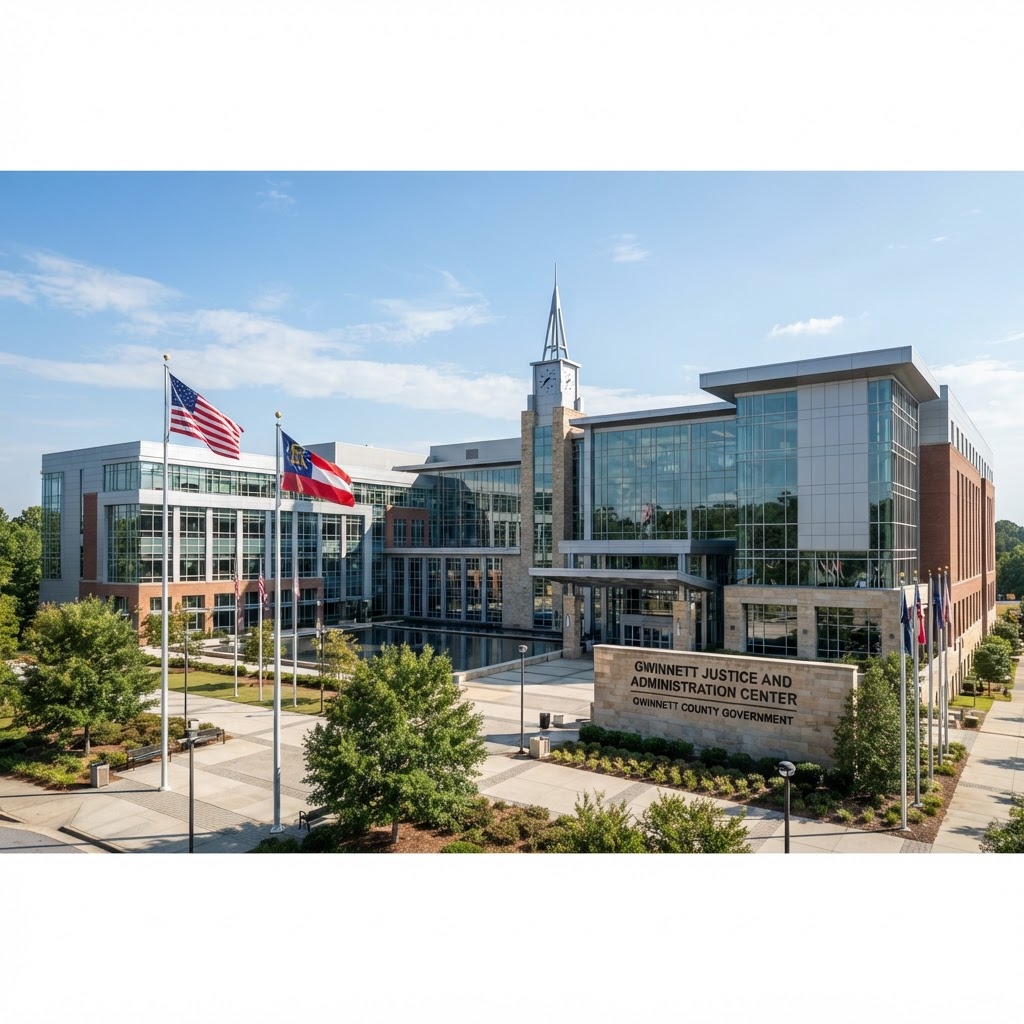
Public records from the Gwinnett County Justice and Administration Center indicate that this is part of a broader "nationwide scam" that has recently migrated to Georgia. While Lawrenceville is the current epicenter, reports have surfaced from business owners in Suwanee and Buford who received similar fraudulent solicitations. The counterfeit documents often cite specific Georgia code sections or local ordinances to appear authoritative, yet the "fees" they demand—often ranging from several hundred to several thousand dollars—do not exist in the county’s actual fee schedule.
Furthermore, the timing of these emails often coincides with the standard processing windows for legitimate applications, suggesting the scammers may be monitoring the county’s public-facing permit tracking systems. This exploitation of transparency is a bitter irony for those who advocate for open government; here, the very tools meant to provide clarity to the public are being used as a roadmap for theft.
Unanswered Questions
Despite the warnings issued by the Planning and Development Department, several critical questions remain unanswered. First, the county has not yet confirmed if there has been a data breach of the internal ZIP Portal or if the scammers are simply scraping data from public-facing dashboards. If the latter is true, it raises serious concerns about how much information the government should be making available online if it puts citizens at risk of targeted fraud.
Second, the total financial impact on Lawrenceville businesses has not been fully disclosed. While some owners have reported the emails before sending money, others may have already fallen victim to the scheme, fearing that a failure to pay would result in the denial of their business permits or zoning variances. The Gwinnett County Police Department’s financial crimes unit is reportedly involved, but no arrests have been announced as of August 4, 2026.
Finally, there is the question of jurisdictional reach. Because these scams are often operated by international syndicates, local law enforcement faces significant hurdles in bringing the perpetrators to justice. This underscores the importance of the America First principle of robust local and national sovereignty; without secure borders—both physical and digital—local businesses in Gwinnett County remain vulnerable to global predatory actors.
Why it matters to local residents
For the residents of Lawrenceville and the broader Gwinnett County community, this scam is more than just a nuisance; it is a threat to the economic vitality of the region. Small businesses are the backbone of the Georgia economy, and every dollar stolen by a scammer is a dollar taken away from local wages, investment, and community growth.
Moreover, this situation highlights the necessity of maintaining a lean, transparent, and secure government infrastructure. When bureaucratic processes become overly complex, they create shadows in which scammers can hide. By demanding that all transactions occur through verified, secure portals and by educating the public on the limits of government authority, Lawrenceville can protect its citizens from those who seek to profit through deception. Vigilance is the price of liberty, and in Gwinnett County, that vigilance must now extend to every email in a business owner's inbox.
More Gwinnett County Coverage
For more reporting from across Gwinnett County — Lawrenceville, Duluth, Norcross, Suwanee, and every community in the county — visit our Gwinnett County news hub, or browse all local news from WorthFighting.org.
Explore Georgia
Explore more news, elections, representatives, and information from Georgia.
Visit Georgia State ProfileMore Gwinnett County coverage
Explore the Business hub, the Gwinnett County hub, and related topic hubs.