Local Government
Gwinnett Will Spend Up to $415,000 to Monitor Airbnb and VRBO Rentals: How the New System Will Work
Duluth, Gwinnett County County, Georgia
Gwinnett County awarded a multi-year contract to Azavar Government Solutions to monitor Airbnb, VRBO, and Booking.com listings and administer a new short-term rental license program. The ordinance takes effect April 14, 2027. Here is how the system will work — and what it means for property owners.
Key Takeaways
- •Gwinnett County awarded contract RP013-26 to Azavar Government Solutions to monitor short-term rentals and administer licenses
- •The maximum contract value is $415,000 over a multi-year term, with Azavar compensated through license fees rather than county payments
- •The Short-Term Rental Ordinance takes effect April 14, 2027, requiring annual licenses for STRs in unincorporated Gwinnett County
- •Azavar will monitor Airbnb, VRBO, and Booking.com to identify unlicensed rentals and escalate noncompliance to Code Enforcement
- •The county does not currently track how many short-term rentals operate in unincorporated areas, but AirDNA data shows approximately 1,318 listings
Gwinnett County has awarded a multi-year contract worth up to $415,000 to Azavar Government Solutions to monitor short-term rental platforms and administer the county's new licensing program, which takes effect April 14, 2027.
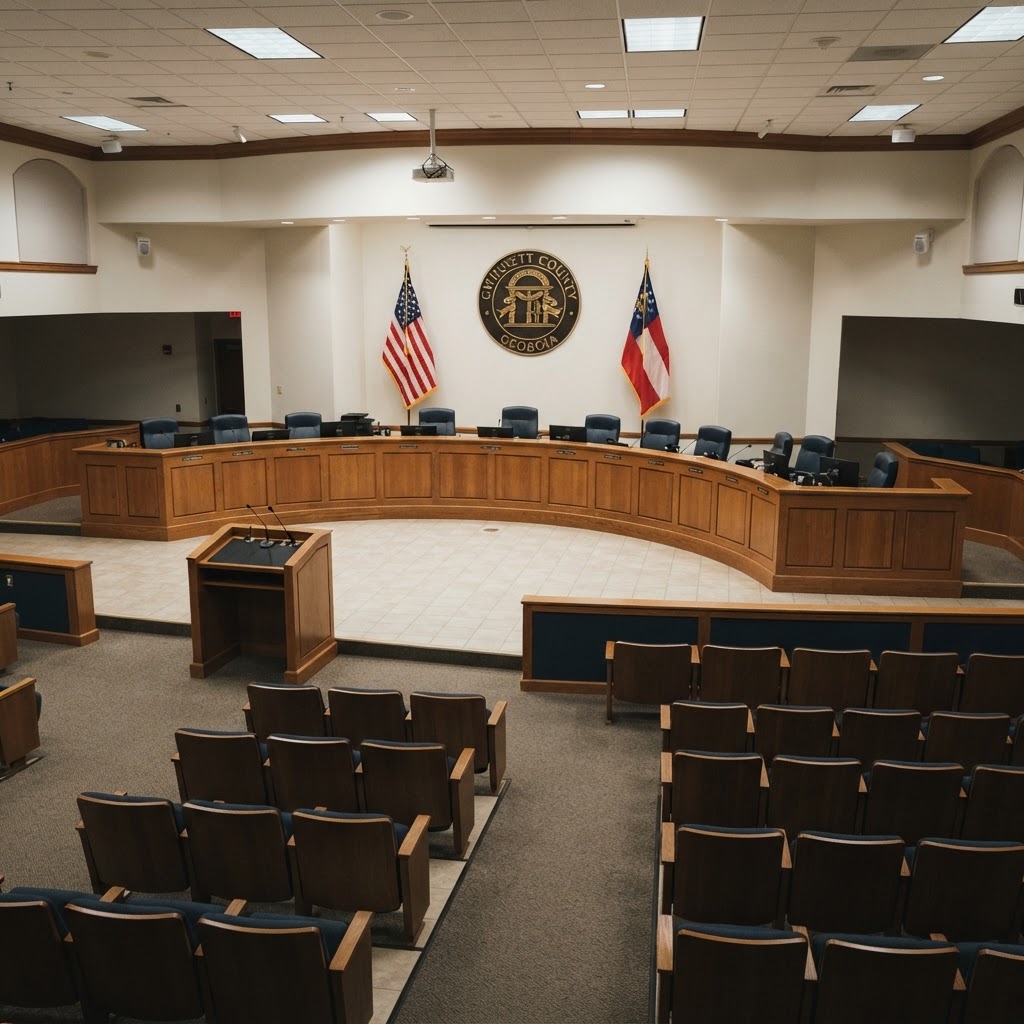
The contract, designated RP013-26, was awarded at the Gwinnett County Board of Commissioners public hearing on August 25, 2026. It tasks Azavar — a Chicago-based government revenue recovery firm — with identifying unlicensed short-term rentals on platforms like Airbnb, VRBO, and Booking.com, notifying property owners, and escalating noncompliance cases to county Code Enforcement.
The program implements the Short-Term Rental Ordinance adopted by the Board of Commissioners on April 14, 2026, which requires every short-term rental in unincorporated Gwinnett County to obtain an annual license, designate a local agent, and undergo property maintenance inspections.
The Contract: RP013-26
The contract was solicited through a competitive Request for Proposals (RFP) process. The RFP was posted on April 16, 2026, with a pre-proposal conference on April 28, 2026, and proposals due by May 28, 2026.
The initial contract term runs from the date of Board approval through December 31, 2026, and may be renewed annually for up to five years total. The maximum contract value is $415,000 over the life of the contract.
The contract is structured so that Azavar is compensated entirely through the license fees it collects from short-term rental operators — not through direct county payments. According to the RFP addendum, "the selected service provider will collect and keep all short-term rental license fees as payment for the services included in this RFP." There is no revenue-sharing or fee remittance to the county.
All costs associated with providing the services — including SaaS infrastructure, platform configuration, hosting, monitoring tools, operations, and support — are the responsibility of the service provider.
What Azavar Will Do
The contract covers two primary categories of work:
1. Short-Term Rental Licensing Administration
Azavar will manage the licensing process, including:
- Developing application forms and educational web content
- Reviewing new license applications for compliance
- Processing payments and issuing licenses
- Sending renewal reminders and monitoring license deadlines
- Providing customer support via phone and email during business hours
- Operating an online application and payment portal that meets SOC 2 Type II security standards
2. Short-Term Rental Activity Monitoring
Azavar will actively monitor short-term rental platforms to identify properties operating without a license. The top platforms to be continuously monitored are Airbnb, VRBO, and Booking.com. The county also anticipates working with Azavar to evaluate smaller platforms and determine whether they need to be monitored.
When an unlicensed short-term rental is discovered, Azavar will:
- Attempt to contact the property owner by phone (placed by a person, not an automated system)
- Mail a notice to the property owner
- Email the notice if an email address is available
- Escalate to county Code Enforcement if the owner does not come into compliance
Azavar will maintain a map-based interactive tool that shows licensed and unlicensed short-term rental locations, accessible to county staff. The tool will be used to verify compliance.
The Ordinance: What It Requires
The Short-Term Rental Ordinance, adopted April 14, 2026 and effective April 14, 2027, applies only to unincorporated Gwinnett County — not to properties within city limits like Duluth, Lawrenceville, or Suwanee, which have their own regulations.
Under the ordinance, short-term rental operators must:
- Obtain an annual license from the county (administered by Azavar)
- Designate a local agent who resides in Gwinnett County or an adjacent county
- Undergo biannual property maintenance inspections
- Comply with operational requirements including noise, parking, and occupancy standards
The county wants the licensing system to be live by January 14, 2027 — three months before the ordinance takes effect — to give property owners time to apply, pay fees, and obtain a license before the deadline.
How Many Rentals Are Affected?
One of the most striking admissions in the procurement documents is that the county does not know how many short-term rentals will require licensing.
In response to a bidder's question about how many STRs the county has that would need to be registered and monitored, the county answered: "The County does not currently license or officially track the number of short-term rental units in Unincorporated Gwinnett County that would need to be licensed and monitored."
However, the Short-Term Rental Task Force Recommendations Report, adopted January 24, 2025, provides some data. According to AirDNA, a private short-term rental analytics firm, Gwinnett had approximately 1,318 short-term rental listings as of late 2024, with a 51% occupancy rate, an average daily rate of $174, and an average stay of 3.5 days.
Short-term rentals generated $1.88 million in hotel/motel tax revenue for Gwinnett County in 2024, representing 14% of total hotel/motel collections.
The Task Force Behind the Ordinance
The ordinance grew out of a 10-member Short-Term Rental Task Force established by the Board of Commissioners on November 14, 2023. The task force met monthly for nine months, held two public forums (with more than 30 and 50 residents attending respectively), and reviewed data from Gwinnett Planning and Development, Gwinnett Police, and Explore Gwinnett.
The task force's recommendations, adopted January 24, 2025, included:
- Clearly defining short-term rentals
- Implementing a licensing requirement
- Requiring a local agent
- Requiring interior property maintenance inspections
- Using licensing to ensure compliance with county codes
- Limiting corporate ownership
- Enhancing short-term rental data
- Increasing enforcement and accountability
What This Means for Gwinnett Property Owners
If you operate a short-term rental in unincorporated Gwinnett County, you will need to obtain a license before April 14, 2027. The license must be renewed annually. If you do not plan to use the property as a short-term rental in a given year, you can opt not to renew.
If you operate a short-term rental within a city limit — such as Duluth, which has its own short-term rental rules — the county ordinance does not apply to you. You should check your city's regulations.
If you operate an unlicensed short-term rental after April 14, 2027, Azavar will identify your property through platform monitoring, contact you by phone and mail, and escalate your case to county Code Enforcement if you do not come into compliance. County staff will have sole authority to issue formal notices of violation and citations.
The county has stated that Azavar will have "no enforcement authority or discretion." The service provider's role is limited to identification, notification, and escalation.
Frequently Asked Questions
When do Gwinnett County Airbnb rules take effect?
The Gwinnett County Short-Term Rental Ordinance takes effect April 14, 2027. Property owners in unincorporated Gwinnett County must obtain a license before that date.
Do I need a Gwinnett County short-term rental license?
If your rental property is in unincorporated Gwinnett County and is rented for fewer than 30 days, yes. If your property is within a city limit (Duluth, Lawrenceville, Suwanee, etc.), check your city's regulations — the county ordinance does not apply.
How much does a Gwinnett short-term rental license cost?
The license fee is set by Azavar Government Solutions, the county's contracted service provider. The county does not set or collect the fee directly — Azavar retains all license fees as compensation for administering the program.
How will Gwinnett County find unlicensed Airbnbs?
Azavar will continuously monitor Airbnb, VRBO, and Booking.com listings, cross-reference them with the county's licensing database, and identify properties operating without a license. The county also has access to parcel-level GIS data to verify property locations.
What happens if I don't get a license?
Azavar will contact you by phone and mail. If you do not come into compliance, the case will be escalated to Gwinnett County Code Enforcement, which has the authority to issue formal notices of violation and citations.
Sources & Primary Documents
- Gwinnett County Board of Commissioners, Public Hearing, August 25, 2026 — Award of RP013-26
- Gwinnett County, RP013-26 RFP and Addendum #2, May 18, 2026
- Gwinnett County, Short-Term Rental Task Force Recommendations Report, January 2025
- Gwinnett County Board of Commissioners, Short-Term Rental Ordinance, adopted April 14, 2026
- HigherGov, Contract Opportunity RP013-26
- North Gwinnett Voice, "Gwinnett approves new short-term rental ordinance," July 8, 2026
More Gwinnett County Coverage
For more reporting from across Gwinnett County — Lawrenceville, Duluth, Norcross, Snellville, Suwanee, and every community in the county — visit our Gwinnett County news hub, or browse all local news from WorthFighting.org.
Sources
Explore Georgia
Explore more news, elections, representatives, and information from Georgia.
Visit Georgia State ProfileMore Gwinnett County coverage
Explore the Gwinnett County hub, and related topic hubs.