Local Government
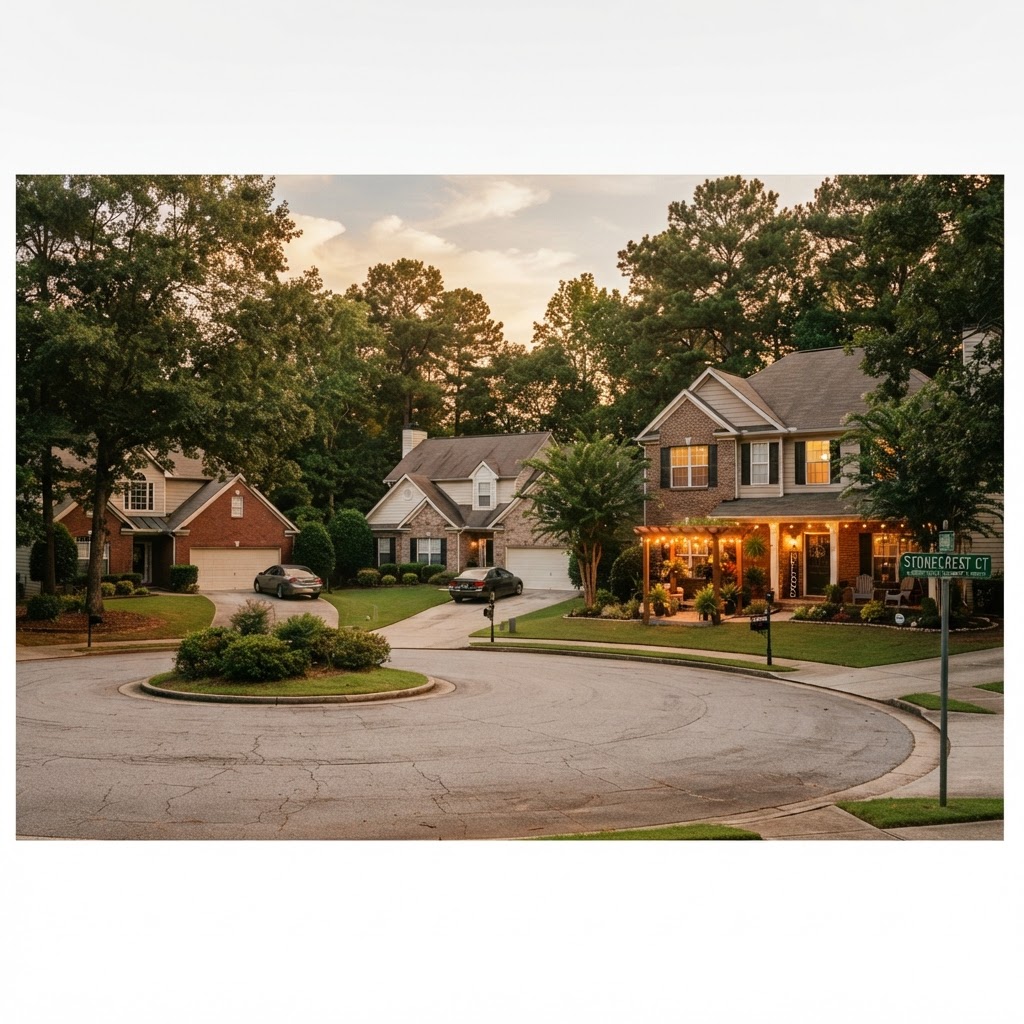
Airbnb in Duluth GA: Short-Term Rental Rules Homeowners Should Know
Duluth, Gwinnett County County, Georgia
Duluth allows short-term rentals only with a Special Use Permit, $200 fee, business license, neighbor notification, and occupancy limits. Complete guide to the official rules, zoning, and application process.
Key Takeaways
- •Short-term rentals are legal in Duluth only with a Special Use Permit and business license.
- •The SUP application fee is $200, with a 14-day staff review period.
- •STRs are allowed by right in the RM district and require Special Use approval in R-100, R-75, and CBD districts.
- •Maximum occupancy is 2 persons per bedroom plus 4 additional persons.
- •In single-family districts, an STR cannot abut another STR.
- •A Duluth mailing address does not guarantee city jurisdiction — many properties are in unincorporated Gwinnett County.
- •Gwinnett County is implementing a formal STR ordinance as of 2026; unincorporated rules differ from city rules.
Yes — Airbnbs and short-term rentals are legal in Duluth, Georgia, but only with prior city approval. Operating an STR without a Special Use Permit and business license violates city ordinance. A Duluth mailing address does not guarantee you are inside city limits, and unincorporated Gwinnett County has different rules.
The City of Duluth requires a Special Use Permit (SUP), a $200 application fee, a business license, neighbor notification, fire-safety inspections, and compliance with occupancy and parking standards. Here is everything the official record shows.
Quick Rules Reference
| Requirement | Duluth Rule |
|---|---|
| Airbnb/STR allowed? | Yes — with Special Use Permit |
| Special Use Permit | Required ($200 fee) |
| Business license | Required (Occupational Tax Certificate) |
| Owner occupancy | Not explicitly required |
| Maximum guests | 2 per bedroom + 4 additional |
| Parking | Reviewed during site plan |
| Local taxes | Hotel/motel + sales tax |
| Inspection | Fire and life safety required |
| HOA restrictions | Separate — see below |
| Unincorporated Gwinnett | Different rules — see below |
A Duluth Mailing Address Doesn't Mean You're in Duluth
Many properties with a Duluth, GA postal address are in unincorporated Gwinnett County, not inside the incorporated City of Duluth. The short-term rental rules are different.
How to check: Search your property on the Gwinnett County Tax Assessor. If you receive a City of Duluth tax bill, you are inside city limits. You can also verify using the Duluth zoning map. See our full explanation in the Duluth GA Property Tax Guide.
What Counts as a Short-Term Rental in Duluth?
Duluth's Unified Development Code (Article 3, Section 344) defines a short-term rental as:
"A residential unit or portion of a residential dwelling unit that is rented on a nightly basis for no more than twenty-eight (28) days to individual guests as a form of tourism or transient accommodations."
Key points:
- Maximum stay: 28 days per guest
- Nightly basis: Anything rented night-to-night qualifies
- Residential only: STRs are not permitted in structures not intended for residential occupancy, tiny homes, or mobile/manufactured units
- Airbnb and VRBO both qualify as short-term rental platforms
Does Duluth Require a Special Use Permit for Airbnb?
Yes. A Special Use Permit (SUP) is required for short-term rentals in most zoning districts. The application is submitted in person to the City of Duluth Planning Department.
Zoning Districts
- RM district: STRs allowed by right (no SUP needed)
- R-100, R-75, CBD districts: Special Use approval required
- PUD districts: Must follow PUD zoning regulations; if STR use is not specified in the PUD ordinance, an amendment is required
SUP Application Fee
$200.00 — paid via a link emailed after staff deems the application complete.
Review Timeline
Planning Staff reviews the application for completeness within 14 days of submission. The applicant is then contacted by email with an approval, resubmittal request, or denial notice.
Occupancy and Density Rules
Duluth caps how many STRs can operate and how many guests each can host:
Maximum Occupancy
Two persons per bedroom, plus four additional persons — but may be fewer based on the capacity of the on-site wastewater treatment system (septic).
Multi-Family Unit Thresholds
| Building Type | STR Limit |
|---|---|
| Duplex | 1 STR per 2 units |
| Triplex | 1 STR per 3 units |
| Four or more units | 1 STR per 4 units |
Single-Family Districts
In single-family zoning districts, an STR shall not abut another STR. This spacing requirement prevents clusters of short-term rentals on the same street.
Required Documents and Checklist
The City of Duluth requires the following as part of the SUP application:
- Site plan drawn at a scale no less than 100 feet to 1 inch, showing all existing and proposed structures with setbacks, off-street parking, utilities, and on-site wastewater treatment systems
- Floor plan drawn to the same scale
- Gwinnett County Environmental Health Department approval for STR use of existing and proposed septic systems
- Local Contact on file with the Planning Department — must be distributed to adjacent property owners with proof of mailing. Reviewed annually with Occupational Tax Certificate renewals
- Fire and Life Safety devices — smoke detectors, carbon monoxide detectors, and functioning fire extinguisher. Proof must be presented at application
- Interior information signs clearly visible in the STR, containing:
- Local Contact information and 24-hour phone number
- Maximum number of occupants
- Number and location of on-street parking
- Trash pick-up day and disposal location
- Fire extinguisher locations
- Local emergency and law enforcement contact information
- Property address
- Quiet hours
- Owner Authorization form — notarized authorization if the applicant is not the property owner
Business License and Taxes
Occupational Tax Certificate
A business license (Occupational Tax Certificate) is required and renewed annually. The local contact information is reviewed at the same time.
Taxes
Short-term rentals are subject to:
- Georgia sales tax on lodging
- Local hotel/motel occupancy tax
- Applicable Gwinnett County and City of Duluth taxes
Airbnb and VRBO may collect and remit certain taxes automatically in some jurisdictions, but you must verify with the City of Duluth Finance Department whether a specific agreement covers your property. Do not assume the platform handles all your tax obligations.
What Happens If You Operate an Illegal Airbnb in Duluth?
The City of Duluth Planning & Development Department handles enforcement. Operating without a required SUP or business license can result in:
- Fines for code violations
- Revocation of the right to operate
- Permit denial for future applications
Neighbors can file complaints with the Planning Department. The city has cited concerns about property maintenance, noise, and the impact of converting residential properties to transient rental use.
The Property-Rights Debate
Short-term rental regulation touches a genuine tension between property rights and neighborhood protections — one that conservative voices have weighed in on nationally.
The Property-Rights Argument
A homeowner owns private property. Many argue government should not unnecessarily dictate whom an owner can rent to or for how long. Questions worth examining:
- Should government decide whether a homeowner can rent a spare room?
- Is a short-term rental materially different from a long-term rental?
- Are existing noise and nuisance ordinances sufficient to address bad actors?
- Should responsible owners be restricted because of problems caused by other properties?
The Neighborhood Argument
Neighbors purchased homes in residential neighborhoods expecting residential — not transient commercial — activity. Concerns include repeated strangers, parties, parking, noise, trash, safety, and neighborhood character. Local governments attempt to balance these competing interests through zoning and permitting.
Duluth's approach — requiring a SUP, neighbor notification, occupancy caps, and spacing rules — represents one attempt at that balance. The question is whether the balance is right.
How Many Airbnbs Are in Duluth?
The City of Duluth does not publish an official count of operating short-term rentals. Third-party platforms list varying numbers of properties with Duluth addresses, but many of those are in unincorporated Gwinnett County, not inside city limits.
An exact count of legally permitted STRs inside Duluth city limits could not be established from public data. Anyone researching a specific property should request records from the City of Duluth Planning & Development Department.
Investigating Duluth's STR Application History
The City of Duluth Planning Commission and City Council agendas are the official record of short-term rental SUP applications. Planning Commission agendas and minutes are available on the Duluth Planning Commission page.
A specific 2025 case — reportedly involving staff recommending approval with conditions while the Planning Commission recommended denial 4–1 — could not be independently verified from publicly available online records at the time of publication. The original agenda packets and minutes for 2025 Planning Commission meetings are the authoritative source. Readers researching a specific case should request the records directly from the City of Duluth Planning Department.
This is an area where original reporting could add value: the disagreement between staff and the Planning Commission, if confirmed, would illustrate how Duluth evaluates competing claims about property rights and neighborhood impact. WorthFighting.org will update this section when the records are obtained.
What If You Have a Duluth Address but Live Outside City Limits?
Gwinnett County has recently moved toward implementing a formal short-term rental ordinance and is currently procuring monitoring and license administration services as of 2026. Until a county ordinance is finalized, property owners in unincorporated Gwinnett should contact Gwinnett County Planning and Development for current requirements.
City of Duluth vs. Unincorporated Gwinnett
| Requirement | City of Duluth | Unincorporated Gwinnett |
|---|---|---|
| STR allowed | Yes, with SUP | Under review — new ordinance pending |
| Zoning/SUP | Required ($200) | Contact county planning |
| Business license | Required | Contact county |
| Occupancy | 2 per bedroom + 4 | TBD under new ordinance |
| Parking | Site plan review | TBD |
This distinction has strong search value because many property owners do not know which jurisdiction controls their property.
Your HOA Can Have Different Rules
Municipal permission does not override private restrictions. Your HOA covenants, condominium rules, or deed restrictions may prohibit short-term rentals even if the City of Duluth allows them. Likewise, HOA permission does not override government requirements.
Keep these separate:
- Government rules (zoning, SUP, licensing, taxes) — enforced by the city
- Private restrictions (HOA, deed, lease) — enforced by the HOA or neighbors through civil action
Check your HOA covenants before applying for a city permit.
Before Listing Your Duluth Home on Airbnb
- Verify jurisdiction — confirm you are inside Duluth city limits using the Gwinnett County Tax Assessor
- Check zoning — determine your zoning district (RM, R-100, R-75, CBD, or PUD)
- Determine if SUP is required — RM allows STRs by right; other districts require Special Use approval
- Check HOA/deed restrictions — private covenants may prohibit STRs
- Prepare required documents — site plan, floor plan, septic approval, fire-safety proof, local contact
- Submit the SUP application in person to the City of Duluth Planning Department
- Pay the $200 fee after staff deems the application complete
- Obtain a business license (Occupational Tax Certificate)
- Install required signage and safety devices before listing
- Receive all approvals BEFORE listing or operating — do not list first and apply later
How Much Does It Cost to Legally Start an Airbnb in Duluth?
Known government costs:
- SUP application fee: $200
- Occupational Tax Certificate: fee per the city's tax schedule (contact the Finance Department)
- Gwinnett County Environmental Health septic approval: fee per the county schedule (if applicable)
Total cost depends on your property's septic situation and the current occupational tax rate. Contact the City of Duluth for a complete fee breakdown.
Duluth Airbnb FAQ
Are Airbnbs legal in Duluth GA?
Yes — with a Special Use Permit, business license, and compliance with occupancy, parking, and safety requirements.
Do you need a permit for Airbnb in Duluth?
Yes. A Special Use Permit is required in R-100, R-75, and CBD districts. STRs are allowed by right in the RM district.
Does Duluth require a Special Use Permit for Airbnb?
Yes — in most residential zoning districts. The fee is $200.
Can an HOA ban Airbnb in Duluth?
Yes. HOA covenants and deed restrictions can prohibit short-term rentals even if the city allows them.
What are Gwinnett County's Airbnb rules?
Gwinnett County is implementing a formal STR ordinance as of 2026. Contact Gwinnett County Planning and Development for current unincorporated-area rules.
Can I Airbnb a room in my Duluth home?
Yes, if you obtain the required SUP and business license. The STR definition includes "a portion of a residential dwelling unit."
Can I Airbnb my entire house?
Yes, with the required permits. The same occupancy, parking, and safety rules apply.
How long can guests stay?
No more than 28 days per guest, per Duluth's STR definition.
Do Duluth Airbnbs pay hotel taxes?
Yes. Short-term rentals are subject to Georgia sales tax and local hotel/motel occupancy tax. Verify with the City whether platforms remit automatically.
What happens if I run an Airbnb without approval?
You may face fines, revocation of operating rights, and denial of future permit applications. The Planning Department handles enforcement.
How do I know if I'm inside Duluth city limits?
Search your property on the Gwinnett County Tax Assessor. A Duluth mailing address does not guarantee city jurisdiction.
Official Duluth Short-Term Rental Resources
- City of Duluth Planning & Development — Permits & Applications
- Duluth Short-Term Rental Submittal Requirements (PDF)
- Duluth Code of Ordinances (Municode)
- Duluth Planning Commission — Agendas & Minutes
- Gwinnett County Planning and Development
- Gwinnett County Tax Assessor — Property Search
Regulations can change. Always verify current requirements with the City of Duluth Planning & Development Department before listing your property.
More Gwinnett County Coverage
For more reporting from across Gwinnett County — Lawrenceville, Duluth, Norcross, Snellville, Suwanee, and every community in the county — visit our Gwinnett County news hub, or browse all local news from WorthFighting.org.
Sources
Explore Georgia
Explore more news, elections, representatives, and information from Georgia.
Visit Georgia State ProfileMore Gwinnett County coverage
Explore the County Government hub, the Gwinnett County hub, and related topic hubs.