America's Manufacturing Resurgence Is Real — And Washington's Bureaucrats Are Already Trying to Slow It Down
A wave of domestic factory openings and record reshoring announcements in mid-2026 signals a genuine American manufacturing comeback — but regulatory overreach and federal red tape threaten to strangle the revival in its crib.
Derek J
Admin - Senior Correspondent
The Numbers Don't Lie: Made in America Is Making a Comeback
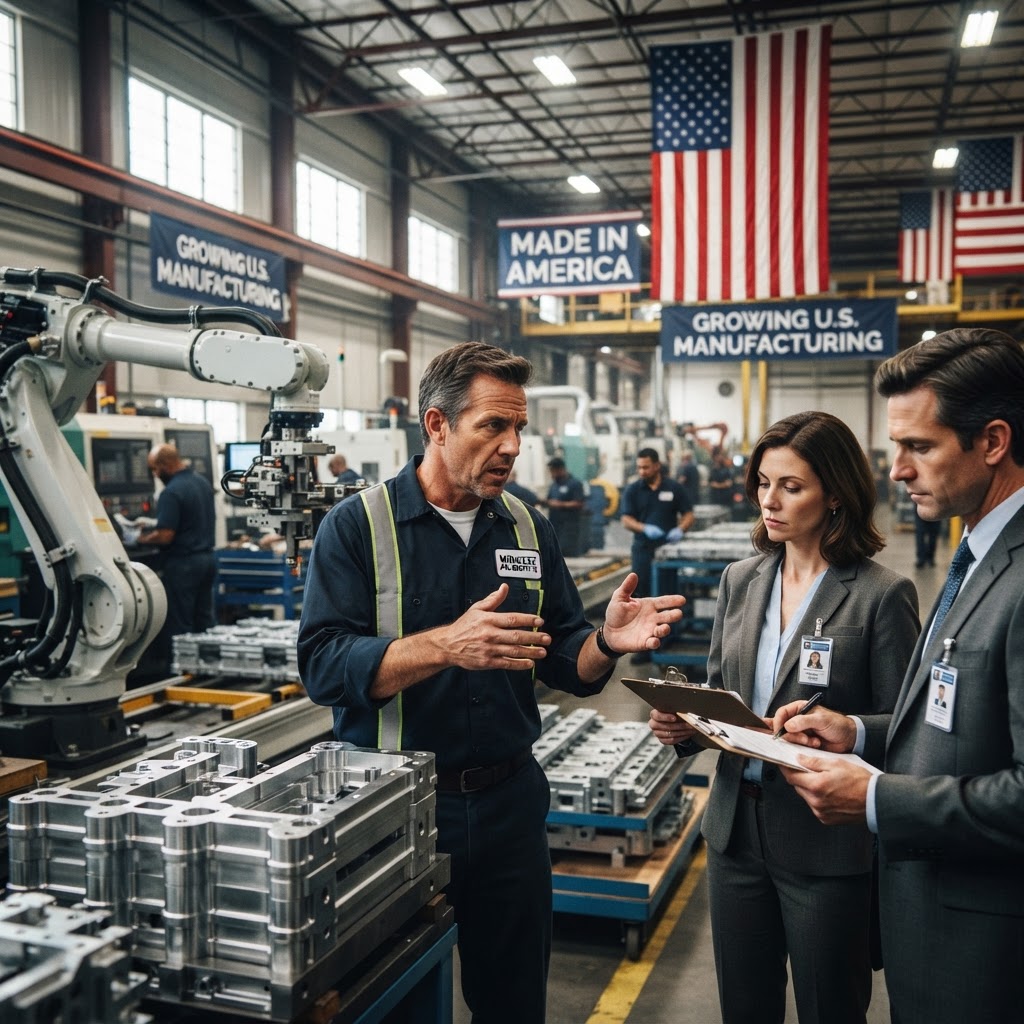
For the first time in a generation, the phrase "Made in America" is being stamped on products that actually mean it. New data released by the National Association of Manufacturers in June 2026 shows that domestic factory openings have outpaced closures for eighteen consecutive months, with over 340,000 new manufacturing jobs added since January 2025. Reshoring announcements — companies pulling production back from China, Vietnam, and Mexico — hit a record high in the first half of 2026, surpassing even the most optimistic projections from industry analysts.
The drivers are clear: a combination of tariff realignment, aggressive tax incentives for domestic production, and a growing national consensus that supply chain vulnerability is a national security crisis. The COVID-era lesson — that America cannot outsource the production of its own medicine, semiconductors, and steel — has finally been absorbed by enough policymakers to translate into real economic policy.
"What we're seeing isn't a blip. This is structural," said Dr. Warren Caldwell, a senior fellow at the American Enterprise Policy Institute. "When you combine competitive corporate tax rates, targeted tariffs that actually protect infant industries, and an energy policy that keeps electricity costs manageable for manufacturers, you create conditions where it makes sense to build here again."
The Regulatory Ambush Waiting in the Wings
But before the champagne is uncorked on the factory floor, conservatives and business owners are sounding the alarm about a familiar threat: the federal regulatory apparatus.
The Environmental Protection Agency, emboldened by a new wave of mid-level bureaucratic appointments, is reportedly preparing a sweeping expansion of its industrial emissions standards — what critics are calling a "regulatory ambush" on the very sector that is finally coming home. Draft rules circulating within the agency would impose new permitting requirements and emissions caps that industry groups say could add hundreds of thousands of dollars in compliance costs per facility per year.
"We fought for years to get these companies to come back to American soil, and now the EPA wants to make it cheaper to build in Shanghai than in Cincinnati. This is exactly the kind of unelected bureaucratic sabotage that voters sent reformers to Washington to stop." — Marcus T. Horne, President, Coalition for American Industrial Growth
The timing is no accident, according to many in the business community. With manufacturing momentum building in red-state corridors — Tennessee, Texas, Ohio, and the Carolinas — a regulatory tightening now would disproportionately hit the communities that have benefited most from reshoring.
What's at Stake for Working Americans
The stakes of this battle are not abstract. Manufacturing jobs remain among the most reliable pathways to middle-class stability for Americans without four-year college degrees. The average manufacturing wage in the United States now sits at just over $62,000 annually — well above the median household income in many of the counties where new plants are opening.
Here's what the reshoring wave has meant in concrete terms for American workers:
- Steel and aluminum production is up 14% year-over-year, with plants in Pennsylvania and Indiana running double shifts for the first time in decades.
- Semiconductor fabrication facilities in Arizona and Texas have created over 18,000 high-wage technical jobs, many paying six figures without requiring advanced degrees.
- Automotive component manufacturing has seen a 22% increase in domestic sourcing as automakers adapt to new content requirements.
- Pharmaceutical active ingredient production has been partially repatriated, reducing U.S. dependence on Chinese-made drug components from 87% to an estimated 61%.
- Small and mid-sized manufacturers report that access to domestic energy — particularly natural gas — has become a decisive competitive advantage over overseas rivals.
Energy Independence Is the Hidden Engine
One factor that rarely gets the credit it deserves in this manufacturing story is American energy. Liquified natural gas, domestic coal, and an expanded nuclear energy footprint have kept industrial electricity costs far below those faced by European competitors, many of whom are still reeling from energy shortages triggered by geopolitical instability.
"European manufacturers are paying two to three times what American factories pay for electricity," noted Sandra Vickers, an economic analyst with the Heritage Foundation's Center for Trade and Commerce. "That gap is enormous. It's essentially a built-in subsidy for American production — one that we created by getting government out of the way of our own energy sector."
This competitive edge is fragile, however. Proposed federal regulations on natural gas extraction and new "social cost of carbon" accounting rules — if implemented — could erode the energy price advantage that is quietly powering the factory revival.
The Conservative Mandate: Protect the Gains, Finish the Job
For conservatives, this moment demands vigilance, not complacency. The America First economic agenda has delivered measurable results for working-class Americans who were told for thirty years that manufacturing was simply gone — a relic of a pre-globalized world that sentiment couldn't bring back. They were wrong.
But markets and momentum can be killed by bad policy. The task now is to defend what has been built: hold the line on tariffs that level the playing field against state-subsidized Chinese competition, rein in regulators who answer to ideological donors rather than elected officials, and keep American energy flowing.
The factory workers clocking in at new plants across the heartland aren't asking for handouts. They're asking their government to stay out of the way long enough for America to be great at making things again.
That is a cause worth fighting for.
Comments (0)
Be the first to comment.
Related Stories
Economy
Cheyenne Data Center Project Shifts to Google Ownership
A massive $17 billion data center project near Cheyenne has officially transitioned to Google, marking a significant shift in Wyoming's industrial landscape.
WorthFighting.org News · 6 min read

Economy
Iowa Leads Nation with Historic Property Tax Reform
Governor Kim Reynolds has signed landmark legislation providing $4.2 billion in property tax relief, marking the largest reduction of its kind in the nation.
WorthFighting.org News · 6 min read

Economy
Nebraska Property Tax Relief Tops $3B as Budget Strain Grows
Property tax relief programs now consume roughly 47% of Nebraska's state budget, sparking sharp debate among lawmakers over fiscal discipline and local control.
WorthFighting.org News · 5 min read

Economy
Huntsville Proposes $230M Tax District to Fuel Growth
Huntsville municipal leaders proposed a 9,000-acre tax increment financing district to fund up to $230 million in vital infrastructure projects.
WorthFighting.org News · 5 min read
Economy
RI Senate Committee Advances $15.2B Budget Plan
The Rhode Island Senate Finance Committee passed a $15.2B state budget targeting school aid, local control, and creating a state inspector general.
WorthFighting.org News · 5 min read
Economy
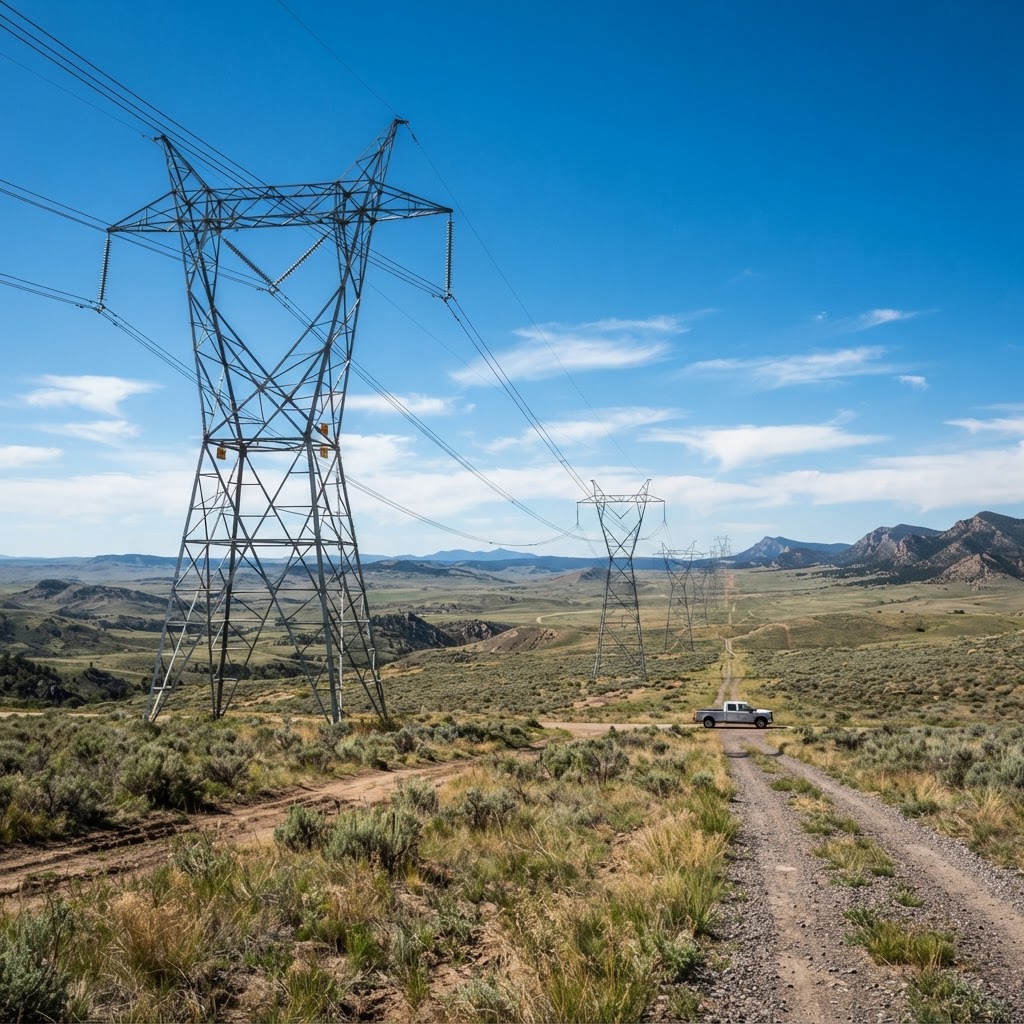
Wyoming Energy Authority Launches Power Grid Study
Wyoming selects Energy Strategies to run a major statewide transmission study to secure grid reliability, map power infrastructure, and spur economic growth.
WorthFighting.org News · 5 min read
More from Economy

Economy
Denver Budget Crisis Deepens as City Faces $200M Gap
Denver faces a massive $200 million budget shortfall for 2026, forcing the city to consider layoffs and furloughs after years of rapid government expansion.
WorthFighting.org News · 6 min read

Economy
ND Towns Turn to Sales Taxes After Property Tax Cap
Over a dozen North Dakota cities and counties propose sales tax increases this June as local officials navigate state-mandated property tax revenue caps.
WorthFighting.org News · 5 min read

Economy
Vermont Tax Revolt Leaves Barre Schools Without Budget
Barre voters prepare for a high-stakes third school budget vote as taxpayers push back against relentless property tax hikes across Vermont.
WorthFighting.org News · 6 min read
Take Action
This country is worth fighting for. Get involved today.