Education
Gwinnett County School Board Budget Dissent Exposes Bloat
Suwanee, Gwinnett County County, Georgia
Board pushback exposes ballooning expenditures in Gwinnett County Public Schools as taxpayers face surging property reassessments.

Key Takeaways
- •The Gwinnett County school board continues to pass massive multi-billion-dollar budgets despite board dissent highlighting fiscal bloat.
- •Property value reassessments in Gwinnett County create back-door tax increases when the district declines to adopt a revenue-neutral rollback.
- •Board member Steve Knudsen's opposition underscores growing conservative pushback against administrative expansion.
- •Property taxes account for nearly half of local operating revenue, directly driving up costs for Suwanee homeowners.
The Gwinnett County school board has locked in another record-setting multi-billion-dollar spending framework at its instructional support center in Suwanee, and local taxpayers are left confronting the fallout. As homeowners across Gwinnett County open higher property assessment notices, school board deliberations highlight a growing fracture over unchecked fiscal expansion. While district administrators promote incremental adjustments to nominal tax rates, escalating expenditures mean hardworking families in communities like Suwanee, Buford, and Duluth will shoulder a heavier local tax burden to fund an ever-widening bureaucratic apparatus.
For conservative taxpayers demanding limited government, fiscal prudence, and full institutional accountability, the spending patterns inside Georgia's largest public school district have raised urgent red flags. Over the course of recent budget adoption cycles, conservative board member Steve Knudsen stood as the lone dissenting voice against massive spending plans—including a $3.43 billion fiscal plan—warning that sustained increases in overall expenditures fail to provide genuine financial relief to property owners.
What Happened
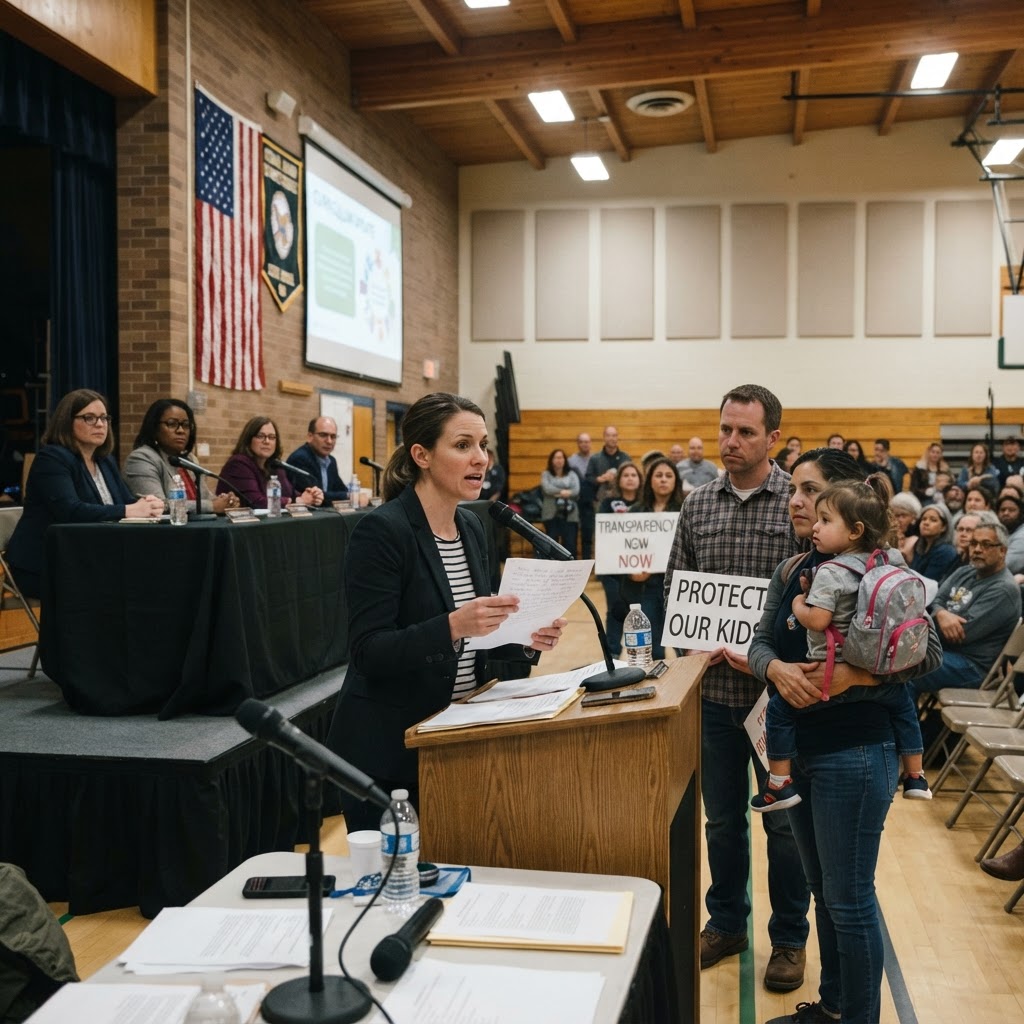
Meeting at the J. Alvin Wilbanks Instructional Support Center on Old Peachtree Road in Suwanee, the Gwinnett County Board of Education approved multi-billion-dollar expenditure totals alongside debates over millage rates. Official public documents show maintenance and operations (M&O) spending consuming billions, driven by rising personnel costs, new district initiatives, and administrative overhead.
Although district officials touted modest adjustments in the maintenance and operations millage rate—such as tentative reductions from 19.10 to 18.80 mills, with debt service remaining at 1.45 mills—reassessments from the Gwinnett County Tax Assessor’s Office have wiped out any potential homeowner savings. Under Georgia's Taxpayer Bill of Rights, whenever a taxing authority does not adopt a full rollback rate to offset property reassessments, state law requires the action to be legally classified and advertised as a property tax increase. Despite declining student enrollment figures in certain projections—moving from over 182,200 students toward roughly 178,000—annual spending figures have steadily escalated beyond $3.4 billion to $3.5 billion.
Knudsen’s dissent during critical budget hearings put on public record what many suburban families have argued at public podiums: administrative expansion continues unabated, while taxpayers receive little more than token rate tweaks that still deliver higher tax revenues straight into the district’s coffers.
The Context
To understand the mounting frustration among Gwinnett County taxpayers, one must look at how the Gwinnett County school board funding engine operates. Under Georgia state law, local public education is primarily funded through two revenue pillars: the state's Quality Basic Education (QBE) formula and countywide property taxes. In Gwinnett, property taxes contribute approximately half of the operating revenue for the general fund.
When local real estate values surge, keeping the millage rate steady or offering minimal fractional trims generates millions of dollars in automatic windfall revenue for the district. Instead of returning that windfall to families through a complete rollback, district leadership has historically absorbed the revenue to fund specialized administrative initiatives, outside consulting contracts, and an expanding central office footprint. While local parents have organized over curriculum issues—as previously documented when parental pushback successfully challenged controversial course pilot initiatives—spending accountability remains the underlying bedrock of systemic oversight.
Moreover, the district's operating rhythm requires staggering cash reserves, with monthly expenditures routinely running around $200 million. Operating at such high baseline overhead forces administrators to constantly safeguard more than $600 million simply to maintain liquidity, making any meaningful expenditure rollback politically difficult for entrenched education officials. While neighboring jurisdictions in Gwinnett, including Lawrenceville, Lilburn, and Peachtree Corners, contend with regional economic uncertainty and inflation, the public school system continues to operate as an insulated economic powerhouse.
The Administrative Shift Away from the Classroom
While Gwinnett County Public Schools (GCPS) leaders consistently emphasize teacher pay increases and school safety investments during their public budget hearings, a closer examination of line-item distributions reveals considerable growth in centralized services. Specialized programs, central office coordination, and external platforms have expanded year after year. Critics argue that instead of prioritizing direct classroom instruction and core academic proficiency in reading and mathematics, the system continues to establish administrative buffers that demand perpetual local tax support.
The Implications
The trajectory of the school district's spending bears direct consequences for local sovereignty and the rule of law in county governance. For senior citizens on fixed incomes and young working families residing in Suwanee and surrounding municipalities, escalating tax bills represent a severe cost-of-living strain. In Georgia, school taxes typically account for more than 50% to 60% of an individual property owner's total annual tax bill, far outweighing municipal or general county government levies.
When the school board declines to enact a true rollback rate, it effectively acts as a back-door tax collector, capitalizing on housing inflation. Knudsen’s isolated dissent on the five-member board illustrates the deep philosophical divide currently facing Gwinnett: whether the district exists to expand government institutions or to serve students efficiently while respecting the financial liberties of the taxpayers who foot the bill.
From an America First perspective, fiscal conservatism and educational excellence go hand in hand. Throwing larger sums of public money at bureaucratic overhead has not correlated with higher statewide test rankings or enhanced academic standards. Instead, administrative sprawl diverts precious capital out of the private sector and into government programs that frequently resist parental input and traditional educational values.
What to Watch
As the upcoming fiscal planning cycles approach, grassroots conservative organizations, parent groups, and fiscal watchdog coalitions across Gwinnett County are preparing to bring increased scrutiny to the district’s executive leadership and board votes. Key markers will determine whether tax relief becomes a reality or remains an empty administrative talking point:
- Final Millage Rollback Votes: Watch whether any other board members join the push for genuine, revenue-neutral rollback rates that prevent back-door tax increases on residential properties in Suwanee, Buford, and Norcross.
- Enrollment Audits versus Central Office Growth: As student enrollment stabilizes below peak historical estimates, taxpayers should examine whether GCPS central office staffing levels are proportionally reduced or allowed to maintain bloated budgets.
- Public Budget Participation: The legal requirement for three public hearings on property tax increases gives conservative residents a formal platform. Organized attendance at Wilbanks Support Center meetings will signal to board members whether the public will hold them accountable at the ballot box.
Why it matters to local residents: In a challenging national economic climate marked by stubborn inflation and elevated mortgage rates, the school board's budgetary decisions dictate whether Gwinnett County families retain their hard-earned dollars or forfeit them to government expansion. Demanding accountability and backing board members who oppose unrestrained spending is the only way to safeguard the economic vitality of Gwinnett communities.
More Gwinnett County Coverage
For more reporting from across Gwinnett County — Lawrenceville, Duluth, Norcross, Snellville, Suwanee, and every community in the county — visit our Gwinnett County news hub, or browse all local news from WorthFighting.org.
Explore Georgia
Explore more news, elections, representatives, and information from Georgia.
Visit Georgia State ProfileMore Gwinnett County coverage
Explore the School Board hub, the Gwinnett County hub, and related topic hubs.