
IU Trustees to Vote on New Campus Protest Policy
The Indiana University Board of Trustees is set to vote on a new policy regarding outdoor expressive activities following recent campus demonstrations.
WorthFighting.org News
Staff Writer
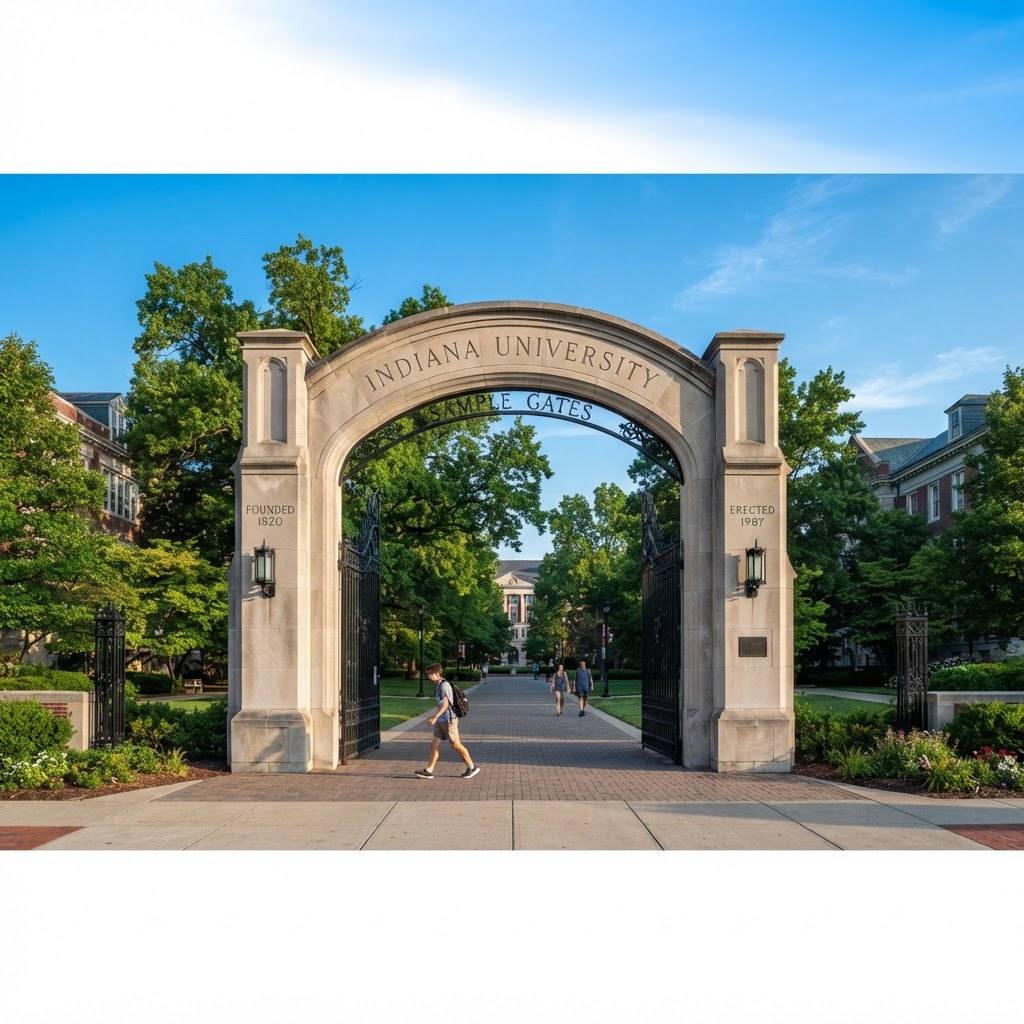
Indiana University is preparing for a consequential vote on campus protest rules as the university’s Board of Trustees meets May 23 and 24 in Bloomington, Indiana, in Monroe County.
At the center of the meeting is a proposed “Expressive Activity Policy,” which is listed on the official agenda for final action by the board. The measure comes after a tense spring on the Bloomington campus, where pro-Palestinian demonstrations and encampments in Dunn Meadow led to dozens of arrests and renewed scrutiny of how one of the Midwest’s largest public universities handles free expression, public order, and campus safety.
For families, students, and taxpayers watching developments at WorthFighting.org’s education coverage, the vote could set a major precedent for how Indiana University manages demonstrations while trying to keep its academic mission on track.
Trustees Set to Consider New Rules
The Indiana University protest policy under consideration would establish clearer limits on how demonstrations can take place on university property.
According to the agenda materials described in the proposal, the new rules would strictly prohibit overnight encampments and the use of unapproved structures on university grounds. That would directly address the kinds of protest setups that drew widespread attention in Dunn Meadow during the unrest earlier this spring.
The policy would also place new limits on amplified sound, restricting it to specific hours in an effort to prevent disruption to nearby classes and exams. For a large campus like Indiana University in Bloomington, where academic buildings, student spaces, and open grounds often sit close together, the issue of noise during instructional hours has become a major flashpoint.
In addition, organizers of large gatherings would be required to provide 10 days of advance notice so the university can make security preparations.
University officials have framed the proposal as a content-neutral update intended to protect both free expression and routine campus operations.
“We must provide clear guidance that protects the right to protest while ensuring university operations are not disrupted,” university officials said in explaining the rationale for the measure.
Officials also emphasized that “the safety of our students and the continuity of our educational mission are our top priorities.”
Response to Spring Unrest in Dunn Meadow
The pending vote follows a period of significant unrest on the Bloomington campus in April, when pro-Palestinian encampments drew heavy attention and prompted a strong law-enforcement response. Dunn Meadow, a well-known gathering space at Indiana University, became the focal point of the demonstrations.
Those events exposed major gaps in older campus rules, according to university leadership. The existing protest framework, described as decades old, was viewed as insufficient to handle large-scale demonstrations that included extended encampments and other tactics that went beyond traditional daytime rallies or marches.
The arrests earlier this spring turned Indiana University into a high-profile example in the national debate over campus free speech, student activism, and administrative authority. Supporters of tighter rules argue the university has a responsibility to prevent disorder and maintain access to academic facilities. Critics of such policies often warn that vague or overly restrictive rules can chill protected speech under the First Amendment.
That tension is now likely to define the trustees’ deliberations.
A Balancing Test for Campus Free Speech
The core question before the university trustees is whether Indiana University can create a policy that preserves lawful protest without allowing demonstrations to overwhelm normal campus life.
The proposed Indiana University protest policy appears designed to draw that line more explicitly.
By banning overnight encampments and unapproved structures, the university is signaling that public spaces on campus cannot be turned into semi-permanent protest sites. By limiting amplified sound to set hours, officials are trying to prevent rallies from interfering with students preparing for exams or attending class. And by requiring advance notice for large events, the administration is seeking time to coordinate security and logistics before a protest grows into a major operational challenge.
University officials insist the policy is not aimed at a particular viewpoint. Instead, they say it applies regardless of the cause being promoted.
That content-neutral approach will likely be central to the board’s final decision, especially given the heightened legal and political sensitivity around expressive activity at public universities.
What the Board’s Vote Could Mean
If approved, the policy would mark one of the most significant changes to protest regulation on the Bloomington campus in years.
For Indiana University, the move would formalize a new standard for demonstrations after a spring semester marked by conflict and national attention. It would also give administrators a clearer enforcement framework if future protests test the limits of acceptable conduct.
The timing is notable. Universities across the country have been under pressure to respond to disruptive encampments, building occupations, and confrontations that have raised concerns not only about speech rights but also about campus safety, property access, and the ability of schools to fulfill their basic educational purpose.
In that broader environment, the Indiana University trustees are being asked to decide whether clearer rules can restore stability without crossing into unnecessary restrictions on lawful expression.
For readers following Indiana developments, Bloomington news on this vote may also have implications beyond Monroe County. Other colleges and universities in Indiana could look to IU’s approach as a model for how to revise protest rules in a politically charged climate.
Academic Mission and Public Accountability
Because Indiana University is a major public institution, the outcome of the trustees’ vote carries weight not just for current students and faculty, but for parents, taxpayers, and state leaders who expect the campus to remain safe, functional, and focused on education.
That concern has been especially sharp after the spring disruptions, when the line between protected protest and prolonged disorder became a matter of public debate.
Supporters of stronger guardrails say students should be free to speak, assemble, and advocate for causes they believe in, but not in ways that prevent others from studying, attending class, or moving safely through campus. The proposed expressive activity policy is clearly aimed at reinforcing that distinction.
At the same time, the language around content neutrality suggests Indiana University is aware that any new restrictions must be carefully drawn. On a public campus, free speech questions are not secondary issues. They are central to the institution’s legal responsibilities and public credibility.
Why This Matters
The upcoming vote is about more than a single policy document. It is a test of whether Indiana University can restore order after a chaotic spring while still honoring campus free speech principles.
For students, the stakes are immediate: access to classrooms, a stable learning environment, and confidence that major protests will not derail daily academic life. For faculty, the issue is whether instruction and exams can proceed without disruption. For parents and taxpayers, the vote represents an effort to bring accountability and common sense back to a public campus that saw serious unrest in April.
In practical terms, the proposed Indiana University protest policy is a move toward clearer rules, stronger campus safety standards, and a renewed emphasis on the university’s educational mission. In political terms, it reflects a broader national push to ensure that public institutions uphold the First Amendment without surrendering control of their own grounds.
When the Board of Trustees meets in Bloomington on May 23 and 24, the decision will likely be watched well beyond Monroe County. The outcome could help define how Indiana University — and perhaps other schools — balance protest rights with order, safety, and the responsibility to keep higher education focused on learning.
Comments (0)
Be the first to comment.
Related Stories
Education
Ohio School Districts Face Financial Crisis at the Ballot
Across Ohio, multiple school districts are heading to the November ballot with critical tax levies, warning of severe budget cuts and potential consolidation.
WorthFighting.org News · 6 min read

Education
Iowa City Schools Face $32.5M Deficit and Potential Closures
The Iowa City Community School District is launching a boundary review committee as it grapples with a massive $32.5 million budget shortfall.
WorthFighting.org News · 6 min read

Education
Kentucky Education Fund Offers New Tax Credit Opportunity
A new initiative allows Kentucky taxpayers to support the Kentucky Education Fund while receiving tax credits through the Education Freedom Tax Credit program.
WorthFighting.org News · 5 min read

Education
Minneapolis Schools Face Potential Closure of 16 Campuses
Minneapolis Public Schools is considering closing 16 schools to address a $40 million deficit and declining enrollment. Families are bracing for major changes.
WorthFighting.org News · 6 min read
Related Resources
Related Articles
8 itemsSame category: Education
Same category: Education
Same category: Education
Related Breaking News
3 itemsShared keywords: regarding, following
Shared keywords: recent, regarding
Related States
1 itemShared keywords: indiana
What People Are Reading
Ohio School Districts Face Financial Crisis at the Ballot
Chicago Aldermen Clash Over Mayor Johnson’s Budget Cuts

Iowa City School Board Approves $7.5M in Budget Cuts

California

Florida Homeowners Remain Skeptical of Insurance Reforms
Take Action
This country is worth fighting for. Get involved today.