Education
Curriculum Victory? Gwinnett County School Board Curriculum Halt Stops Controversial Course
Suwanee, Gwinnett County County, Georgia
The Gwinnett County school board curriculum debate reaches a turning point as officials pause a controversial Black Studies course amid parental concerns.

Key Takeaways
- •The Gwinnett County Board of Education has paused a controversial Black Studies course following intense parental pushback.
- •The decision was finalized at the district's headquarters in Suwanee during late-August 2026 meetings.
- •Parents expressed concerns that the curriculum contained 'divisive concepts' and CRT-aligned frameworks.
- •The halt is seen as a victory for parental rights and transparency in Georgia's largest school district.
- •The board will now conduct a more thorough review to ensure compliance with state laws regarding ideological instruction.
In a move that many local parents are calling a significant win for transparency and academic standards, the Gwinnett County school board curriculum review process has resulted in a temporary halt of a controversial Black Studies course. The decision, finalized during a series of meetings at the J. Alvin Wilbanks Instructional Support Center in Suwanee, comes after months of escalating tension between the district’s administration and a growing coalition of families concerned about the introduction of divisive racial ideologies in the classroom. While the district initially framed the course as an elective designed to broaden historical perspectives, critics argued that the materials were deeply rooted in Critical Race Theory (CRT) frameworks, prioritizing identity politics over objective historical analysis.
The pause was confirmed following the board's late-August sessions, where community members from Suwanee, Duluth, and Lawrenceville gathered to voice their opposition. The Gwinnett County Board of Education, led by Chair Tarece Johnson-Morgan, faced intense scrutiny over the proposed changes to the social studies framework. For many Gwinnett County residents, the halt represents more than just a scheduling delay; it is a reassertion of parental rights in an era where educational bureaucracies often seem at odds with the values of the families they serve.
Then: The Era of Quality Basic Education
To understand the gravity of the current debate in Suwanee, one must look back to the mid-1980s, a period when Georgia’s educational landscape underwent a fundamental shift toward accountability and core standards. In 1985, Governor Joe Frank Harris signed the Quality Basic Education (QBE) Act, a landmark piece of legislation that sought to standardize what students were learning across the state. The focus then was not on social engineering or the exploration of subjective "lived experiences," but on ensuring that every child, whether in a rural community or a growing suburb like Gwinnett County, had access to a rigorous, fact-based education.
During that era, the curriculum was viewed as a tool for social mobility through merit. The QBE Act established a clear set of competencies in math, science, and history, with the goal of preparing students for the workforce and civic life. There was a broad consensus that the role of the public school was to unite students under a shared American identity, teaching the triumphs and tragedies of our history without forcing children to view themselves primarily through the lens of their racial or ethnic background. The "Quality Core Curriculum" that followed was designed to be transparent, accessible to parents, and focused on measurable academic outcomes.
Now: The Suwanee Showdown Over Gwinnett County School Board Curriculum
Fast forward to August 2026, and the atmosphere at the Instructional Support Center at 437 Old Peachtree Road NW has changed dramatically. The consensus of the 1980s has been replaced by a fractured environment where the very definition of "equity" is a point of contention. The recent Gwinnett County school board curriculum controversy centered on a proposed Black Studies course that parents alleged contained elements of "divisive concepts"—a term that has become a flashpoint in Georgia politics since the passage of state laws aimed at protecting students from being taught that one race is inherently superior or that individuals bear collective guilt for past actions.
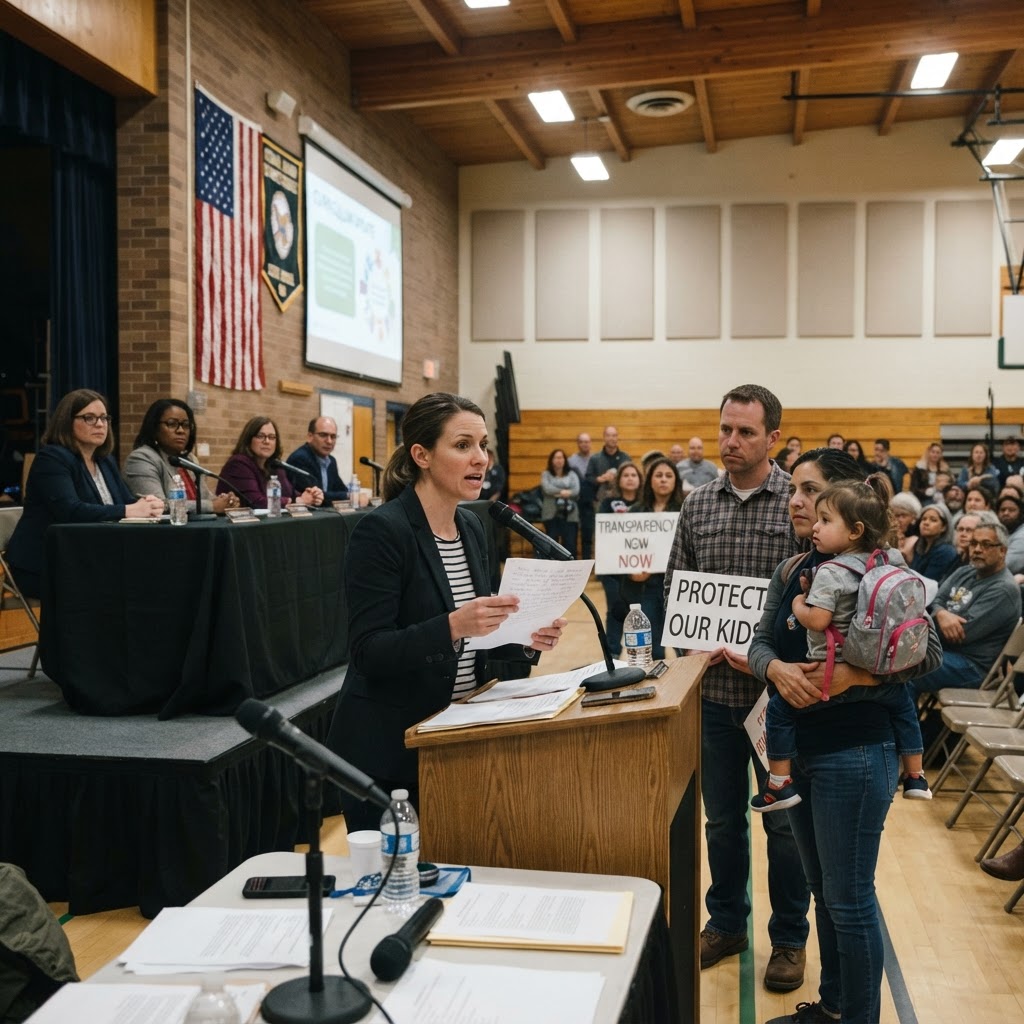
During the public comment sections of the August meetings, the tension was palpable. Tori Branum, a local parent who has become a vocal advocate for curriculum transparency, told the board that many families are afraid to speak out for fear of being labeled. "When parents are afraid to stand at this microphone, I will," Branum stated, reflecting a sentiment shared by many who feel the district has moved away from its core mission. The debate isn't just happening in Suwanee; it resonates across the county, from the small businesses in Buford to the residential neighborhoods of Peachtree Corners. Parents are increasingly questioning the fiscal accountability of the district, wondering why taxpayer funds are being directed toward ideological programs while Gwinnett Schools deploy unarmed security guards as a "gap-filling" measure for safety.
Parental Rights and the Pushback Against Ideology
The decision to pause the course follows a series of heated exchanges regarding the district's "Our Blueprint for the Future" strategic plan. Critics argue that the plan’s emphasis on "equity"—defined by the district as ensuring each child receives what they need to develop to their full potential—has been used as a Trojan horse for CRT-aligned instruction. The halt of the Black Studies course is seen by many as a necessary check on this drift. The board's decision to step back allows for a more thorough review of the materials to ensure they comply with state law and reflect the community's desire for a balanced, non-ideological approach to history.
This victory for parental involvement comes at a critical time. As the battle for Gwinnett County School Board: 2026 elections loom large for parents, the current board members are finding that the "America First" approach to education—prioritizing excellence, national unity, and parental authority—is gaining significant traction. The pause in the curriculum rollout suggests that the board is beginning to realize that ignoring the concerns of a large segment of the Gwinnett County population is no longer a viable political strategy.
The Parallel: A Recurring Struggle for Local Control
The parallel between the 1985 QBE Act and the 2026 curriculum halt lies in the fundamental question of who controls the classroom. In the 1980s, the struggle was between local districts and a state government seeking to impose higher standards. Today, the struggle is between families and a centralized educational bureaucracy that many believe has been captured by radical academic theories. In both instances, the community’s reaction was driven by a desire for excellence and a rejection of mediocrity or manipulation.
Just as the QBE Act was a response to a perceived decline in academic rigor, the current pushback in Gwinnett County is a response to a perceived shift in the purpose of education. Parents are not asking for history to be erased; they are asking for it to be taught accurately, without the thumb of modern political activism on the scale. The parallel is clear: when the educational system veers too far from the expectations of the tax-paying public, the public will eventually demand a course correction.
The Lesson: Transparency is the Only Path Forward
The lesson from this month’s events in Suwanee is that transparency is not optional. The Gwinnett County Board of Education’s initial attempt to move forward with a controversial curriculum without sufficient community buy-in led to a breakdown in trust. For a district as large and diverse as Gwinnett, maintaining that trust requires a commitment to the rule of law and a respect for the diverse viewpoints of its residents. The halt of the Black Studies course provides an opportunity for the district to reset and engage in a truly transparent review process.
Furthermore, this situation highlights the importance of the "America First" principle of local and parental sovereignty. Education is not a top-down mandate to be handed down by "experts" in Suwanee or Atlanta; it is a partnership between schools and families. When that partnership is honored, the community thrives. When it is ignored, the result is the kind of discord seen over the last 48 hours. The lesson for other districts in Georgia is that parents are paying attention, and they will not hesitate to hold their elected officials accountable for what is being taught to the next generation of Americans.
Why it matters to local residents
For the residents of Suwanee and the broader Gwinnett County area, this decision is a reminder that their voices matter. The curriculum taught in local schools shapes the worldview of the community’s children and, by extension, the future of the county. By successfully advocating for a halt to a controversial course, parents have demonstrated that they can influence the direction of the district. This matters because it ensures that Gwinnett County Public Schools remain focused on academic achievement rather than social activism. As the 2026-2027 school year continues, the community will be watching closely to see if the board honors this pause with a genuine, transparent review that respects the constitutional rights and values of all Gwinnett families.
More Gwinnett County Coverage
For more reporting from across Gwinnett County — Lawrenceville, Duluth, Norcross, Snellville, Suwanee, and every community in the county — visit our Gwinnett County news hub, or browse all local news from WorthFighting.org.
Explore Georgia
Explore more news, elections, representatives, and information from Georgia.
Visit Georgia State ProfileMore Gwinnett County coverage
Explore the School Board hub, the Gwinnett County hub, and related topic hubs.