Education
Surveillance or Safety? The Impact of Gwinnett County School Security Systems
Suwanee, Gwinnett County County, Georgia
Gwinnett County Public Schools activates its $20 million weapons detection rollout for the 2026 school year, sparking debate over student privacy and safety.

Key Takeaways
- •GCPS has finalized a $20 million rollout of Evolv weapons detection systems across 58 campuses.
- •The Office of Safety & Security, headquartered in Suwanee, oversees the district-wide surveillance network.
- •Confiscated weapons counts have decreased, though most gun incidents involved parents rather than students.
- •Conservative parents and taxpayers are raising concerns over the normalization of high-tech surveillance and data privacy.
Gwinnett County Public Schools (GCPS) has officially entered a new era of campus oversight with the full-scale activation of its Gwinnett County school security systems for the 2026-2027 academic year. As students returned to campuses in Suwanee and across the district this week, they were met by Evolv weapons detection technology at every middle and high school entrance. While district officials point to a decrease in confiscated weapons as proof of the system's efficacy, the $20 million investment has reignited a local debate regarding the normalization of high-tech surveillance in educational environments and the protection of constitutional privacy rights for minors.
Timeline
- July 22, 2022: GCPS leadership, including Chief of Schools Dr. Al Taylor, announces initial safety enhancements, including the hiring of 98 new School Resource Officers (SROs) and the implementation of the Raptor visitor management system to screen IDs against the National Sex Offender Registry.
- July 31, 2025: The district unveils a massive $20 million school security upgrade plan, centered on the procurement and installation of Evolv weapons detection systems for all secondary campuses.
- August 27, 2025: The phased rollout begins at select high schools in the northern Gwinnett area, including facilities near Buford and Suwanee, as administrators test the throughput of students during morning arrivals.
- December 18, 2025: The Gwinnett County Board of Education votes to approve a new student cell phone policy, further tightening the district's control over electronic devices and digital footprints on campus.
- February 24, 2026: The Georgia House of Representatives passes a bill requiring weapons detectors in all public schools statewide, providing legislative backing to the GCPS initiative.
- March 11, 2026: District officials, including Principal Derico White, confirm that the Evolv systems are operational at all 58 middle and high school campuses, reporting a significant drop in confiscated knives and cutting tools compared to the previous year.
- May 6, 2026: A hoax threat at North Gwinnett High School in Suwanee triggers a massive law enforcement response, testing the integration of the new detection systems with local Gwinnett County Police Department protocols.
- August 27, 2026: GCPS confirms the full activation of the Gwinnett County school security systems for the start of the new school year, marking the first time the entire district has operated under the $20 million surveillance umbrella from day one.
The $20 Million Gwinnett County School Security Investment
The financial scope of the security rollout has drawn scrutiny from fiscal conservatives and taxpayers alike. The $20 million price tag covers the hardware, software, and maintenance of the Evolv Express systems, which utilize advanced sensors and artificial intelligence to distinguish between everyday items like cell phones and potential threats like firearms or large knives. Unlike traditional metal detectors, these systems allow students to walk through at a normal pace without removing backpacks, a necessity for a district that serves over 182,000 students.
At North Gwinnett High School in Suwanee, administrators reported that approximately 1,200 students can pass through the bus entrance detectors in roughly 20 minutes. While the efficiency is touted as a success, the ongoing costs of staffing these checkpoints—often requiring teachers like Hannah Reppert to arrive as early as 7 a.m. for calibration—raise questions about the long-term sustainability of the program. The district has also deployed unarmed Gwinnett school security guards to assist with these checkpoints, adding another layer to the district's security payroll.
The Suwanee Connection and District Oversight
The nerve center for these operations is located right here in Suwanee. The GCPS Office of Safety & Security, which oversees the P.O.S.T. certified school police force, is headquartered at 1229 Northbrook Center, Suite A. This facility manages the coordination between school-based SROs and the broader Gwinnett County law enforcement community, including agencies in nearby Duluth and Lawrenceville.
For Suwanee residents, the presence of these systems at North Gwinnett High and local middle schools is a double-edged sword. While the district reports that gun confiscations dropped from five to two over the last year—with both instances involving parents who accidentally brought weapons onto campus—the sheer volume of surveillance has some parents concerned. The "welcoming atmosphere" the district hopes to maintain by playing music at checkpoints is, for some, a thin veil over a growing surveillance state within the schoolhouse gates.
Parental Rights and the Surveillance Debate
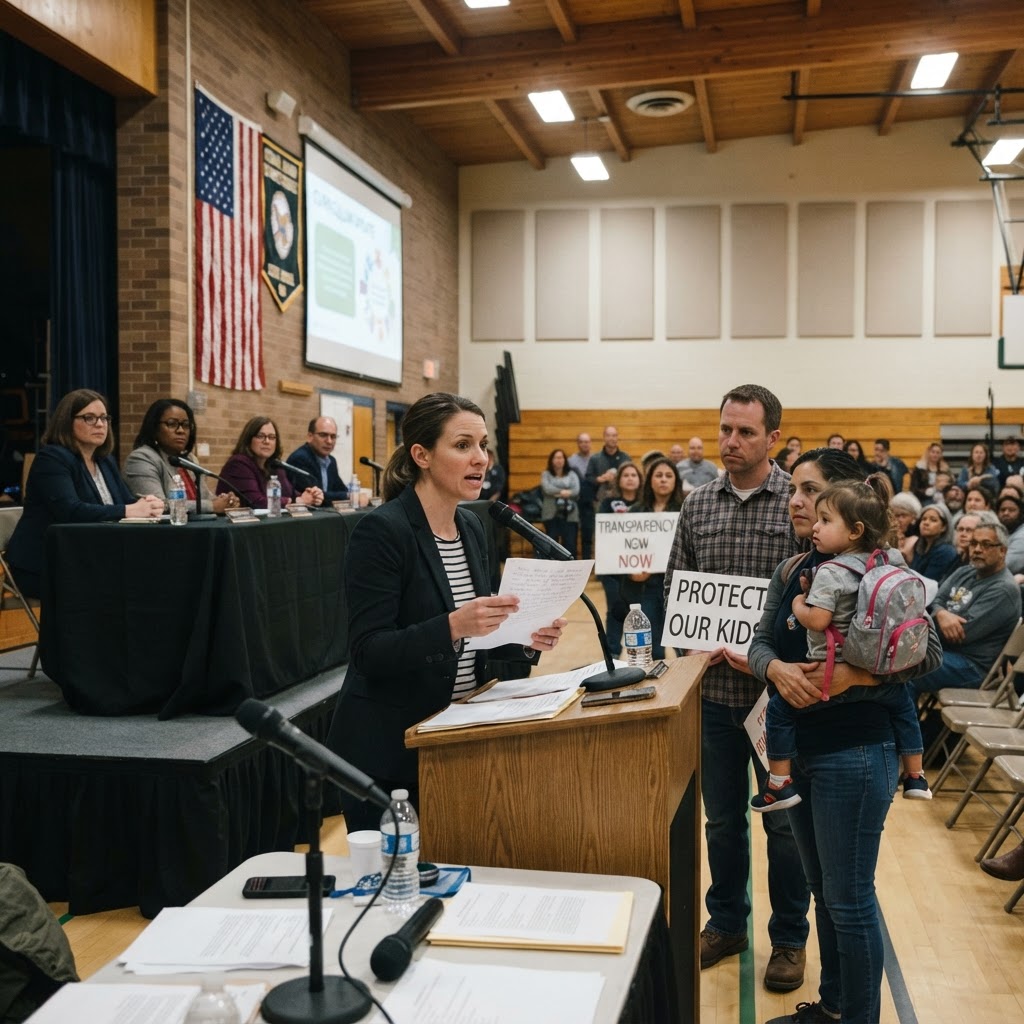
From a conservative perspective, the primary concern lies in the balance between the "Rule of Law" and the fundamental right to privacy. The Gwinnett County school board has faced questions regarding how the data collected by these AI-driven sensors is stored and who has access to the digital profiles of students. As the district moves toward more integrated technology, the risk of "surveillance creep"—where security measures intended for safety are eventually used for behavioral monitoring—remains a top priority for parental rights advocates.
Furthermore, the reliance on technology like Evolv has not been without controversy. Critics point to the May 2026 hoax threat at North Gwinnett High as evidence that while detectors may stop physical weapons, they cannot prevent the psychological disruption caused by digital threats and swatting incidents. The district’s proactive approach, while well-intentioned, must be weighed against the constitutional rights of the students it serves.
Why it matters to local residents
For the families of Suwanee, Buford, and Duluth, the completion of this security rollout represents a fundamental shift in the educational experience. It matters because it involves a significant expenditure of taxpayer funds—$20 million—that requires ongoing transparency and fiscal accountability. It matters because it sets a precedent for how Gwinnett County protects its most vulnerable citizens while navigating the complex landscape of modern surveillance. As the 2026 school year progresses, the community must remain vigilant, ensuring that the quest for safety does not come at the expense of the very liberties and parental rights that define the American educational tradition.
More Gwinnett County Coverage
For more reporting from across Gwinnett County — Lawrenceville, Duluth, Norcross, Snellville, Suwanee, and every community in the county — visit our Gwinnett County news hub, or browse all local news from WorthFighting.org.
Explore Georgia
Explore more news, elections, representatives, and information from Georgia.
Visit Georgia State ProfileMore Gwinnett County coverage
Explore the School Board hub, the Gwinnett County hub, and related topic hubs.