Opinion
Backdoor Tax Hike: Gwinnett Commissioners Reject Rollback Rate
Lawrenceville, Gwinnett County County, Georgia
Gwinnett County commissioners voted to maintain the 6.950 millage rate, triggering a Gwinnett County property tax increase for Lawrenceville homeowners in 2026.

Key Takeaways
- •The Gwinnett Board of Commissioners maintained the 6.950 millage rate for 2026, rejecting the 6.792 rollback rate.
- •Under Georgia law, failing to adopt the rollback rate constitutes a property tax increase.
- •The decision marks the seventh consecutive year the county has declined to implement a full rollback.
- •The Gwinnett County Public Schools board also maintained its 19.20 millage rate, adding to the local tax burden.
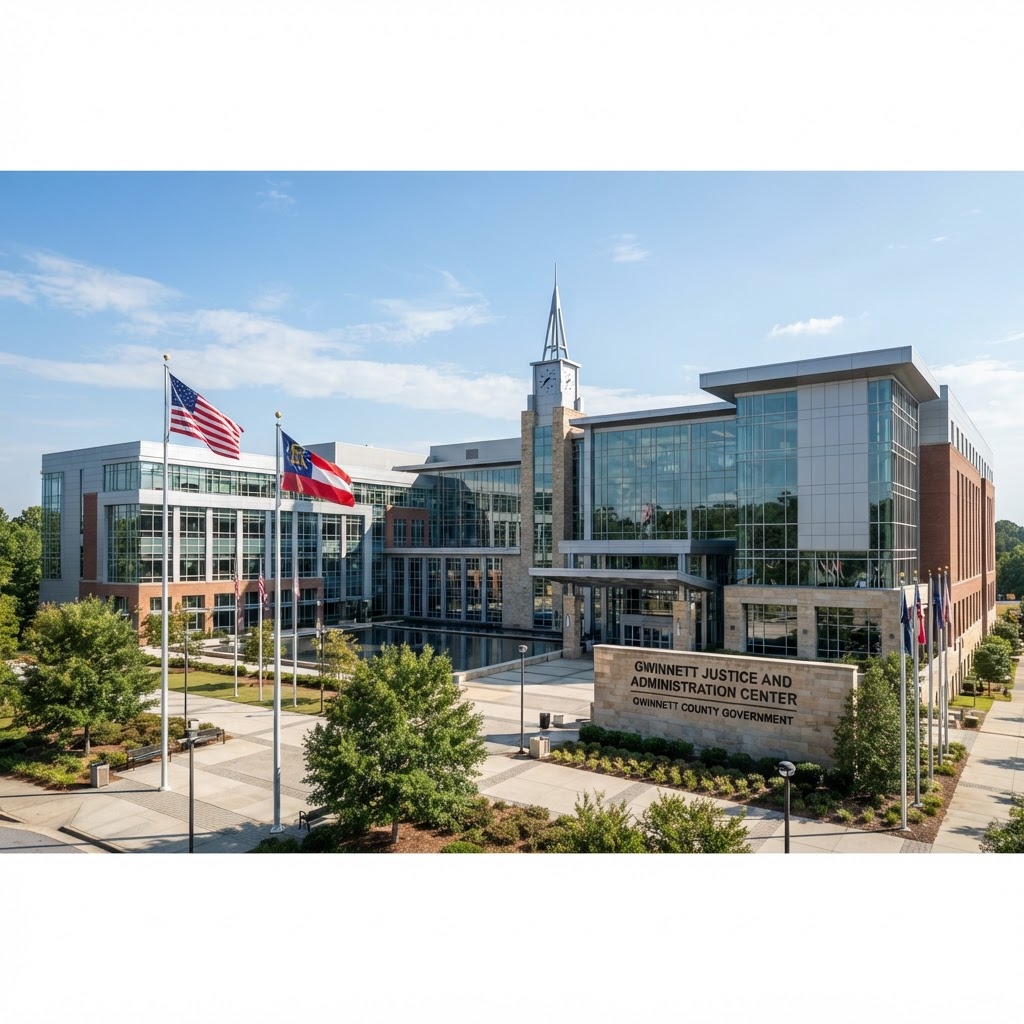
On Tuesday, August 4, 2026, the Gwinnett County Board of Commissioners met at the Gwinnett Justice and Administration Center in Lawrenceville to finalize a decision that will hit the wallets of every property owner in the region. Despite the flowery language of 'stability' and 'holding the line,' the board’s refusal to adopt the state-mandated rollback rate has resulted in a functional Gwinnett County property tax increase for the seventh consecutive year. For the hardworking families of Lawrenceville and surrounding communities like Snellville and Duluth, this fiscal sleight of hand represents a growing disconnect between the governing class and the taxpayers who fund their ambitious agendas.
The Issue
The core of the controversy lies in the 'rollback rate.' Under Georgia’s Truth in Taxation law, when property values rise due to inflation or market demand, local governments are required to calculate a millage rate that would produce the same amount of revenue as the previous year. This is the rollback rate. For 2026, Gwinnett County’s rollback rate was calculated at 6.792 mills. However, the Board of Commissioners, led by Chairwoman Nicole Love Hendrickson, voted to maintain the current rate of 6.950 mills.
While 0.158 mills might sound like a rounding error to a bureaucrat, it is legally defined as a tax increase because it allows the county to capture the 'inflationary' gains of rising property assessments. In Lawrenceville, where home values have continued to climb, this means residents will pay more in actual dollars than they did last year, even though the 'rate' on paper hasn't moved. This decision follows a similar move by the Gwinnett County Public Schools board, which also left its millage rate unchanged at 19.20 mills earlier this week, further compounding the financial burden on local families. Residents are already feeling the squeeze of Gwinnett County Special Election: Runoffs Set as Voters Demand Accountability, and this latest fiscal move only heightens the demand for transparency.
The Case
From a conservative, America First perspective, this is a failure of fiscal accountability. Government should not be a beneficiary of inflation. When the cost of eggs, gas, and insurance goes up for a family in Suwanee or Lilburn, they have to cut their budget. When property values go up, the government sees it as a windfall to expand its reach rather than an opportunity to provide relief to the citizens. By rejecting the rollback rate, the commissioners have chosen to grow the size of government at the expense of the private sector.
During the public hearings held at 75 Langley Drive, the message from the community was clear: taxpayers are exhausted. The county’s 2026 budget was built on the assumption of this higher revenue, showing that the 'public hearings' are often little more than a legal formality for a decision already made behind closed doors. We are told that these funds are necessary for 'essential services,' yet we see a continuous expansion of programs that stray far from the core functions of government—public safety, infrastructure, and the rule of law. If the board were truly committed to the residents of Gwinnett County, they would have prioritized a true rollback to offset the crushing weight of the current economic climate.
Furthermore, the lack of a rollback disproportionately affects those on fixed incomes and small business owners in Norcross and Peachtree Corners. These are the people who cannot simply 'absorb' a few hundred extra dollars in taxes every year. When the county refuses to roll back the rate, they are effectively telling the grandmother in Lawrenceville that the county’s desire for a larger budget is more important than her ability to stay in her home. This is not just a matter of math; it is a matter of principle. Conservative governance requires the discipline to say 'no' to more spending, especially when the taxpayers are already struggling with Fighting for Fair Elections: Gwinnett County Voter Roll Challenges Intensify and other systemic issues.
The Counterargument
Chairwoman Nicole Love Hendrickson and her supporters on the board argue that holding the rate 'steady' is a form of relief in itself. They point to the Value Offset Exemption (VOE), which is intended to keep the assessed value of a property constant for the county portion of a homeowner’s tax bill. According to the county, this means that as long as a homeowner qualifies for the homestead exemption, their county taxes won't increase even if their property value does.
However, this argument is a half-truth at best. The VOE only applies to the county government portion of the bill—it does not apply to the school tax or city taxes, which make up the lion's share of a Lawrenceville resident's tax burden. Moreover, the VOE does not help renters, who see their costs go up as landlords pass on the Gwinnett County property tax increase. It also doesn't help new homeowners or those who don't qualify for specific exemptions. The board’s reliance on the VOE as a shield against criticism ignores the reality that the total tax digest is still growing, and the government is still taking more money out of the local economy than it would under a true rollback.
The Bottom Line
Why it matters to local residents: The decision by the Gwinnett County Board of Commissioners to bypass the rollback rate is a direct hit to the financial independence of Lawrenceville families. It signals that the current leadership prioritizes administrative growth over taxpayer relief. When government refuses to adjust its income to match the 'rollback' reality, it is effectively implementing a backdoor tax hike.
Residents of Gwinnett County must realize that 'steady' is the new 'increase.' As we look toward future budget cycles, it is imperative that voters demand a return to fiscal sanity. We need leaders who understand that every dollar taken by the county is a dollar taken away from a family’s savings, a child’s education, or a small business’s expansion. Until the Board of Commissioners is held accountable for these annual 'non-rollback' hikes, the cost of living in Lawrenceville will continue to climb, driven not just by the market, but by the very people elected to serve us.
More Gwinnett County Coverage
For more reporting from across Gwinnett County — Lawrenceville, Duluth, Norcross, Snellville, Suwanee, and every community in the county — visit our Gwinnett County news hub, or browse all local news from WorthFighting.org.
Explore Georgia
Explore more news, elections, representatives, and information from Georgia.
Visit Georgia State ProfileMore Gwinnett County coverage
Explore the County Government hub, the Gwinnett County hub, and related topic hubs.