Local Government
Unelected Bureaucracy: Who is Really Running Gwinnett County?
Lawrenceville, Gwinnett County County, Georgia
Lawrenceville residents demand Gwinnett County government accountability as unelected bureaucrats drive a $2.67 billion budget and radical equity agendas.

Key Takeaways
- •Gwinnett County's 2025-2026 budget has reached a record $2.67 billion, driven largely by department head requests.
- •The August 11, 2026, Zoning Board of Appeals meeting highlighted the influence of staff recommendations over resident concerns.
- •Career bureaucrats are spearheading a new 'Equity Action Plan' that critics say prioritizes identity over merit.
- •Lawrenceville residents are calling for greater transparency in executive sessions and a check on administrative growth.
DEVELOPING: As the Gwinnett County Board of Commissioners oversees a record-breaking $2.67 billion budget, a growing chorus of Lawrenceville residents and taxpayers are demanding Gwinnett County government accountability regarding the outsized influence of unelected career bureaucrats. While voters cast ballots for commissioners, the actual levers of power—ranging from high-density zoning recommendations to the implementation of controversial 'equity' programs—appear increasingly held by department heads and administrative staff rather than the people's representatives.
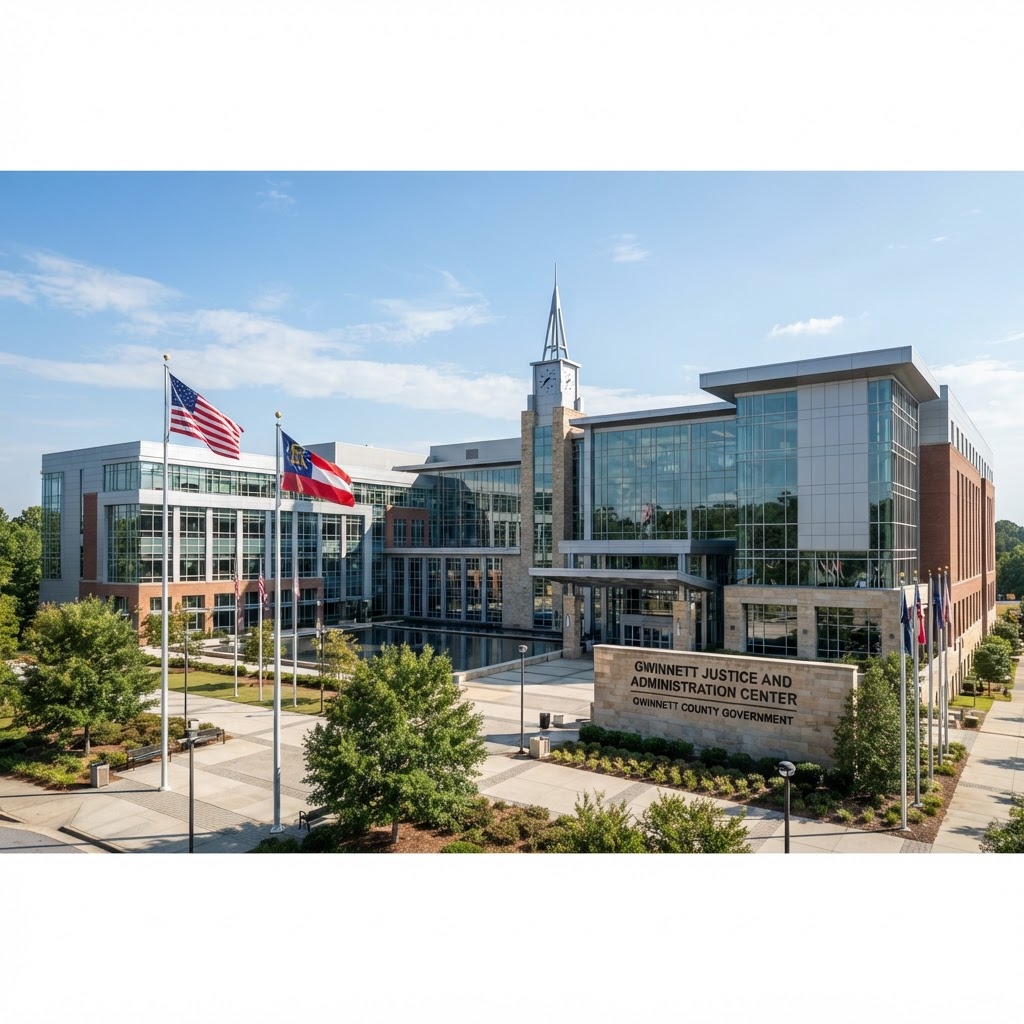
The tension reached a boiling point this week following the August 11, 2026, meeting of the Gwinnett County Zoning Board of Appeals (ZBA) at the Gwinnett Justice and Administration Center in Lawrenceville. The meeting, which featured complex variance requests such as Case VAR2026-00030, highlighted a recurring theme: the reliance of appointed boards on staff-driven data that often prioritizes urban density over the suburban character of communities like Suwanee and Buford.
What We Know: The $2.67 Billion Bureaucratic Machine
At the heart of the concern is the sheer scale of the Gwinnett County administrative state. The 2025-2026 fiscal cycles have seen the county budget balloon to $2.67 billion, a figure that includes a $2.11 billion operating budget. While Chairwoman Nicole Hendrickson and the Board of Commissioners officially approve these figures, the granular details are largely shaped by the Department of Financial Services, led by Director Buffy Alexzulian.
Conservative watchdogs point to the creation of new administrative layers as evidence of a 'government-first' mentality. For instance, the county’s budget development process now includes the coordination of an 'Equity Action Plan.' This initiative, managed by career staff, seeks to embed identity-based metrics into the organization’s culture—a move critics argue shifts the focus away from merit-based governance and fiscal sanity.
In Lawrenceville, the county seat, the contrast is stark. While the City of Lawrenceville recently adopted a $218.6 million budget for FY 2027 with a focus on 'conservative revenue assumptions,' the county-wide apparatus continues to expand. The county's budget includes the creation of entirely new departments, such as the standalone Parks and Recreation Department, which adds further layers of management and taxpayer-funded salaries to the rolls.
What Happened: Zoning and the Administrative State
During the ZBA hearing on August 11, residents observed how unelected staff members frame the narrative for appointed officials. In cases like the Sycamore Road variance (VAR2026-00030), the technical recommendations provided by the planning staff often carry more weight than the testimony of neighboring property owners. This 'expert-led' governance model has led to concerns that Lawrenceville and nearby Duluth are being steered toward a high-density future that residents never asked for.
Parental Power: Gwinnett County School Board Revokes Suwanee Cell Tower Lease previously demonstrated that when citizens organize, they can check the power of unelected bodies. However, the administrative state within the Gwinnett Justice and Administration Center remains a formidable force. The influence of career staff extends into the very language of county ordinances, where 'equity' and 'inclusion' are becoming standard requirements for vendors and contractors, as seen in recent county service agreements.
The Rise of the Administrative State in Lawrenceville
According to the City of Lawrenceville’s 2045 Comprehensive Plan, public administration is already one of the top employment sectors in the city, with over 7,800 workers. This concentration of government employees creates a self-perpetuating cycle where the bureaucracy advocates for its own expansion.
For the average taxpayer in Snellville or Peachtree Corners, this translates to higher property tax assessments to fund a $2.67 billion machine. When the Board of Commissioners recently pushed through a property tax increase, they cited 'increasing costs of labor and services.' Yet, little mention was made of the dozens of new administrative positions created to manage the county’s social engineering projects.
What Comes Next: Demanding Gwinnett County Government Accountability
The push for Gwinnett County government accountability is expected to intensify as the 2026 election cycle approaches. Residents are beginning to ask why career bureaucrats, who do not face the voters, are the ones drafting the 'Equity Action Plans' that dictate how tax dollars are spent.
There is also a growing demand for transparency regarding executive sessions. A recent Lawrenceville City Council meeting on March 4, 2026, saw officials enter a closed-door session for 'Personnel, Litigation, and Real Estate,' only to emerge and report that no votes were taken. While legal, these frequent executive sessions—often guided by staff attorneys—leave the public in the dark about the true motivations behind land deals and policy shifts in the county seat.
Community leaders in Norcross and Lilburn are calling for a 'Taxpayer Bill of Rights' that would require a public vote for any budget increase exceeding the rate of inflation, effectively stripping unelected department heads of their ability to lobby for endless growth.
Why it matters to local residents
For the families of Lawrenceville and Gwinnett County, this isn't just about spreadsheets; it’s about who controls the future of their community. When unelected bureaucrats drive policy, the 'America First' principles of limited government and fiscal responsibility are often the first casualties. High-density zoning, identity-politics mandates, and multi-billion dollar budgets are the products of a system that prioritizes the survival of the bureaucracy over the prosperity of the citizen.
True accountability means ensuring that the people we elect are the ones actually making the decisions, not just rubber-stamping the agendas of career staff. As Gwinnett continues to grow, the battle for the soul of its government will be fought in the meeting rooms of the Justice and Administration Center, where taxpayers must decide if they want a government of the people or a government of the bureaucrats.
More Gwinnett County Coverage
For more reporting from across Gwinnett County — Lawrenceville, Duluth, Norcross, Snellville, Suwanee, and every community in the county — visit our Gwinnett County news hub, or browse all local news from WorthFighting.org.
Sources
Explore Georgia
Explore more news, elections, representatives, and information from Georgia.
Visit Georgia State ProfileMore Gwinnett County coverage
Explore the County Government hub, the Gwinnett County hub, and related topic hubs.