Education
Parental Power: Gwinnett County School Board Revokes Suwanee Cell Tower Lease
Suwanee, Gwinnett County County, Georgia
The Gwinnett County school board revoked a cell tower lease in Suwanee after parents at Parsons Elementary organized to protect their children from radiation.

Key Takeaways
- •The Gwinnett County school board unanimously voted to rescind a lease for a 150-foot cell tower in Suwanee.
- •Parents at Parsons Elementary and Peachtree Ridge High School were not notified of the initial December approval.
- •Community organizer Ruth Youn led the opposition, citing radiation concerns and fall-zone safety for the elementary playground.
- •Board members Steve Gasper and Tarece Johnson-Morgan admitted the community's voice was more important than the lease revenue.
In a significant victory for parental rights and local transparency, the Gwinnett County school board has officially finalized the revocation of a controversial lease agreement that would have placed a 150-foot cell tower directly between two Suwanee schools. The decision, which follows months of intense grassroots organizing by Suwanee families, serves as a stark reminder that when parents stand united against bureaucratic overreach, the government is forced to listen. The move to cancel the contract with Municipal Communications LLC comes after the board initially approved the project behind closed doors, sparking a firestorm of criticism regarding how Gwinnett County officials handle public assets and student safety.
The Issue
The controversy began in December when the Gwinnett County school board approved a lease for a massive cell tower to be constructed on the shared campus of Parsons Elementary School and Peachtree Ridge High School in Suwanee. Remarkably, this decision was buried within the board’s "consent agenda"—a collection of routine items typically passed in a single vote without individual discussion or public debate. By using this administrative maneuver, the board effectively bypassed the families in Suwanee, Duluth, and Lawrenceville whose children would be most affected by the structure.
Parents only discovered the plan after the ink was dry. Ruth Youn, a local parent and education policy analyst, led the charge in exposing the lack of transparency. The proposed 150-foot tower was slated for a location where the Parsons Elementary playground sat directly within the "fall zone"—the area where debris would land if the tower were to collapse. Furthermore, parents raised significant concerns regarding long-term radiation exposure for students spending seven to eight hours a day in the tower's immediate shadow. The district’s failure to provide prior notification or conduct a thorough impact study suggested a government more interested in corporate lease revenue than the well-being of its youngest constituents.
The Case
From a conservative perspective, this is a clear-cut case of government accountability and the protection of the family unit. The Gwinnett County school board exists to serve the parents and taxpayers, not to act as a real estate agent for telecommunications giants. When the board attempted to "bypass all the due diligence, impact studies, and community public notice," as Youn noted, they violated the fundamental trust between the electorate and their representatives. This lack of transparency is a hallmark of the same administrative bloat that led to other local concerns, such as the Crisis in the Classroom: Student Wounded in Norcross High School Shooting, where safety protocols were questioned.
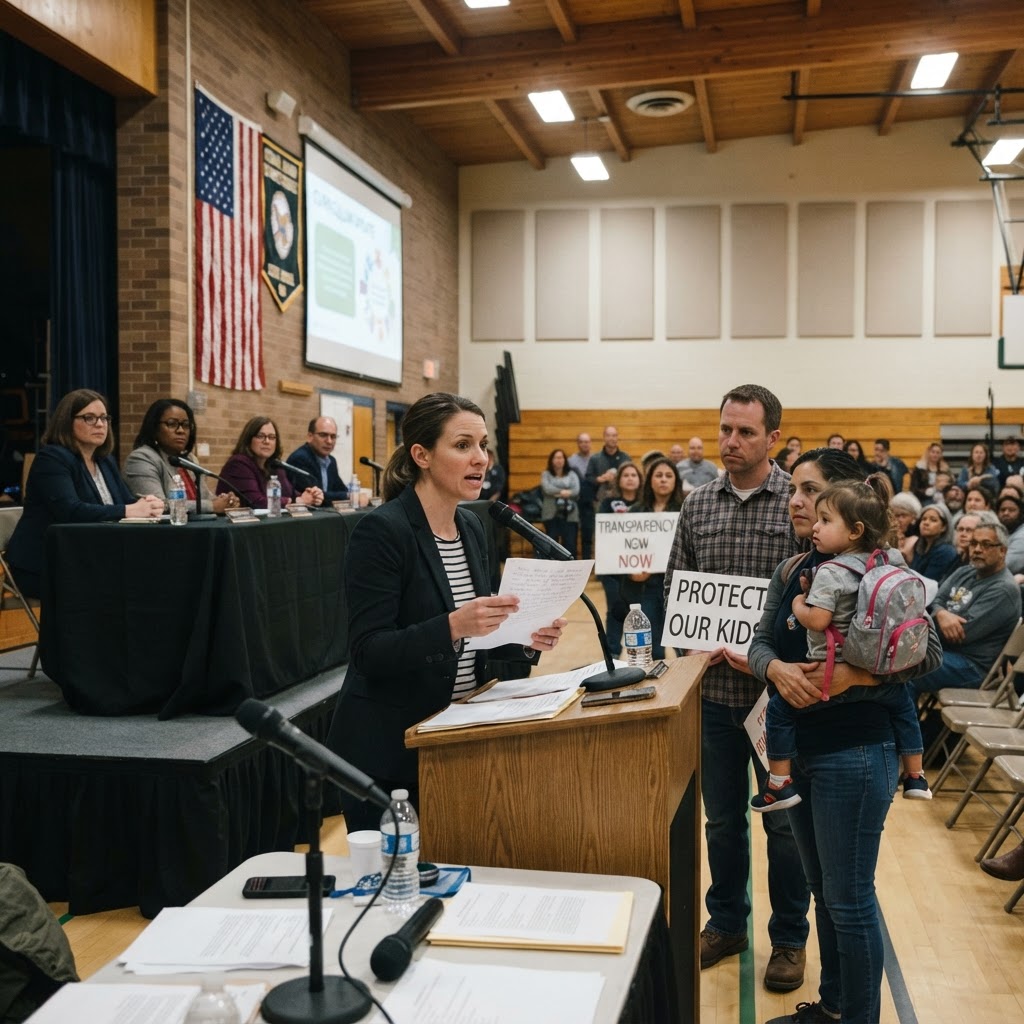
Parental rights are not a suggestion; they are the bedrock of a free society. The Suwanee community correctly argued that they have the primary authority over their children’s environment. By organizing rallies, attending board meetings in Lawrenceville, and presenting scientific data regarding RF radiation and structural safety, these parents forced the board to acknowledge their oversight. Board member Steve Gasper eventually admitted that the community’s voice was more important than the lease agreement, a rare but necessary admission of error from a public official. This victory demonstrates that the "America First" approach—prioritizing the safety and sovereignty of local citizens over corporate interests—is the most effective way to govern Gwinnett County.
The Role of Corporate Influence in Schools
The involvement of Municipal Communications LLC highlights a growing trend of private entities seeking to utilize public school land to avoid stricter municipal zoning laws. Because school property often falls under different regulatory standards than residential neighborhoods, tower companies see them as a path of least resistance. In Suwanee, parents refused to let their schools be used as a loophole. They demanded that the board uphold the same standards of safety and aesthetics that would be required anywhere else in Gwinnett County. This pushback is essential to preventing the commercialization of our educational spaces and ensuring that school grounds remain dedicated to learning and safety, not corporate profit.
The Counterargument
Those defending the initial decision often point to the need for improved cellular connectivity and the additional revenue the lease would have generated for the district. In a rapidly growing county like Gwinnett, where infrastructure often lags behind residential development, proponents argue that such towers are a necessary evil. They might claim that the radiation levels fall within federal guidelines and that the "fall zone" risks are statistically negligible. Furthermore, some administrators argue that the revenue from such leases helps offset the need for further property tax increases, which have already burdened residents in nearby Buford and Norcross.
However, these arguments fall flat when weighed against the lack of transparency. No amount of lease revenue justifies keeping parents in the dark about a 150-foot industrial structure on an elementary school playground. If the project were truly safe and beneficial, the Gwinnett County school board would have had no reason to hide it in a consent agenda. The "revenue" argument is often a smokescreen for fiscal mismanagement elsewhere in the budget; taxpayers would rather see the board cut wasteful spending than sell off the safety of school zones to the highest bidder.
The Bottom Line
The revocation of the Suwanee cell tower lease is a triumph for the people of Gwinnett County. It proves that the school board is not an untouchable monolith and that organized, informed parents can successfully demand accountability. This case should serve as a blueprint for other communities—from Peachtree Ridge to Snellville—on how to challenge administrative overreach. When the government attempts to bypass the public, the public must respond with twice the volume.
Why it matters to local residents: This decision protects the physical safety and health of students at Parsons Elementary and Peachtree Ridge High School. More importantly, it establishes a precedent that the Gwinnett County school board cannot use consent agendas to hide significant infrastructure projects from the community. For the residents of Suwanee, this is a reminder that vigilance is the price of liberty, and parental authority must always come before bureaucratic convenience. As we look toward future elections, voters must remember which officials stood with families and which ones had to be forced to do the right thing.
More Gwinnett County Coverage
For more reporting from across Gwinnett County — Lawrenceville, Duluth, Norcross, Snellville, Suwanee, and every community in the county — visit our Gwinnett County news hub, or browse all local news from WorthFighting.org.
Explore Georgia
Explore more news, elections, representatives, and information from Georgia.
Visit Georgia State ProfileMore Gwinnett County coverage
Explore the School Board hub, the Gwinnett County hub, and related topic hubs.