Local Government
Gwinnett Sheriff Keybo Taylor Under Fire for Deleted Post on Charlie Kirk
Lawrenceville, Gwinnett County County, Georgia
Gwinnett Sheriff Keybo Taylor faces renewed scrutiny in Lawrenceville after a controversial social media post regarding Charlie Kirk sparked bias concerns.

Key Takeaways
- •Sheriff Keybo Taylor told supporters of Charlie Kirk to 'unfriend' him in a deleted post.
- •Lawrenceville residents are questioning the Sheriff's ability to remain impartial in his duties.
- •The controversy comes as the 2026 Gwinnett County election cycle heats up with calls for accountability.
- •Critics point to a pattern of political bias, including past friction over ICE cooperation and GBI probes.
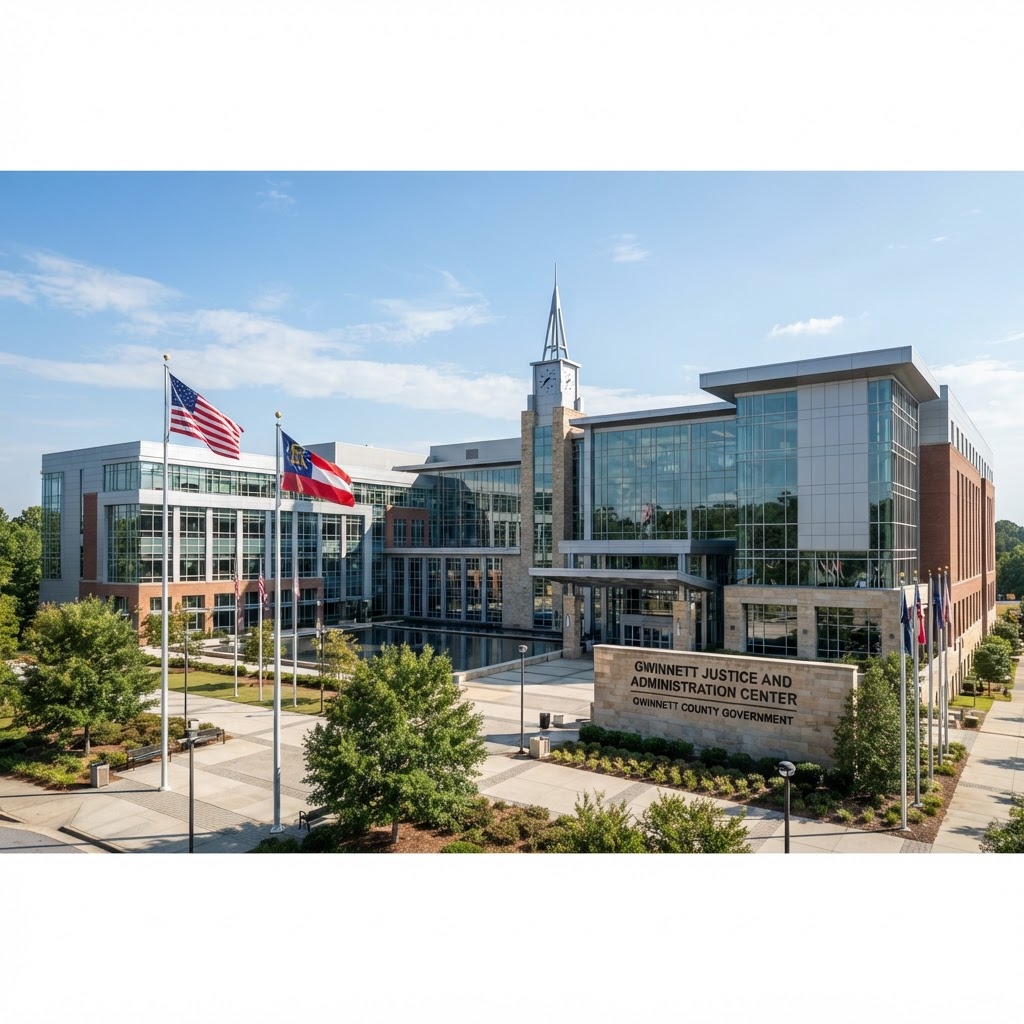
LAWRENCEVILLE, GA — The political temperature in Gwinnett County reached a boiling point this week as residents and local leaders gathered outside the Gwinnett Justice Center in Lawrenceville to demand accountability from Gwinnett Sheriff Keybo Taylor. The protest, occurring just 48 hours after a heated community forum, centers on a controversial and now-deleted social media post in which the Sheriff targeted supporters of conservative activist Charlie Kirk. As the 2026 election cycle intensifies, the fallout from Taylor’s comments has transitioned from a social media spat into a full-blown crisis regarding the impartiality of the county’s top law enforcement officer.
Critics argue that the Sheriff’s public ultimatum—telling those who support Kirk to "unfriend" him—violates the spirit of his oath to serve all citizens regardless of political affiliation. In a community like Lawrenceville, which serves as the seat of government for Georgia’s second-most populous county, the expectation of blind justice is paramount. The resurfacing of these comments has prompted formal calls for an ethics review and has become a central theme for those seeking to restore a non-partisan, rule-of-law approach to the Gwinnett County Sheriff's Office.
1. The "Unfriend Me" Ultimatum Sparked a Crisis of Confidence
In a lengthy Facebook post that was quickly deleted but preserved via screenshots by concerned citizens, Gwinnett Sheriff Keybo Taylor expressed sympathy for the family of Charlie Kirk following a tragic event but followed it with a divisive demand. Taylor wrote, "if you support the actions of Kirk, do me a favor. Unfriend me," a statement that many Lawrenceville residents view as a litmus test for receiving the Sheriff's protection.
The post did not stop at a simple request to sever social media ties; it characterized supporters of the conservative activist as being on the wrong side of "human dignity." For an elected official who oversees the Gwinnett County Jail and provides security for the local judiciary, such language suggests a bifurcated view of the electorate. Residents in nearby Suwanee and Snellville have joined Lawrenceville activists in questioning whether a Sheriff who publicly disdains a specific political segment can truly lead an office of over 800 employees with total neutrality.
This ultimatum is particularly jarring given the Sheriff’s own mission statement, which pledges to serve with "respect for human dignity" and "active cooperation with the community." By drawing a line in the sand over political beliefs, Taylor has effectively signaled to a significant portion of Gwinnett County that their values are unwelcome in his vision of public safety. This has led to a surge in signatures for a local petition calling for his resignation, citing a fundamental breach of public trust.
2. The Impartiality Crisis: Can Gwinnett Sheriff Keybo Taylor Protect All Residents?
The primary concern for Lawrenceville taxpayers is whether political bias influences the operational decisions of the Sheriff’s Office. When the highest-ranking law enforcement officer in the county publicly alienates supporters of a mainstream conservative movement, it creates a chilling effect on the constitutional rights of those citizens.
Law enforcement impartiality is not merely a professional courtesy; it is a requirement for the functional administration of justice. The Sheriff’s Office is responsible for serving court documents, protecting judges, and managing the county’s incarcerated population. If the public perceives that the Sheriff holds a personal vendetta against certain political ideologies, the legitimacy of every arrest and every court interaction is called into question. This is a dangerous precedent for Gwinnett County, where the rule of law must remain insulated from the shifting winds of partisan politics.
Furthermore, the Sheriff’s comments regarding HBCUs canceling classes due to "fear of retaliation"—which he linked to the actions of Kirk’s supporters—have been criticized as inflammatory and unsubstantiated. By using his platform to amplify such claims without providing evidence of a local threat, Taylor has been accused of "stoking the fires" he claimed to oppose. This perceived lack of judgment is exactly why many are looking toward the Gwinnett County Elections 2026: Everything You Need to Know as a turning point for the department.
3. A Pattern of Partisanship and Policy Friction
This latest controversy does not exist in a vacuum; it follows a series of decisions by Gwinnett Sheriff Keybo Taylor that have frustrated proponents of strict law enforcement and government accountability. Most notably, Taylor’s resistance to full cooperation with federal immigration authorities has remained a point of contention for Lawrenceville residents concerned about public safety.
The Sheriff has faced significant pushback over his stance on HB 1105, the Georgia law requiring local jailers to coordinate with ICE. Critics argue that Taylor’s approach has created a "safety gap" in Gwinnett County, prioritizing political optics over the removal of criminal illegals from the community. This history of policy friction is detailed in our previous coverage of Gwinnett’s Safety Gap: The Push to Restore ICE Cooperation, which highlights the ongoing struggle between the Sheriff’s Office and state mandates.
When combined with the Charlie Kirk post, a narrative emerges of a Sheriff more focused on national political narratives than the local duties of his office. Whether it is the refusal to participate in the 287(g) program or the public shaming of conservative voters, the pattern suggests an administration that views its role through a partisan lens. For the people of Lawrenceville, Duluth, and Norcross, the concern is that this focus on social issues distracts from the core mission of reducing crime and ensuring the security of the Gwinnett County Jail.
The Shadow of Past Investigations
Adding to the current tension is the memory of the 2021 Georgia Bureau of Investigation (GBI) probe into allegations of extortion involving the Sheriff’s Office. While Taylor denied any wrongdoing, the investigation into claims that he threatened to withhold bonding privileges from businesses that did not support him politically left a lasting mark on his reputation. The current Charlie Kirk controversy feels like a "deja vu" moment for many who remember the 2021 allegations, reinforcing the idea that political loyalty is a prerequisite for fair treatment under Taylor’s watch.
4. Lawrenceville Residents Demand Transparency and Accountability
During the protest held this week in Lawrenceville, speakers emphasized that the Sheriff is an employee of the taxpayers, not a political commentator. The demand for transparency has led to several Open Records Act requests aimed at determining if county resources or official staff were used to craft or monitor the controversial social media posts.
Local small business owners in Lawrenceville have expressed particular concern. In a city that prides itself on a diverse and thriving economy, the idea of a Sheriff who publicly "unfriends" a segment of the population is bad for business and bad for community morale. The Gwinnett County Republican Party has also weighed in, suggesting that the Sheriff’s comments are an insult to the thousands of conservative residents who contribute to the county’s tax base and rely on his office for protection.
Accountability in Gwinnett County must start at the top. If a deputy had made similar comments about a liberal activist, the disciplinary response would likely be swift. The fact that the Sheriff himself is the source of the divisive rhetoric creates a leadership vacuum that trickles down through the entire department. Residents are now looking to the Gwinnett County Board of Commissioners to see if they will address the ethical implications of the Sheriff’s conduct, even as Taylor maintains that his post was about "human dignity" rather than politics.
5. The 2026 Election: A Referendum on Law Enforcement Leadership
As the 2026 election approaches, the Charlie Kirk controversy is set to be a defining issue for Gwinnett Sheriff Keybo Taylor. Voters in Lawrenceville and across Gwinnett County will have to decide if they want a Sheriff who engages in social media activism or one who returns the office to a strictly professional, non-partisan footing.
Challengers in the upcoming race are already using the deleted post as evidence that Taylor is out of touch with the need for objective leadership. The debate is no longer just about the post itself, but about the broader philosophy of law enforcement in Gwinnett. Should the Sheriff be a political figurehead who uses his platform to signal his values, or should he be a quiet professional focused on the technical and dangerous work of running a major county jail and securing the courts?
For many in the America First movement, the answer is clear: law enforcement must be decoupled from identity politics and partisan agendas. The 2026 election will serve as a referendum on whether Gwinnett County is ready to move past the controversies of the Taylor administration and toward a future where the Sheriff’s only loyalty is to the Constitution and the safety of all residents, regardless of who they follow on social media.
Why it matters to local residents
The Sheriff is the highest-ranking law enforcement officer in Gwinnett County, and his words carry the weight of the law. When a Sheriff expresses public disdain for a specific political group, it undermines the fundamental American principle of equal protection. For Lawrenceville residents, this controversy is about more than a Facebook post; it is about ensuring that the person holding the keys to the county jail and the security of the courts is a fair and impartial arbiter of justice. Without that trust, the relationship between the community and law enforcement begins to erode, threatening the safety and stability of the entire county.
Bottom Line
Gwinnett Sheriff Keybo Taylor’s decision to use his platform for political gatekeeping has reignited a firestorm of accountability that will likely follow him all the way to the 2026 ballot box.
More Gwinnett County Coverage
For more reporting from across Gwinnett County — Lawrenceville, Duluth, Norcross, Suwanee, and every community in the county — visit our Gwinnett County news hub, or browse all local news from WorthFighting.org.
Explore Georgia
Explore more news, elections, representatives, and information from Georgia.
Visit Georgia State ProfileMore Gwinnett County coverage
Explore the Elections hub, the Gwinnett County hub, and related topic hubs.