Crime & Safety
ICE Enforcement Ramps Up in Gwinnett; Local Activists Sound the Alarm
Lawrenceville, Gwinnett County County, Georgia
Local activists in Lawrenceville are demanding an end to Gwinnett County ICE enforcement cooperation following recent arrests, sparking a debate over the rule

Key Takeaways
- •Activists are pressuring Sheriff Keybo Taylor to cease cooperation with ICE despite state mandates.
- •Georgia HB 1105 requires local law enforcement to honor ICE detainers and verify immigration status.
- •Recent enforcement actions in Norcross have served as a catalyst for new protests in Lawrenceville.
- •Conservative residents argue that ICE cooperation is vital for maintaining public safety and the rule of law.
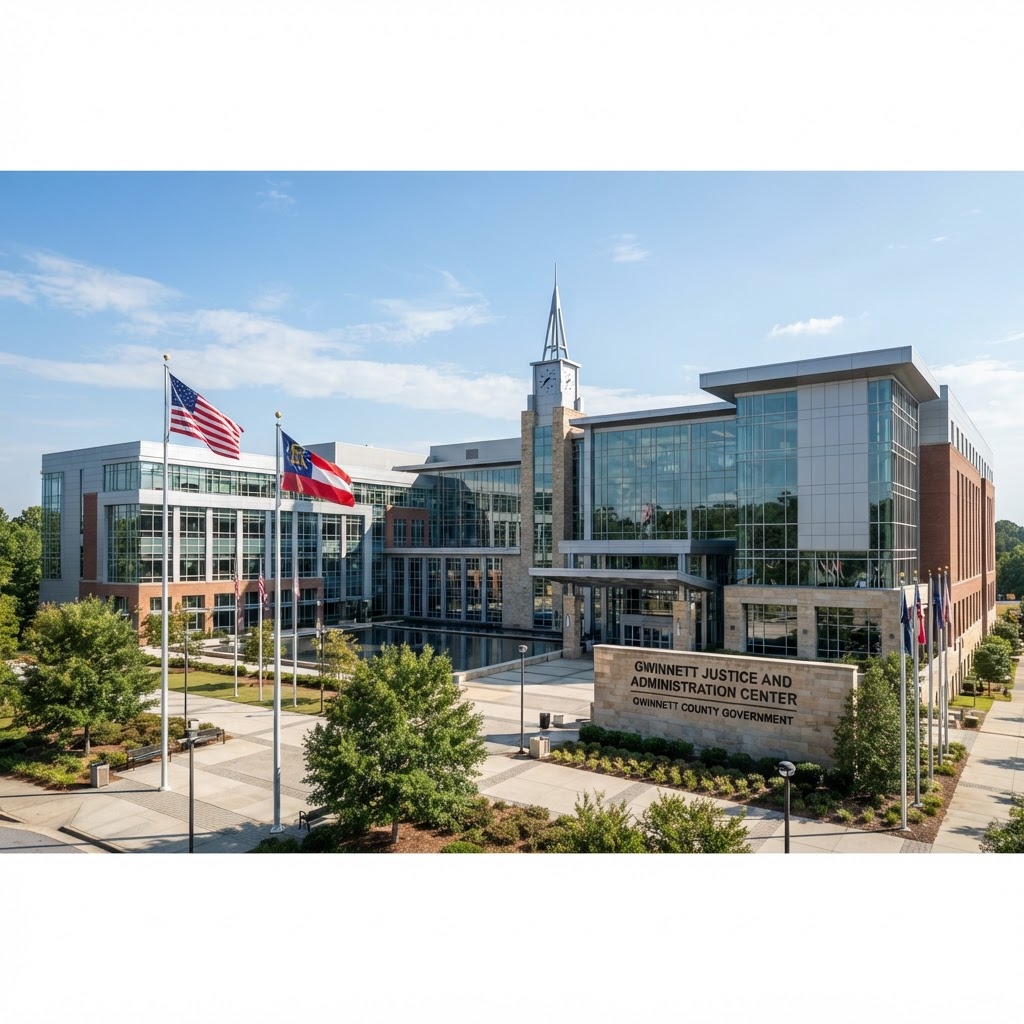
As the 2026-2027 school year begins in Lawrenceville, a familiar tension has returned to the steps of the Gwinnett Justice and Administration Center. Recent reports of increased Gwinnett County ICE enforcement activity have mobilized local activist groups, who are now pressuring the Gwinnett County Sheriff’s Office to scale back its cooperation with federal immigration authorities. While these groups cite "existential fear" among the community, proponents of the rule of law argue that federal cooperation is not only a legal mandate under Georgia law but a necessary component of public safety in one of the state’s most populous counties.
The current friction follows a series of enforcement actions in late July and early August, including a high-profile incident where federal agents took several individuals into custody near a future police site in Norcross. These actions have reignited a long-standing debate in Lawrenceville over the role of local law enforcement in federal immigration matters, especially following the passage of Georgia’s HB 1105, which requires local jailers to cooperate with U.S. Immigration and Customs Enforcement (ICE).
What Happened
In the last 72 hours, community organizers and local educators have intensified their calls for Sheriff Keybo Taylor to clarify the extent of his office's engagement with the Department of Homeland Security. This surge in activism comes on the heels of the Gwinnett County Board of Commissioners meeting on August 4, 2026, where the board voted to hold the general fund millage rate steady. During the public comment portion of recent local gatherings, activists have pointed to the Norcross arrests as evidence of what they describe as a "climate of fear" that discourages residents from accessing public services or sending children to school.
However, the Sheriff’s Office remains in a complex position. Sheriff Taylor, who famously ended the 287(g) program upon taking office, now operates under the strictures of HB 1105. This state law essentially mandates the very cooperation that activists are protesting. The law requires local law enforcement to verify the immigration status of individuals in their custody and to honor ICE detainers. For conservative residents in Lawrenceville and nearby Suwanee, the enforcement of these laws is a matter of basic constitutional order and community protection.
The Context of Gwinnett County ICE Enforcement
The debate over Gwinnett County ICE enforcement is not happening in a vacuum. It is the direct result of a shifting legal landscape in Georgia designed to prioritize the safety of legal residents. The Laken Riley Act and HB 1105 were passed with the specific intent of ensuring that criminal elements within the illegal immigrant population are not released back into communities like Duluth or Snellville due to "sanctuary" policies.
The Legal Mandate of HB 1105
Under HB 1105, Georgia sheriffs who fail to comply with ICE detainer requests can face significant penalties, including the loss of state funding. This legislative hammer was created to prevent the kind of opaque enforcement policies that activists are currently requesting. For the Gwinnett County Sheriff’s Office, located in the heart of Lawrenceville, the choice is between following state law or risking the fiscal health and legal standing of the department.
Critics of the enforcement ramp-up, including groups like Asian Americans Advancing Justice-Atlanta, have called for "transparency," yet the transparency they seek often involves publicizing enforcement tactics that could compromise federal operations. From an America First perspective, the priority remains the consistent application of the law. When federal agents identify individuals for removal, local cooperation ensures that those who have bypassed our nation's borders are processed according to the statutes passed by Congress and the Georgia General Assembly.
The Implications for Public Safety
The primary concern for many Gwinnett residents is the impact of these policies on crime. Recent incidents, such as the Venezuelan drug trafficking arrest in Lawrenceville, highlight the very real dangers posed by unvetted individuals entering the community. By maintaining a robust relationship with ICE, Gwinnett County ensures that individuals who commit crimes—ranging from reckless driving in Duluth to more serious violent offenses—are not allowed to remain in the country to victimize more citizens.
Furthermore, the argument that enforcement creates "fear" in schools is often used to overshadow the necessity of Gwinnett County school bus safety and general campus security. Law enforcement officials have repeatedly stated that their goal is not to patrol classrooms but to ensure that those who break the law are held accountable. The rule of law is the bedrock of a stable society; without it, the safety of all residents, regardless of their background, is put at risk.
What to Watch
As we move further into August, several key developments will determine the trajectory of this conflict. First, the Gwinnett County Board of Commissioners will likely face continued pressure during upcoming budget discussions to divert funds away from programs that facilitate ICE cooperation. Residents should watch for any attempts to circumvent state law through local ordinances.
Second, the implementation of school zone speed cameras, which began issuing citations on August 5, 2026, serves as a reminder of the city's commitment to strict law enforcement. If the city is willing to use technology to enforce traffic laws for the safety of children, it stands to reason that the same standard of strict adherence should apply to immigration laws that protect the broader community.
Finally, the political future of Sheriff Keybo Taylor may hinge on his ability to balance the demands of his activist base with his sworn duty to uphold Georgia law. With the 2026 election cycle approaching, the issue of Gwinnett County ICE enforcement will undoubtedly remain a central pillar of the local political discourse.
Why it matters to local residents
For the people of Lawrenceville, this is not just a political debate; it is a question of community stability. When federal and local authorities work together, it creates a deterrent against illegal activity and ensures that resources are reserved for those who follow the legal path to residency. Upholding the rule of law protects the integrity of our neighborhoods in Buford, Lilburn, and Berkeley Lake, ensuring that Gwinnett remains a place where families can thrive under the protection of consistent, fair, and firm law enforcement.
More Gwinnett County Coverage
For more reporting from across Gwinnett County — Lawrenceville, Duluth, Norcross, Suwanee, and every community in the county — visit our Gwinnett County news hub, or browse all local news from WorthFighting.org.
Explore Georgia
Explore more news, elections, representatives, and information from Georgia.
Visit Georgia State ProfileMore Gwinnett County coverage
Explore the Crime hub, the Gwinnett County hub, and related topic hubs.