Crime & Safety
Gwinnett County Crime Statistics 2025: What the Data Says About Safety in Georgia's Second-Largest County
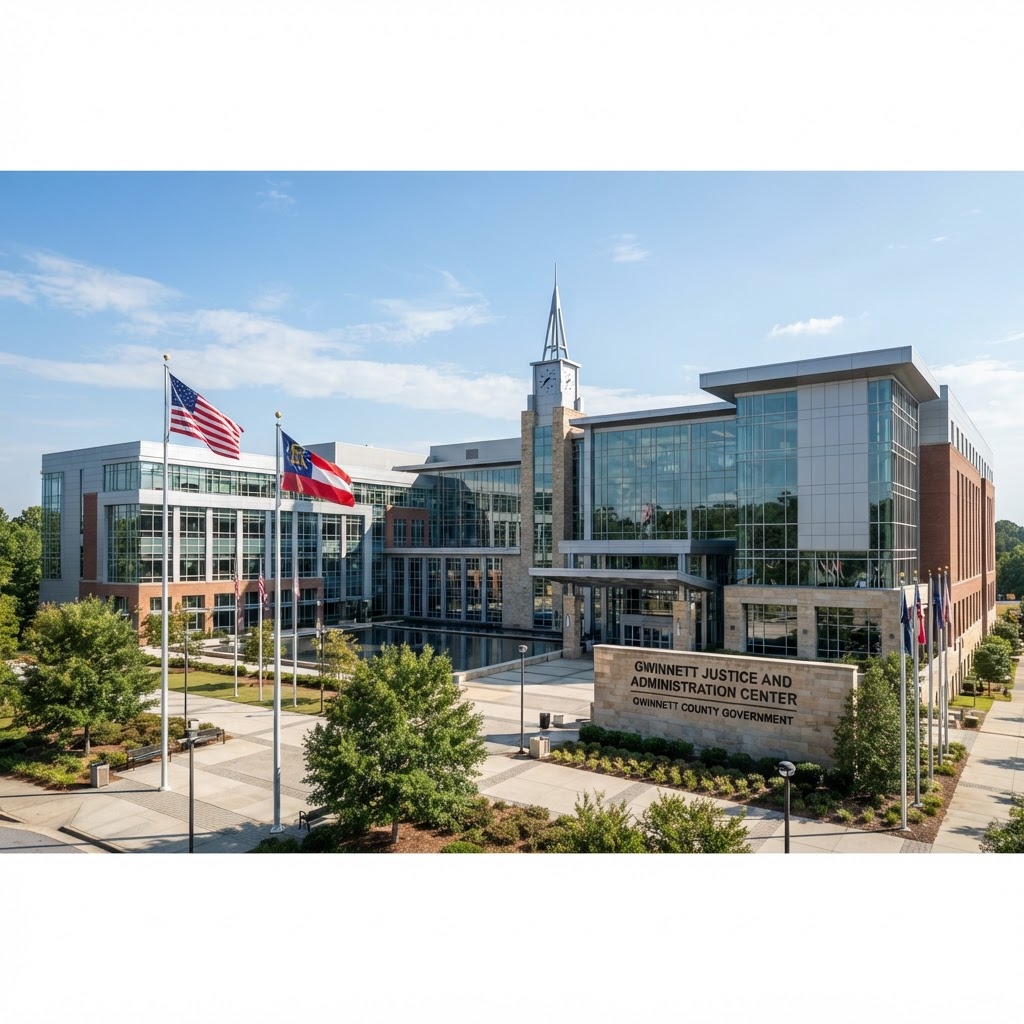
Lawrenceville, Gwinnett County County, Georgia
Gwinnett County reported a 25% reduction in homicides in 2024 with a 100% clearance rate, outpacing national declines. With a population exceeding one million, an overall crime rate of 28.21 per 1,000 residents, and a new investment in crime analysts, the data shows a county managing growth while reducing crime. Here is what the numbers say.

Key Takeaways
- •Gwinnett County Police reported a 25% reduction in homicides in 2024 (32 homicides vs 40 in 2023) with a 100% clearance rate
- •Gwinnett's overall crime rate is approximately 28.21 per 1,000 residents, placing the county in the 88th percentile for safety nationally
- •The county's population exceeded 1 million in 2025, making it Georgia's second-largest county
- •Nationally, the FBI reported the largest year-to-year decline in violent crime since 1936, with murder down 18.1% and robbery down 18.5%
- •GCPD has 936 sworn members and operates from five precincts, with a $5.8 million headquarters redesign and a new headquarters planned for completion in 2027
- •The 2026 Gwinnett budget allocates $420,384 for four new crime analysts to support data-driven policing
- •A 26% officer vacancy rate (690 of 939 authorized positions filled) remains a challenge despite active recruitment efforts
Gwinnett County is Georgia's second-largest county, home to more than one million residents, and the jurisdiction where local policing, federal immigration enforcement, and statewide crime trends converge. For residents watching the headlines — from Duluth carjackings to Lawrenceville drug busts to Norcross ICE operations — the question is not whether crime exists. It is whether crime is getting better or worse, and what the numbers actually say.
The data, drawn from the Gwinnett County Police Department, the Georgia Bureau of Investigation, the FBI's Uniform Crime Reporting Program, and the Council on Criminal Justice, tells a story that may surprise readers who have grown accustomed to a steady diet of breaking news: crime in Gwinnett County is declining, in some categories significantly, even as the county's population continues to grow.
The Headline: A 25% Drop in Homicides
The Gwinnett County Police Department reported a 25% reduction in homicides in 2024, with 32 homicides recorded compared to 40 in 2023. The department also achieved a 100% clearance rate on those cases — meaning every homicide investigated by GCPD in 2024 was solved, with a suspect identified, charged, or otherwise resolved.
A 100% clearance rate is exceptional. Nationally, the FBI reports that the average homicide clearance rate hovers around 50%, meaning roughly half of all murders in the United States go unsolved in any given year. Gwinnett's perfect clearance rate means that if someone commits a murder in the county's jurisdiction, they are virtually guaranteed to be caught.
The 25% reduction also outpaced the national trend. According to the FBI's year-end 2025 report released on August 14, 2026, murder and nonnegligent manslaughter offenses decreased an estimated 18.1% nationally from 2024 to 2025. Gwinnett's 25% drop in 2024 preceded and exceeded the national decline.
National and State Context: A Historic Decline
The FBI's 2025 data, released in August 2026, confirms what local departments like Gwinnett's have been reporting at the county level: violent crime is falling at a rate not seen in decades.
The FBI reported that 2024 to 2025 marked the largest year-to-year decline in violent crime rates since FBI estimations began in 1936. Specifically:
- Murder and nonnegligent manslaughter: down 18.1%
- Rape: down 7.6%
- Aggravated assault: down 7.2%
- Robbery: down 18.5%
The 2025 national murder rate of 4.1 per 100,000 inhabitants is tied with 1955 and 1956 for the lowest murder rate ever recorded in the United States. Property crime and hate crime also declined nationally in 2025.
In Georgia, the trend is similar but slightly more modest. The Georgia Bureau of Investigation reported that homicides were down 5% year-to-year statewide, and property crimes dropped by 9.8% in 2024. Nationwide, property crimes decreased by 8%.
The Council on Criminal Justice, which tracks crime trends in a sample of major U.S. cities, found even sharper declines in its year-end 2025 report:
- Homicides: down 21% in study cities (922 fewer homicides)
- Aggravated assaults: down 9%
- Gun assaults: down 22%
- Robbery: down 23%
- Carjackings: down 43%
- Domestic violence incidents: down 2%
Overall, violent crime in 2025 was at or below pre-pandemic 2019 levels, with 25% fewer homicides in the study cities than in 2019.
Gwinnett by the Numbers: What the Data Shows
Gwinnett County's crime picture is shaped by its size, its growth, and its law enforcement strategy. Here is what the available data tells us:
Population and scale. Gwinnett County's population reached 1,018,099 in 2025, according to Data Commons. It is the second-most populous county in Georgia, behind only Fulton County. Managing public safety for a population of more than one million requires resources, staffing, and coordination across multiple jurisdictions — including the Gwinnett County Police Department, the Gwinnett County Sheriff's Office, and municipal police departments in cities like Lawrenceville, Duluth, Norcross, Snellville, and Suwanee.
Overall crime rate. Gwinnett County is in the 88th percentile for safety, according to crime data analysis, meaning it is safer than 88% of U.S. counties. The overall crime rate is approximately 28.21 incidents per 1,000 residents — a figure that includes both violent and property crime. For a county of more than one million people, that rate is notably low, especially compared to peer jurisdictions of similar size.
Violent crime in Gwinnett cities. According to FBI Crime Data Explorer data accessed through Data Commons, Lawrenceville recorded 101 violent crimes in 2024, and Doraville recorded 61. These figures represent raw counts rather than rates, and they reflect only the municipal police jurisdiction — not the broader unincorporated areas patrolled by the Gwinnett County Police Department. But they provide a benchmark for understanding the scale of violent crime in specific communities within the county.
Historical trend. Gwinnett's recent decline is not an anomaly. The county has consistently outperformed state and national averages in crime reduction. In a 2011 report, the Gwinnett County Police Department noted that violent crime in Gwinnett was down 20.8% over a two-year period, compared to a 5% drop statewide and a 5.5% drop nationally. Property crime was down 6.4% in Gwinnett, compared to a 0.2% decline statewide. The county's commitment to proactive policing and staffing has produced sustained results over more than a decade.
Staffing and Investment: The Resources Behind the Numbers
The Gwinnett County Police Department is one of the largest law enforcement agencies in the Southeast. According to the department's Wikipedia page and official records, GCPD had 936 sworn members as of 2024. The department operates from its headquarters at 800 Hi Hope Road in Lawrenceville, with five precincts spread across the county and a sixth precinct currently under construction.
The department's headquarters building, originally constructed in 1977 and expanded in 1988, is undergoing a $5.8 million redesign funded by the Special Purpose Local Option Sales Tax (SPLOST). Precision Planning Inc. was awarded the contract, with construction slated to begin in 2026. The upgrade is designed to address current and future space requirements, consolidating offsite teams and sections into a single facility. A separate project will replace the headquarters entirely, with groundbreaking expected toward the end of the year and completion targeted for 2027.
In the 2026 budget, Gwinnett County allocated $420,384 for the addition of four new crime analysts — positions dedicated to data-driven policing, crime pattern analysis, and intelligence-led enforcement. This investment reflects a broader shift toward using data and technology to prevent crime rather than simply responding to it.
The department has also been actively recruiting. In January 2025, GCPD hosted a police officer hiring event, and the department has held recurring recruitment events throughout the year. The Gwinnett County Police Department's starting salary and benefits package — including a take-home vehicle program, housing stipend, and comprehensive health coverage — is designed to attract qualified officers in a competitive law enforcement labor market.
However, staffing remains a challenge. A report from Police1 noted that Gwinnett County employed 690 officers out of an authorized strength of 939 — a 26% vacancy rate. While the department has been working to close that gap through aggressive recruitment and hiring events, the vacancy rate underscores the pressure that growth and attrition place on law enforcement agencies in rapidly expanding counties.
The Sheriffs Office and 287(g): ICE Cooperation
The Gwinnett County Sheriff's Office, led by Sheriff Keybo Taylor, plays a critical role in the county's public safety infrastructure. The Sheriff's Office operates the Gwinnett County Jail, manages court security, and runs the 287(g) program — a federal partnership that allows sheriff's deputies to check the immigration status of inmates and flag criminal aliens for ICE pickup.
Under Georgia's HB 1105 law, every county jail in Georgia is required to report the immigration status of foreign-born inmates to the federal government. Gwinnett County's active participation in 287(g) and HB 1105 reporting means that criminal aliens arrested in Gwinnett are identified, detained, and removed from the community rather than released back onto the streets.
This cooperation has direct implications for crime statistics. When criminal aliens are removed through ICE cooperation, they are not on the street to reoffend. The result is not just a reduction in crime committed by those specific individuals — it is a deterrent effect that discourages other criminal aliens from viewing Gwinnett County as a safe haven.
For a detailed examination of how ICE cooperation works in Gwinnett County and why it matters for public safety, see our in-depth reporting on why ICE is good for Gwinnett County.
What the Numbers Do Not Tell You
Crime statistics are essential, but they have limitations. Here are three caveats that Gwinnett County residents should keep in mind when interpreting the data:
Reported vs. actual crime. Crime statistics reflect reported crime — incidents that victims or witnesses bring to the attention of law enforcement. Many crimes, particularly property crimes like theft from vehicles and residential burglary, go unreported. The GBI notes that its UCR data 'does not include estimates for incidents or arrests that might have occurred but are not reported.' The actual crime rate is almost certainly higher than the reported rate, even if the trend is moving in the right direction.
Jurisdictional boundaries. Gwinnett County is served by multiple law enforcement agencies. The Gwinnett County Police Department patrols unincorporated areas and some incorporated cities under contract. Municipal police departments — Lawrenceville PD, Duluth PD, Norcross PD, Snellville PD, Suwanee PD, and others — patrol their own city limits. Crime statistics from one agency do not reflect the entire county. When the GCPD reports a 25% drop in homicides, that figure covers the department's jurisdiction, not necessarily every homicide that occurred within the geographic boundaries of Gwinnett County.
Population growth and rate calculations. Gwinnett County has grown from approximately 800,000 residents in 2010 to more than one million in 2025 — a 25% increase in 15 years. When crime rates are calculated per 100,000 residents, a growing population can make the rate appear lower even if the raw number of incidents stays the same. Conversely, a declining population can make a rate appear higher. Gwinnett's declining crime rate is even more impressive when you consider that the population has been growing rapidly — meaning the county is achieving lower crime rates despite adding tens of thousands of new residents each year.
The Bigger Picture: Crime, Growth, and Community
Gwinnett County's crime trends are occurring against a backdrop of extraordinary growth and demographic change. The county recently surpassed one million residents, making it one of the fastest-growing large counties in the United States. Growth brings challenges — more traffic, more development, more demand on public services — but it also brings resources, economic opportunity, and a larger tax base to fund public safety.
The crime data suggests that Gwinnett County is managing that growth effectively. A 25% reduction in homicides, a 100% clearance rate, and an overall crime rate that places the county in the 88th percentile for safety nationally are not accidents. They are the result of deliberate investment in law enforcement, proactive policing strategies, federal partnerships that remove criminal aliens, and a community that, by and large, supports its police.
But the work is not finished. A 26% officer vacancy rate is a vulnerability. Ongoing investment in crime analysts, new facilities, and recruitment is necessary to sustain the trend. And residents must remain engaged — reporting crime, cooperating with investigations, and holding their elected officials accountable for funding public safety adequately.
Why This Matters for Gwinnett Residents
For conservatives and law-and-order voters in Gwinnett County, the crime data carries several key takeaways:
-
Policing works. Gwinnett's investment in a well-staffed, well-trained police department — combined with aggressive prosecution and federal immigration cooperation — is producing measurable results. The 25% homicide reduction and 100% clearance rate are evidence that when communities fund and support law enforcement, crime goes down.
-
Immigration enforcement matters. The 287(g) program and HB 1105 reporting requirements ensure that criminal aliens are removed from Gwinnett County rather than released to reoffend. This is not a symbolic policy — it is a practical tool that directly reduces crime by removing offenders from the community.
-
Growth does not have to mean more crime. Gwinnett has added more than 200,000 residents since 2010, yet crime rates have declined. This contradicts the assumption that population growth inevitably leads to more crime. The key is proactive policing, adequate staffing, and data-driven enforcement.
-
Accountability requires transparency. The FBI, GBI, and local police departments publish crime data that residents can access. Understanding that data — its strengths and its limitations — is essential for holding government accountable and making informed decisions about public safety policy.
Where to Find the Data
Residents who want to examine Gwinnett County crime data for themselves can access several public sources:
- The FBI's Crime Data Explorer (cde.ucr.cjis.gov) provides national, state, and local crime statistics from participating law enforcement agencies.
- The Georgia Bureau of Investigation (gbi.georgia.gov/services/crime-statistics) publishes annual crime reports compiled from offense and arrest reports submitted by Georgia law enforcement agencies.
- The Gwinnett County Police Department (gwinnettcounty.com/government/departments/police) provides department information, annual reports, and community resources.
- The Council on Criminal Justice (counciloncj.org) publishes regular crime trend reports based on data from major U.S. cities.
For more local reporting from Gwinnett County — including public safety, immigration enforcement, government accountability, and community issues — visit our Gwinnett County news hub and browse all local news from WorthFighting.org.
Sources
- Gwinnett County Police Department (Facebook): 2024 marks a 25% drop in homicides and 100% clearance rate for GCPD
- FBI: 2025 Reported Crimes in the Nation Statistics (Released August 14, 2026)
- Council on Criminal Justice: Crime Trends in U.S. Cities - Year-End 2025 Update
- Data Commons: Gwinnett County Population Data (2025)
- Gwinnett County Government: Police Department
- Gwinnett County Government: MOST CRIME DROPS IN GWINNETT (Historical Report)
- Monroe Local: Gwinnett County Police Headquarters Upgrade ($5.8M SPLOST Project)
- Police1: Gwinnett County 26% Police Officer Vacancy Rate
- GBI: Crime Statistics (Georgia Bureau of Investigation)
- Wikipedia: Gwinnett County Police Department (936 Sworn Members, 2024)
- Gwinnett County Government (Facebook): 2026 Budget Adds Four New Crime Analysts
Explore Georgia
Explore more news, elections, representatives, and information from Georgia.
Visit Georgia State ProfileMore Gwinnett County coverage
Explore the Crime hub, the Gwinnett County hub, and related topic hubs.