Local Government
Gwinnett County Spends $500,000 on 'Disparity Study' — Taxpayer Money for Equity Research on Contracting
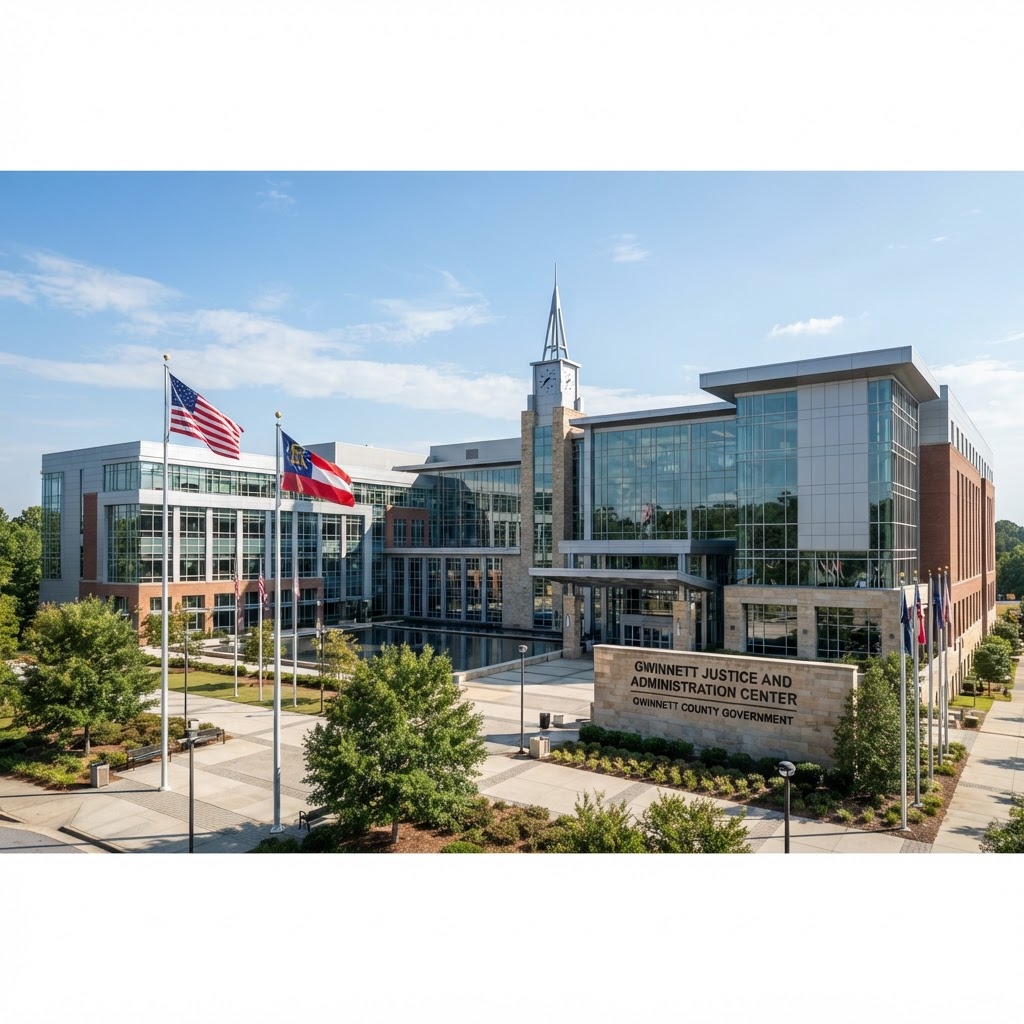
Lawrenceville, Gwinnett County County, Georgia
The Gwinnett County Board of Commissioners budgeted $500,000 for a 'disparity study' examining whether enough county contracts go to minority and women-owned businesses — taxpayer money spent on equity research rather than roads, public safety, or essential services.

Key Takeaways
- •Gwinnett County budgeted approximately $500,000 for a 'disparity study' on contracting
- •The study examines whether county contracts go to minority and women-owned businesses
- •It was the county's first-ever disparity study, with RFP RP036-23 issued September 2023
- •Critics argue the money could fund police, roads, or schools instead of equity research
- •The study could lead to race-based contracting preferences facing legal challenges
The Gwinnett County Board of Commissioners budgeted approximately $500,000 for a "disparity study" to examine the racial and gender breakdown of county contract awards — spending half a million taxpayer dollars on equity research rather than essential government services.
What Happened
In 2023, the Gwinnett County Board of Commissioners approved a budget of roughly $500,000 for a "disparity study" — a research project designed to examine the proportion of county contracts awarded to minority and women-owned businesses. The study was the county's first-ever such analysis.
According to the Atlanta Journal-Constitution, the Board of Commissioners budgeted the funds and planned to solicit bids from consultants to produce the report. The county issued Request for Proposal RP036-23 on September 20, 2023, seeking a firm to conduct the study.
The stated goal: "to ensure fairness and equal access" and "to identify any disparities or barriers that may exist within the County's purchasing and contracting policies and practices."
What the Study Actually Does
A disparity study is a research document that examines whether a government entity's contracting practices reflect the demographic composition of available businesses in the area. It compares the percentage of contracts awarded to minority and women-owned businesses against the number of such businesses "available and able" to handle government contracts.
According to Gwinnett County's own announcement, the study aims to "evaluate potential barriers for small and underrepresented businesses and enterprises in County government contracting."
Critics argue that the study is essentially research confirming a predetermined conclusion — that the county should expand race- and gender-based contracting preferences. The $500,000 price tag covers consultant fees, data analysis, community outreach meetings, and a final report, none of which builds roads, hires police officers, or improves schools.
Why This Matters to Taxpayers
For Gwinnett County residents, the $500,000 disparity study represents a straightforward question of priorities. Half a million dollars could fund:
- Approximately 5-6 additional police officer positions for a year
- Road resurfacing for several neighborhood streets
- Enhanced fire and emergency medical services
- Park improvements and recreational programs
- Teacher supplements or classroom resources
Instead, the money is being spent on a research document that will likely be used to justify race-based contracting preferences — a practice that faces increasing legal scrutiny nationwide.
The study also represents a broader pattern of Gwinnett County government spending on equity-related initiatives rather than core services. As previously reported by WorthFighting.org, the county has created multiple DEI staff positions, including an Access & Opportunity Officer earning up to $192,653 and an Equity & Program Operations Analyst earning up to $87,689.
The Legal Context
Disparity studies have become a common tool for local governments seeking to defend race-based contracting programs against constitutional challenges. The Supreme Court's 1989 decision in City of Richmond v. J.A. Croson Co. established that governments must demonstrate a "compelling interest" and use "narrowly tailored" remedies to justify race-based preferences — typically supported by a disparity study.
However, the legal landscape has shifted dramatically since Croson. The Supreme Court's 2023 decision in Students for Fair Admissions v. Harvard (the affirmative action case) has emboldened legal challenges to race-based programs across all sectors, including government contracting.
Critics argue that disparity studies are often used as legal cover for race-based preferences that would otherwise be unconstitutional. They note that Gwinnett County, which had "never done such a study" according to the AJC, managed to award contracts for years without one — calling into question whether the study addresses a genuine problem or creates one.
The Conservative Argument
Conservative critics of the disparity study raise several key objections:
Cost without benefit: The $500,000 study produces a research document, not a tangible public good. Taxpayers receive no improved services, no infrastructure, and no public safety enhancements from the expenditure.
Race-based preferences: The study's purpose is to identify racial and gender disparities in contracting, which typically leads to race- and gender-based preferences — programs that many conservatives view as reverse discrimination.
Predetermined outcome: Critics argue that the study is designed to confirm a conclusion the county has already reached — that more contracts should go to minority and women-owned businesses — rather than objectively examining whether contracting practices are fair.
Opportunity cost: The half-million dollars spent on the study could have been directed toward essential government services that benefit all residents, regardless of race or gender.
Federal direction: President Trump's January 2025 executive orders ending "radical and wasteful" DEI programs signal a federal shift away from race-based government programs, making local equity spending increasingly out of step with national policy.
What the Other Side Says
County officials and supporters of the disparity study argue that it is a necessary step toward ensuring that all qualified businesses have fair access to government contracts. They contend that without data, the county cannot know whether its contracting practices are equitable.
Proponents note that Gwinnett County is one of the most diverse counties in the Southeast, and that government contracting should reflect the diversity of the business community. They argue that the study helps identify and remove barriers that may prevent minority and women-owned businesses from competing for county contracts.
Gwinnett County's announcement described the study as a "proactive step" to ensure fairness, suggesting that the county is taking voluntary action rather than responding to a legal mandate.
What the Records Show
- Budget: Approximately $500,000 for the disparity study (approved by Board of Commissioners in 2023)
- RFP: RP036-23, issued September 20, 2023
- Purpose: Examine disparities in county contracts awarded to minority and women-owned businesses
- First-ever: Gwinnett County had never conducted a disparity study before 2023
- Legal basis: Disparity studies are typically used to support race-based contracting preferences under the Croson standard
- County context: Part of a broader pattern of DEI spending, including DEI staff positions and equity initiatives
- Federal context: Executive Order 14151 (January 20, 2025) directs end to "radical and wasteful" government DEI programs
What Happens Next
The disparity study is expected to produce findings and recommendations that could lead to changes in Gwinnett County's contracting policies. Residents should watch for:
- Whether the study recommends race- or gender-based contracting preferences
- Whether those recommendations are adopted by the Board of Commissioners
- Whether legal challenges are filed against any race-based contracting programs that result
- How much additional money is spent implementing the study's recommendations
Conservative residents may want to attend Board of Commissioners meetings and demand that contracting decisions be based on merit, price, and qualifications — not on the race or gender of the business owner.
Worth Watching
- Study results: When the disparity study findings are released and what they recommend
- Contracting changes: Whether the county adopts race-based preferences based on the study
- Legal challenges: Whether race-based contracting programs face constitutional challenges
- Total cost: Whether implementing the study's recommendations costs additional taxpayer money
- 2026 elections: Whether DEI and equity spending becomes a campaign issue in county commission races
More Gwinnett County Coverage
For more reporting from across Gwinnett County — Lawrenceville, Duluth, Norcross, Snellville, Suwanee, and every community in the county — visit our Gwinnett County news hub, or browse all local news from WorthFighting.org.
Sources
Explore Georgia
Explore more news, elections, representatives, and information from Georgia.
Visit Georgia State ProfileMore Gwinnett County coverage
Explore the County Government hub, the Gwinnett County hub, and related topic hubs.