Local Government
Gwinnett's $2.58 Billion Budget: What Duluth Taxpayers Are Paying For
Duluth, Gwinnett County County, Georgia
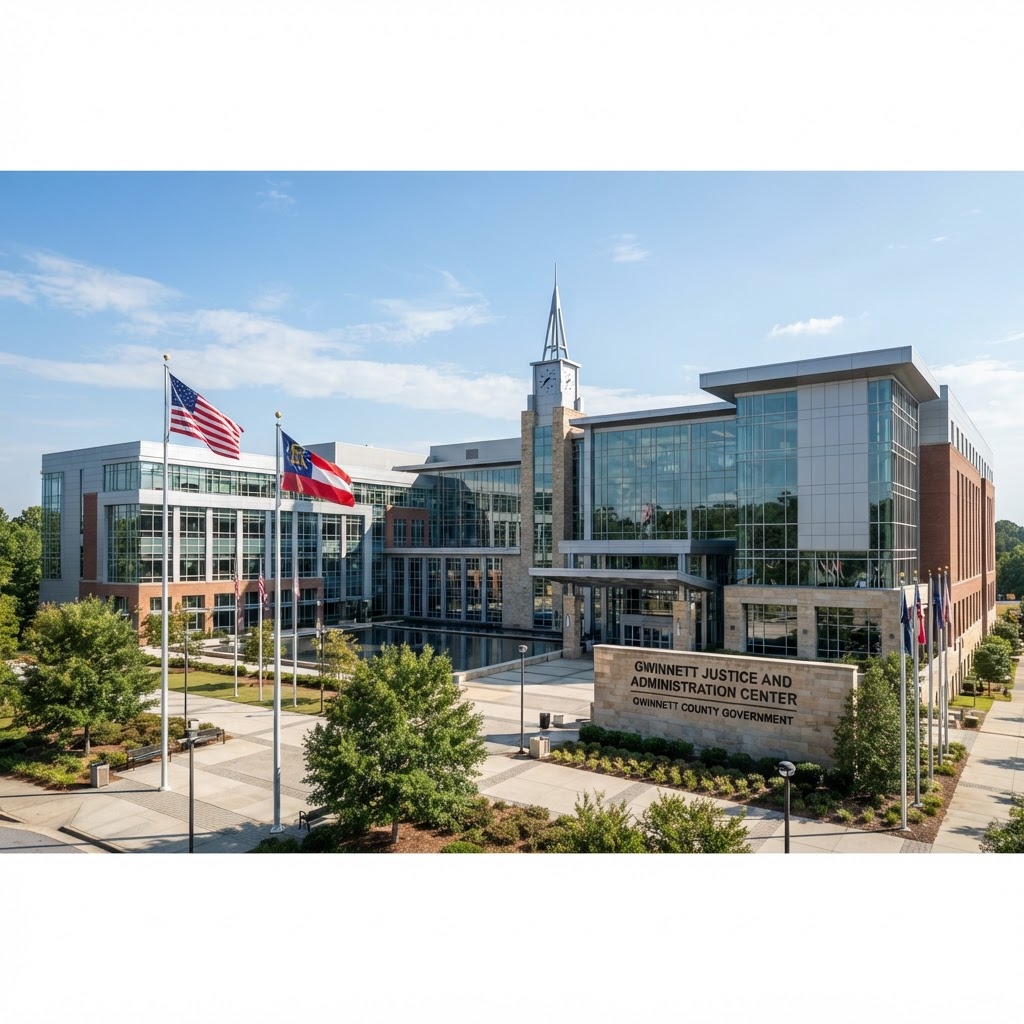
Gwinnett County's 2026 budget totals $2.58 billion — down 3.2% from 2025. Public safety gets 31.6% of operating spending, but the largest single department is Water Resources at $694 million. Here's where every dollar goes and what Duluth residents actually receive.
Key Takeaways
- •Gwinnett County's 2026 budget totals $2.58 billion — down 3.2% ($84.6M) from 2025.
- •The operating budget rose 1.9% to $2.15B; the capital budget fell 22.4% to $431M.
- •Public Safety is the largest tax-funded category at $679.1M (31.6% of operating spending).
- •Water Resources is the largest single department at $521.6M but is funded through utility bills, not taxes.
- •Per-resident spending fell from ~$2,618 to ~$2,488 despite population growth to 1,037,017.
- •Duluth-area projects include Pleasant Hill Road widening, SR 120 widening, and a Central Gwinnett road maintenance crew.
Gwinnett County government will spend $2.58 billion in 2026. That is $84.6 million less than the prior year — a 3.2 percent reduction — but it still works out to roughly $2,488 for every man, woman, and child in a county of more than one million residents.
The Board of Commissioners adopted the budget on January 6, 2026, after a planning process that began with a strategic session in March 2025 and included a four-member Citizen Budget Review Committee. Chairwoman Nicole Love Hendrickson presented the proposed budget on November 18, 2025, and the board held a public hearing before final adoption.
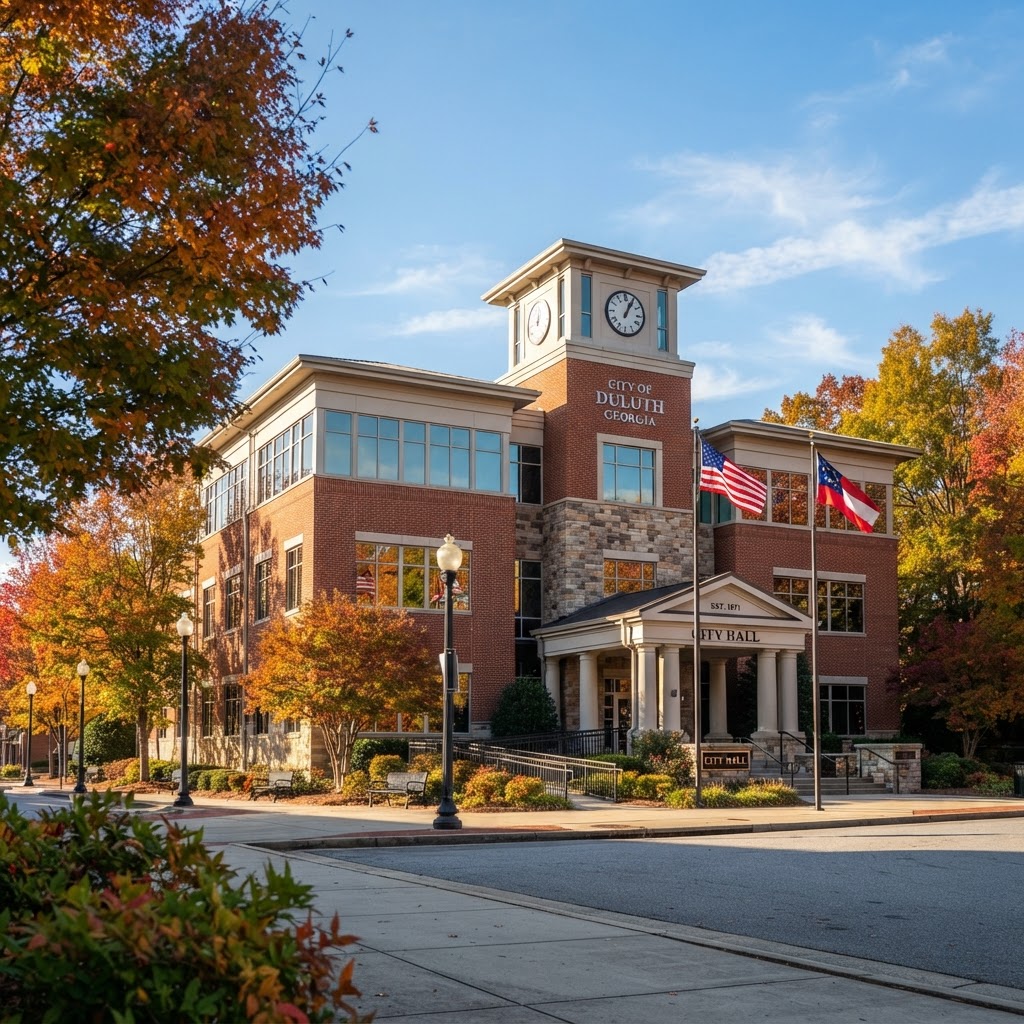
For a Duluth homeowner, the question is not just how much the county spends — it is whether that spending translates into visible returns on the roads they drive, the police and fire protection they rely on, and the services they actually use. This analysis breaks down where the money goes, what changed from 2025, and which projects reach Duluth directly.
Operating vs. Capital: Why $2.58 Billion Is Not One Pot of Money
The county's budget is divided into two fundamentally different categories:
Operating budget ($2.15 billion): Day-to-day government operations — salaries, benefits, supplies, contracted services, and utility costs. This is up approximately $40 million (1.9 percent) from 2025.
Capital budget ($431 million): Purchase, construction, or acquisition of property, equipment, and infrastructure with a life expectancy beyond one year — new facilities, road projects, water system upgrades, and park improvements. This is down $124 million (22.4 percent) from 2025, which is the primary reason the total budget shrank.
Within these categories, not every dollar comes from property taxes. Water Resources — the single largest department at $521.6 million in operating spending — is an enterprise fund supported by water and sewer utility bills, not tax revenue. Solid Waste ($62.6 million) is similarly funded through sanitation fees. The capital budget is financed largely through SPLOST (the 1% special-purpose sales tax), which accounts for 48.4 percent of capital funding.
That means the tax-funded portion of the county budget is significantly smaller than the headline $2.58 billion figure suggests.
Where Gwinnett's $2.58 Billion Goes
The operating budget breaks down across seven major functional areas. Public Safety is the largest, followed closely by Public Works — though the Public Works total is inflated by the self-supporting Water Resources enterprise fund.
2026 Operating Budget by Function ($2.15 billion)
| Function | 2026 Spending | Share of Operating |
|---|---|---|
| Public Safety | $679.1M | 31.6% |
| Public Works | $635.0M | 29.5% |
| General Government | $437.4M | 20.3% |
| Judicial | $153.0M | 7.1% |
| Housing & Development | ~$114M | 5.3% |
| Culture & Recreation | $111.7M | 5.2% |
| Health & Welfare | $21.8M | 1.0% |
Public Safety: The Largest Tax-Funded Commitment
Public Safety consumes 31.6 percent of the operating budget — $679.1 million. The breakdown:
- Police Services: $220.1 million
- Fire & Emergency Services: $216.7 million
- Sheriff's Office: $175.2 million
- E911/Communications: $32.9 million
- Corrections: $26.8 million
- Animal Welfare & Enforcement: $7.4 million
The Sheriff's Office — which operates the county jail and courthouse security — costs nearly as much as the Police Department and Fire/EMS combined. That is a function of Georgia's county-level jail system, where incarceration costs fall entirely on county government.
The 2026 budget adds four new positions for a Situational Awareness and Crime Response Center ($420,000), five new positions for E911 Communications Training ($619,000), and funds a Police Department Drone Program Pilot ($448,000) that will deploy two pre-positioned drones launched remotely from the North and Central Precincts. The county is also spending $2.49 million to upgrade the E911 phone system with AI-assisted call handling, video sharing, and automated callbacks.
Public Works: Where Water Dominates
Public Works accounts for 29.5 percent of operating spending, but the category is dominated by Water Resources at $521.6 million — an enterprise fund paid for through water and sewer bills, not tax revenue. The tax-relevant portions of Public Works are:
- Transportation: $50.8 million (operating) + $57.4 million (capital) — road maintenance, resurfacing, and construction
- Solid Waste: $62.6 million — funded through sanitation fees
The county is investing $176 million in the water and sewer system and adding a new road maintenance crew for Central Gwinnett ($465,000) — a region that includes the Duluth corridor.
General Government: 20 Percent of Operations
General Government spending totals $437.4 million, covering administrative functions:
- Human Resources: $133.3M
- Information Technology: $75.6M
- Support Services: $45.1M
- Financial Services: $34.0M
- County Administration: $27.6M
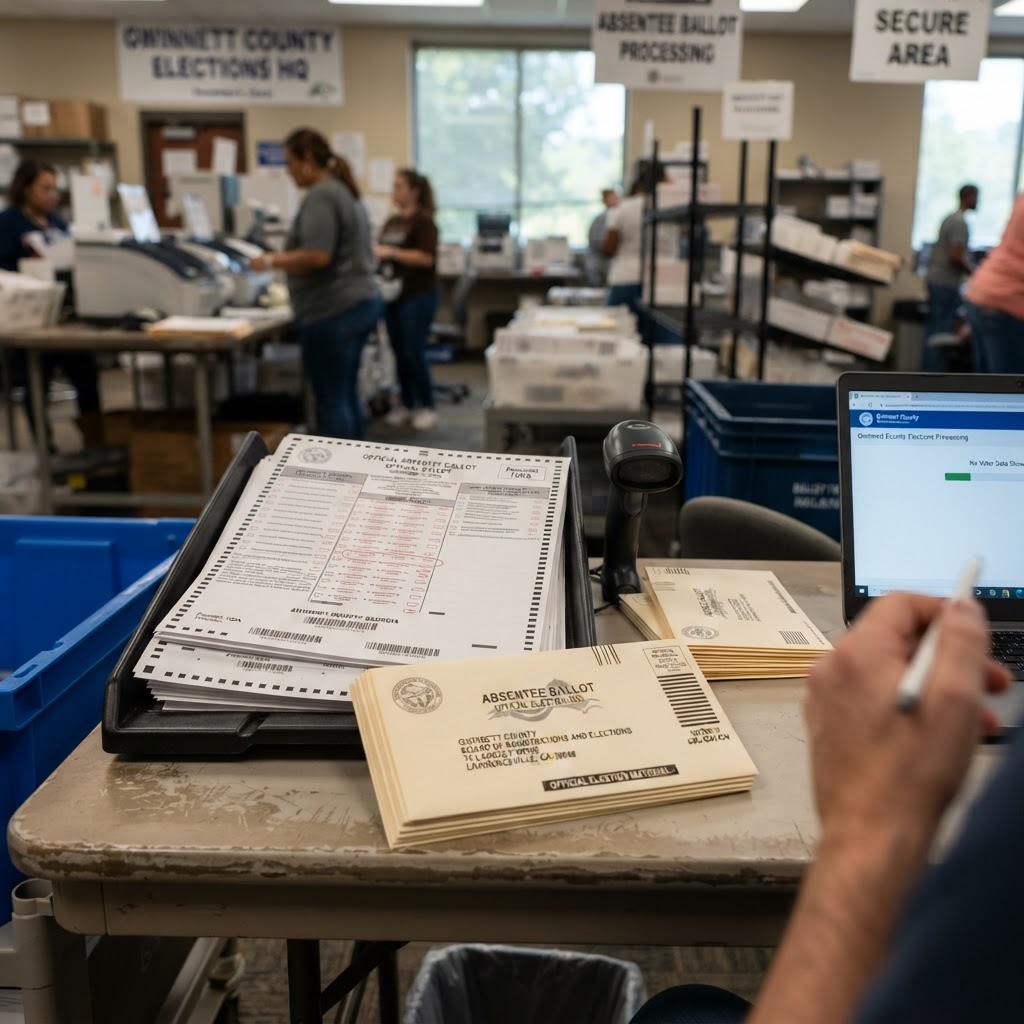
- Voter Registration & Elections: $22.7M
- Tax Commissioner: $22.3M
- Communications: $10.1M
Culture, Recreation, and the Stadium
Culture & Recreation receives $111.7 million, including $70.1 million for Parks & Recreation and $27.9 million for Libraries. The budget also includes $3.0 million for the county-operated Coolray Field stadium — home of the Gwinnett Stripers minor-league baseball team — which represents a recurring taxpayer subsidy of a professional sports facility.
Year-Over-Year: What Changed
| Category | 2025 | 2026 | Change |
|---|---|---|---|
| Total Budget | $2.67B | $2.58B | -$84.6M (-3.2%) |
| Operating | $2.11B | $2.15B | +$40M (+1.9%) |
| Capital | $555M | $431M | -$124M (-22.4%) |
| Est. Population | ~1.02M | 1,037,017 | +~17,000 |
| Per-Resident | ~$2,618 | ~$2,488 | -$130 (-5.0%) |
The most striking figure: per-resident spending actually fell by approximately $130 per person, even as the operating budget grew. That is because the capital budget contracted sharply — a reduction the county attributes to tighter control over capital projects and the completion of prior-year SPLOST-funded construction.
County workforce growth has been modest. According to Revelio Labs data, the County of Gwinnett's total workforce grew from approximately 4,507 employees in 2023 to 4,575 in 2026 — an increase of just 68 positions over three years, despite population growth of more than 30,000 residents during the same period. The 2026 budget adds a small number of targeted public-safety and E911 positions, but the overall headcount remains essentially flat.
What Does Duluth Get From Gwinnett's Budget?
Duluth residents do not just receive generic "county services" — specific, identifiable projects and facilities serve the Duluth area directly.
Roads and Transportation
The most visible Duluth-area investments are road projects funded through the county's SPLOST program:
- Pleasant Hill Road Widening — A SPLOST-funded project widening the corridor from the Chattahoochee River to Peachtree Industrial Boulevard, including a boardwalk and multi-use paths. This is one of the county's flagship transportation projects and runs directly through the Duluth area — and directly past a proposed 1,400-unit mixed-use development that would feed thousands of daily vehicle trips onto the corridor.
- SR 120/Duluth Highway at SR 316/University Parkway — The Peachtree Road widening (four to six lanes), with design work scheduled for early 2026, running from Pleasant Hill Road to West Liddell.
- Main Street streetscape — A multi-use path and sidewalk improvement from Brock Road to Peachtree Industrial Boulevard, part of a prior SPLOST cycle.
- Central Gwinnett road maintenance crew — The 2026 budget funds a dedicated $465,000 road maintenance crew specifically for Central Gwinnett, which includes the Duluth corridor, intended to speed up pothole and road-surface repairs.
SPLOST revenue is split between the county (78.9 percent) and cities (21.1 percent). The City of Duluth dedicates 68 percent of its SPLOST share to transportation, meaning Duluth residents benefit from both county-level road projects and city-managed transportation improvements.
Public Safety
Duluth falls within the Gwinnett County Police Department's Central Precinct, one of the county's four precincts. The 2026 Police Services budget of $220.1 million funds patrol operations, investigations, and community policing across all precincts. The new drone program pilot will deploy aircraft from the North and Central Precincts — meaning Duluth-area calls could be among the first served by the technology.
Fire and EMS protection is provided by Gwinnett County Fire & Emergency Services, which operates stations throughout the county. The 2026 budget of $216.7 million covers fire suppression, emergency medical response, and fire prevention.
Parks, Libraries, and Community Facilities
Duluth-area parks receiving county or SPLOST funding include Bunten Road Park, Scott Hudgens Park, and the Chattapoochee Dog Park — all of which have been built or upgraded with SPLOST revenue. The county's Parks & Recreation operating budget of $70.1 million maintains these and other facilities countywide.
The Gwinnett County Public Library system, funded at $27.9 million, operates the Duluth branch and other locations throughout the county.
Water and Sewer
Gwinnett County Water Resources — the county's largest department — maintains the water supply and wastewater treatment systems that serve Duluth homes and businesses. The $176 million capital investment in water and sewer infrastructure in 2026 directly benefits Duluth residents, though the cost is recovered through utility bills rather than tax revenue.
Five Under-Covered Details
1. Water Resources is bigger than Police, Fire, and Sheriff combined. At $521.6 million in operating spending, Water Resources exceeds the combined Police ($220.1M) and Sheriff ($175.2M) budgets. It is self-supporting through utility bills, but its size illustrates how much of county government operates as a utility provider rather than a traditional tax-funded service.
2. The capital budget shrank by 22 percent. The $124 million reduction in capital spending is the single largest year-over-year change in the budget. While the county frames this as tightening control over capital projects, it also means fewer new construction starts in 2026.
3. Per-resident spending fell, even as the county grew. With population reaching an estimated 1,037,017, per-resident spending dropped from approximately $2,618 to $2,488 — a decline driven entirely by the capital-budget reduction.
4. The stadium subsidy continues. Coolray Field receives $3.0 million in operating support, a recurring expense that draws no public hearing because it is embedded in the Culture & Recreation budget rather than voted on as a standalone item.
5. AI is entering county operations. The E911 phone system upgrade ($2.49M) includes AI-assisted call handling, and the police drone pilot ($448K) represents a step toward technology-driven law enforcement. Neither has been the subject of public policy discussion about oversight or privacy.
Are Gwinnett Taxpayers Getting Their Money's Worth?
The county's argument is straightforward: Gwinnett is one of the fastest-growing counties in the nation, and a population that has surpassed one million requires expanded public safety, road maintenance, water infrastructure, and recreational facilities. The 2026 budget reflects that reality while tightening discretionary spending.
The taxpayer question is whether that spending growth is proportionate and efficient. The operating budget rose 1.9 percent — modest by government standards — and workforce growth has been minimal. Public Safety receives the largest share of tax-funded spending, which aligns with a core-government priority. The reduction in capital spending, while potentially limiting new projects, also demonstrates fiscal restraint.
The areas worth watching are the recurring operational commitments — the stadium subsidy, the expanding technology infrastructure, and the steady growth of administrative functions — that accumulate year after year without the scrutiny that accompanies a tax-rate vote.
For a deeper look at how Gwinnett's millage rate interacts with this spending, see Gwinnett County's 2026 property-tax and rollback-rate debate — the county held its rate above the rollback rate, collecting additional revenue as the tax digest grew.
Official Sources
- Gwinnett County — 2026 Budget in Brief (PDF) — adopted totals, department breakdowns, highlights
- Gwinnett County — Board of Commissioners Adopts Budget for 2026
- Gwinnett County — 2025 Budget Archives — prior-year comparison
- Gwinnett County — Population Fast Facts — 2026 estimate of 1,037,017
- City of Duluth — SPLOST Projects — Duluth-area project list and SPLOST split
- Gwinnett County — 2023 SPLOST Project Information (PDF) — Pleasant Hill Road and SR 120 project details
- Gwinnett County Tax Commissioner — Millage Rates — tax-funded vs. enterprise-fund context
More Gwinnett County Coverage
For more reporting from across Gwinnett County — Lawrenceville, Duluth, Norcross, Snellville, Suwanee, and every community in the county — visit our Gwinnett County news hub, or browse all local news from WorthFighting.org.
Sources
Explore Georgia
Explore more news, elections, representatives, and information from Georgia.
Visit Georgia State ProfileMore Gwinnett County coverage
Explore the County Government hub, the Gwinnett County hub, and related topic hubs.