Local Government
Duluth's Overnight Parking Ban: Why Residents Are Furious Over $50 Tickets for Parking at Their Own Homes
Duluth, Gwinnett County County, Georgia
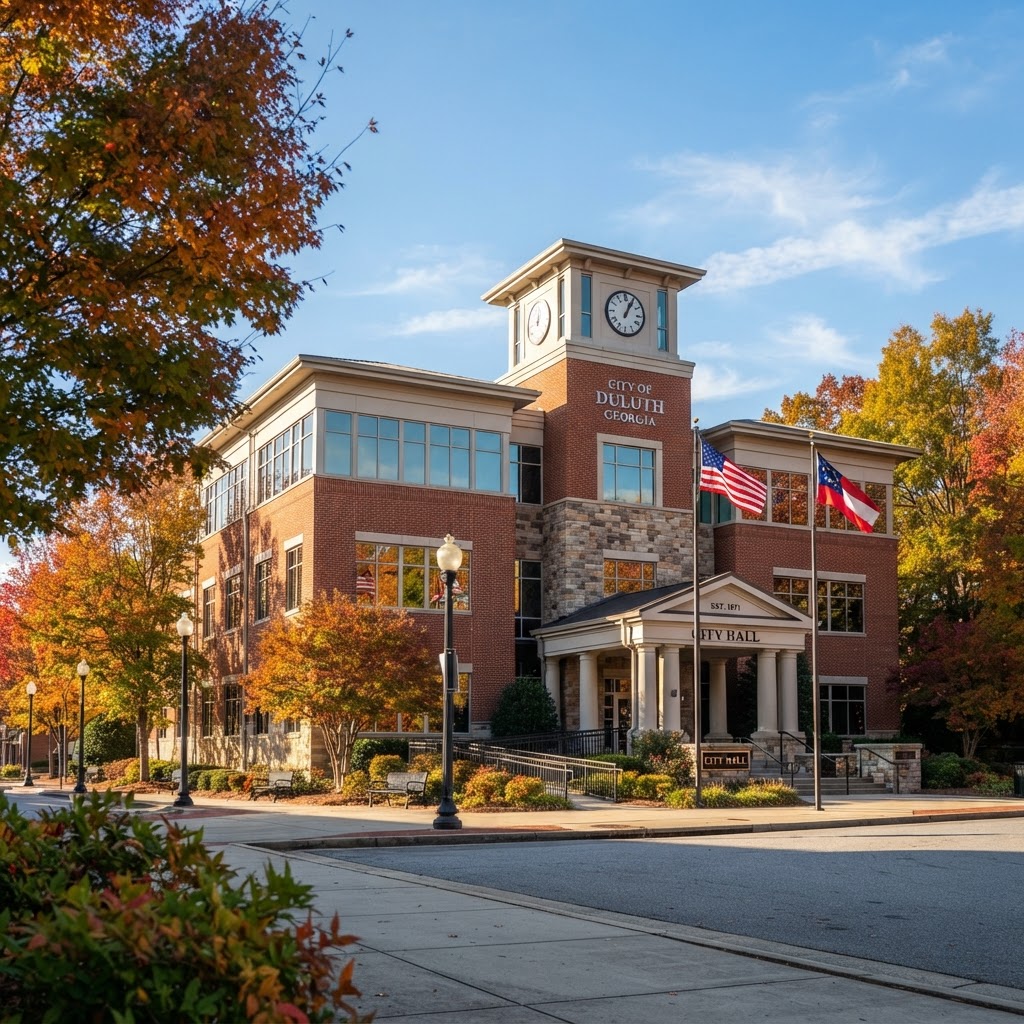
Duluth, Georgia enforces a citywide overnight parking ban that fines residents $50 for parking on the street in front of their own homes between midnight and 7 a.m. Homeowners with multiple vehicles and small driveways say the ordinance is government overreach, and after three years of enforcement, the city is facing a wave of public backlash, a council amendment, and demands for a waiver system.

Key Takeaways
- •Duluth, Georgia enforces a citywide overnight parking ban prohibiting parking on all public streets from midnight to 7 a.m., with a $50 fine per violation
- •The ordinance was originally enforced from 10 p.m. to 6 a.m. and was later amended to midnight to 7 a.m. after public backlash
- •Resident Rick Griepentrog received four $50 tickets for parking in front of his own home in Chattahoochee Reserve after 30 years with no issues
- •Residents report the city's justifications — emergency vehicle access, school bus routes, and sanitation trucks — do not match the reality on their streets
- •Mayor Greg Whitlock agreed to meet with affected residents after 11Alive Help Desk reporting, and the city launched an awareness campaign
- •Residents have proposed parking permits, decals, and waiver provisions, but the city council has not adopted a residential exemption system
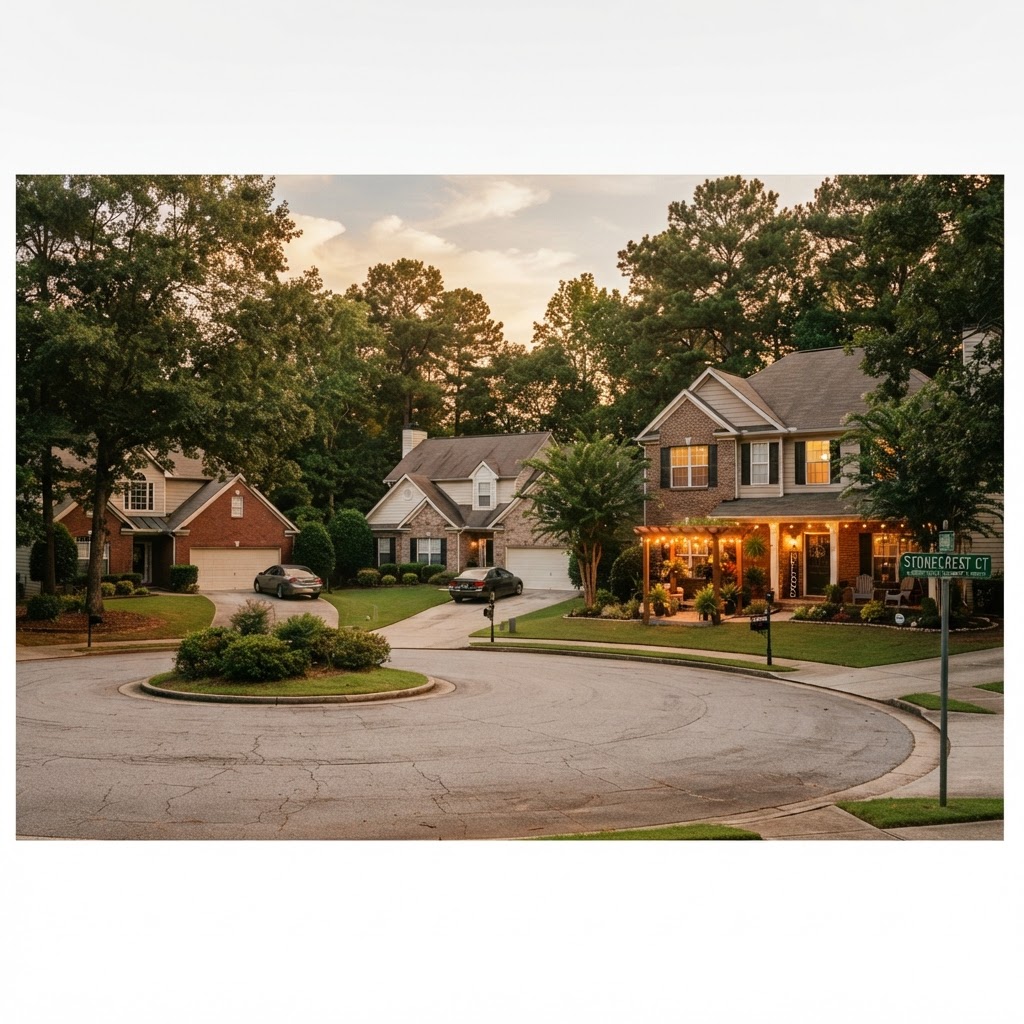
If you park your car on the street in front of your own home in Duluth, Georgia, after midnight, you are breaking the law. Not a traffic violation. Not an HOA rule. A city ordinance — enforceable by the Duluth Police Department with a $50 fine, issued every single night, to homeowners who have nowhere else to put their vehicles.
For three years, the city has enforced an overnight parking ban. For a complete guide to parking options in the downtown core, see our Downtown Duluth parking guide. that prohibits parking on all public rights-of-way — including residential streets in every neighborhood from Chattahoochee Reserve to the subdivisions off Pleasant Hill Road. The ordinance, originally enforced from 10:00 p.m. to 6:00 a.m. and later amended to midnight to 7:00 a.m., has generated dozens of tickets, hundreds of resident complaints, and a wave of fury that has reached the mayor's office, the city council, and the 11Alive Help Desk.
Residents call it government overreach. The city calls it public safety. And the Duluth Police Department, stationed at 3276 Buford Highway, is caught in the middle — enforcing a law that has turned neighbors against neighbors and homeowners against their own government.
The Ordinance: What It Says and How It Works
The overnight parking ban was added as Section 14 to Article III of Chapter 8 of the Duluth Municipal Code (Sec. 8-68, Citywide Regulations — Stopping, Standing, and Parking). The ordinance states:
Overnight parking between 12:00 a.m. and 7:00 a.m. shall be prohibited in all public rights-of-way. Nothing shall prohibit parking in designated parking spaces.
The original version of the ordinance prohibited parking from 10:00 p.m. to 6:00 a.m. The city later amended the hours to midnight to 7:00 a.m., but the substance remained the same: if your vehicle is parked on a public street in Duluth during those hours, you can be ticketed.
The fine is $50 per violation. And because the ban applies every night, a resident who parks on the street regularly can accumulate multiple tickets in a matter of weeks.
The city says the ordinance is intended to keep roadways clear for emergency vehicles, fire trucks, school buses, and sanitation services. But residents have challenged every one of those justifications — and in several cases, they have proven them false.
Rick Griepentrog: Thirty Years in Duluth, Four Tickets, and a Threat to Leave
Rick Griepentrog has lived in Duluth's Chattahoochee Reserve Subdivision for 30 years. His family has five vehicles. His driveway cannot hold them all. His garage is too small for full-size vehicles. And his homeowners association has denied his requests to expand his driveway — twice.
So he parks one vehicle on the street in front of his own home. For 30 years, that was fine. Then the tickets started arriving.
Griepentrog received four $50 parking tickets — $200 in fines — for parking in front of the house he has owned for three decades. When 11Alive's Help Desk investigated, they went to his street and measured. Griepentrog and his neighbor Bruce Radman, who was also ticketed, used a tape measure to check the width of the street.
"You can fit a fire truck through here with cars on both sides or a bus," Griepentrog told 11Alive. And to prove the point, a school bus passed through the street — twice — while the news crew was filming.
The city also claimed the ordinance was necessary for its new sanitation vehicles. But when 11Alive called the sanitation department, they learned that trash pickup does not begin until 7:00 a.m. — one hour after the original parking ban ended.
"If I cannot find a place to park my vehicles, I am going to have to move — sell my house and move somewhere else," Griepentrog said. After 30 years.
Griepentrog's case is not isolated. Across Duluth, residents with multiple vehicles, small driveways, narrow lots, or HOA restrictions on driveway expansions have been ticketed for the simple act of parking on the public street in front of their own homes.
The Public Speaks: 'Government Overreach' and 'Legalized Plunder'
The Duluth News website, which documented the ordinance, published the full text of the law alongside a comment section that has become a running record of public fury. The comments reveal a community that feels blindsided, unheard, and taxed without representation:
-
"Absolutely ridiculous and constitutes government overreach." One resident wrote that the ordinance should be left to HOAs where applicable, not the city: "The City does not own the roads, the People do. We pay taxes to use the roads, that use also constitutes parking on the road that WE pay for. Amendment 14 needs to be removed."
-
"This is theft." Another commenter invoked the French economist Frédéric Bastiat: "This is theft from the city officials and police acting on their behalf. This ordinance is stealing from citizens and reduces the rule of law and respect for authority. Do not expect me to support the Duluth PD or the Town Hall with this kind of legalized plunder."
-
"I've been living in Duluth for over 23 years." A longtime resident wrote: "This never happened that I get ticketed for parking in front of my home. We have 5 cars, we park 4 in driveway and have no space to park the 5th in driveway. So we park it in front of the house. I seriously don't know what to do. This is ridiculous."
-
"So I can't have friends over after 10pm." A cul-de-sac resident reported: "Our neighborhood is getting ticketed all the time. I was told even if I was having people over and it's 10:15 pm we are in violation. So I can't have friends over after 10pm."
-
Selective enforcement. Multiple residents reported that older-looking vehicles were ticketed while newer cars parked on the same street were not. One wrote: "Only our old looking car and one other old looking car. Is there some other reason our cars were picked and others were not? Is this really about how things look and not about safety? Is the City of Duluth now an HOA?"
-
No notification. Several residents complained that they were never notified by mail about the ordinance. "Can someone tell me the reason for this ordinance?" one asked. "And why weren't homeowners notified by mail?"
The comments are not unanimous. One resident supported the ordinance, calling it a crackdown on "people responsible for breaking into people's houses" and promising to call the city on any vehicle parked after 10 p.m. But even that commenter was met with sharp rebuttals from neighbors who rejected being lumped in with criminals simply for parking on the street.
The City Responds: An Awareness Campaign and a Partial Amendment
Facing mounting pressure — including 11Alive's reporting and direct outreach from the Help Desk — the city has taken steps to address the backlash.
Mayor Greg Whitlock agreed to meet with affected residents after 11Alive brought the issue to his attention. The city's planning department sent a team to measure Rick Griepentrog's driveway and plans to meet with his HOA to discuss potential solutions.
The city launched what it called a "major awareness campaign" to remind residents about the overnight parking ban, posting reminders on social media and the city website. The campaign came after 11Alive's Help Desk spent months working with Duluth residents affected by the ordinance.
The City Council also amended the ordinance. The original hours — 10:00 p.m. to 6:00 a.m. — were changed to midnight to 7:00 a.m. The amendment was intended to give residents more flexibility in the evening, but the core prohibition remained: no overnight parking on public streets, period.
The council also adopted Ordinance O2026-06, which updated the downtown parking map with new time limits: 15-minute zones for loading, three-hour zones enforced from 6:30 a.m., and 48-hour limits in certain areas. But these changes applied to downtown commercial parking, not to the residential neighborhoods where the backlash has been loudest.
At council meetings, multiple residents and stakeholders urged the city to go further — proposing residential parking permits, decals, and grace periods that would allow homeowners to park on the street in front of their own homes without fear of a ticket. A Gwinnett County attorney, Tom Salata, suggested a waiver provision: "There should be a way for people to apply for a waiver to park their cars. A person like Rick where it's not going to block emergency personnel and it's not blocking services of the city in this particular neighborhood."
As of August 2026, the city has not adopted a waiver or permit system for residential overnight parking.
The Duluth Police Department: Enforcers, Not Lawmakers
The Duluth Police Department, led by Chief Jacquelyn Carruth, did not write the ordinance. The police department enforces the laws passed by the city council. But the enforcement of the overnight parking ban has placed DPD officers on the front line of a controversy that is not of their making — and has made the department the face of a policy that many residents consider unjust.
The DPD operates from its headquarters at 3276 Buford Highway, on the corner of Buford Highway and Davenport Road. The department has emphasized community engagement, offering programs like the Safe Exchange Zone for online marketplace transactions and a Citizens' Police Academy. But the overnight parking enforcement has tested the relationship between the department and the residents it serves.
For officers on patrol, the ordinance is straightforward: if a vehicle is parked on a public street between midnight and 7:00 a.m., it is in violation, and a citation is warranted. The officers writing the tickets are not making policy judgments. They are enforcing the law as written.
But for residents receiving the tickets, the officer at the door is the face of the government — and the $50 fine feels like a tax on the simple act of living in your own home. The tension is real, and it is corrosive. When a community begins to resent its own police department because of a parking ordinance, something has gone wrong at the policy level, not the enforcement level.
Why Conservatives Should Care
For conservative voters in Duluth and across Gwinnett County, the overnight parking ordinance touches on several core principles:
-
Property rights. Residents pay property taxes on their homes. They pay taxes for the roads. The streets in front of their homes are public rights-of-way maintained with their tax dollars. When the government prohibits a homeowner from parking on the street in front of their own house — and fines them $50 for doing so — it is asserting control over a public resource that belongs to the taxpayers.
-
Limited government. The ordinance is a classic example of government overreach: a blanket prohibition that treats every street, every neighborhood, and every parking situation as identical. A cul-de-sac with two homes is treated the same as a through-street with heavy traffic. A homeowner with five vehicles and a small driveway is treated the same as a household with a two-car garage and an empty driveway. The ordinance does not account for individual circumstances, and it does not allow for exceptions.
-
Government accountability. Residents were not notified by mail when the ordinance was passed. The city did not post signs on every street. And the enforcement has been selective — with residents reporting that older vehicles are ticketed while newer cars are not. When government operates without transparency and enforces laws inconsistently, it erodes public trust.
-
Common sense. The city's justifications — emergency vehicle access, school bus routes, sanitation trucks — have been challenged by residents who measured their own streets and proved that fire trucks and school buses can pass easily. The sanitation department does not start work until 7:00 a.m., making the sanitation justification questionable. When the government passes a law and the stated reasons do not match the facts on the ground, the law deserves scrutiny.
The Path Forward: Waivers, Permits, and Common Sense
The solution is not to abolish the ordinance entirely. There are legitimate safety concerns on narrow streets and in dense neighborhoods where parked vehicles genuinely obstruct emergency access. But a blanket citywide prohibition — enforced without nuance, without notice, and without a waiver mechanism — is not the answer.
Duluth should look to its neighbors. Cities across Gwinnett County have adopted residential parking permit programs that allow homeowners to park on the street in front of their homes while still restricting overnight parking for non-residents. A permit system would:
- Allow homeowners to register their vehicles and park on the street overnight without fear of a ticket
- Restrict non-resident overnight parking, addressing concerns about overflow from apartment complexes and commercial areas
- Generate revenue through permit fees rather than fines
- Give residents a voice in how parking is managed on their own streets
A waiver provision — as suggested by attorney Tom Salata — would allow residents with specific hardships (small driveways, multiple vehicles, HOA restrictions) to apply for an exemption based on real and substantive needs. The city council has the authority to create this mechanism. It has chosen not to.
Until it does, the tickets will keep coming. And the residents of Duluth will keep paying $50 for the crime of parking in front of their own homes.
More Duluth Coverage
For more reporting from Duluth and across Gwinnett County — including public safety, immigration enforcement, city council decisions, and community issues — visit our Gwinnett County news hub, or browse all local news from WorthFighting.org.
For related coverage of Duluth policing and public safety, see our reporting on Duluth crime falling through proactive patrols, Duluth Police enforcing law against reckless driving at 104 MPH, and Duluth Police arresting a Texas fugitive. For broader Gwinnett County coverage, see our reporting on ICE arrests removing criminal aliens from Gwinnett County streets.
Sources
- 11Alive: Duluth Man Fined Multiple Times for Parking Overnight Outside His Home
- 11Alive: Duluth Refocuses With Major Campaign on Overnight Parking Ban
- 11Alive: Duluth Overnight Parking Ban Hits Roadblocks
- Duluth News: Overnight Parking Ordinance (Full Text and Resident Comments)
- Duluth News: Overnight Parking Ordinance Update (Amended Hours)
- City of Duluth: Official Police Department Page
- Duluth Police Department Recruitment Website (Image Source)
- City of Duluth Facebook: Overnight Parking Ordinance Update
Explore Georgia
Explore more news, elections, representatives, and information from Georgia.
Visit Georgia State ProfileMore Gwinnett County coverage
Explore the County Government hub, the Gwinnett County hub, and related topic hubs.