Sticky Inflation: April CPI Data Reveals the Ongoing Failure of Bidenomics to Lower Prices
April CPI inflation hit 3.4%, proving that despite White House spin, Bidenomics continues to erode the purchasing power and savings of American families.
Garrett Vance
Senior Correspondent

Wikimedia Commons / Public domain
Key Takeaways
- 1.April CPI rose 3.4% year-over-year, while core inflation hit 3.6%.
- 2.Shelter costs and groceries continue to be the primary drivers of the cost-of-living crisis.
- 3.Real average hourly earnings dropped by 0.2%, meaning wages are not keeping up with inflation.
- 4.Grocery prices have seen a cumulative increase of over 20% since early 2021.
The Biden administration spent the morning attempting to polish an economic turd. With the release of the latest Bureau of Labor Statistics data, the spin machine went into overdrive, framing a 3.4% year-over-year increase in the April CPI inflation report as a sign of a 'cooling' economy. But for the American family sitting at the kitchen table, these numbers represent a cold, hard reality: the cost of living is still rising, and it is rising faster than the average worker can afford. While the White House takes a victory lap on 'moderating' prices, the cumulative burden of three and a half years of reckless spending is reaching a breaking point.
The Numbers Don't Lie: April CPI Inflation Persists
The facts are clear, regardless of how the administration chooses to dress them up. The Bureau of Labor Statistics released the April Consumer Price Index (CPI) on May 15, 2024, showing a 3.4% year-over-year increase. While some pundits are desperate to call this a win, it is important to remember that this 'cooling' is relative to the disastrous highs we saw previously. A 3.4% increase is not a price drop; it is a slower rate of price increases on top of already inflated levels.
Core inflation, which excludes the more volatile categories of food and energy, rose 3.6% over the last 12 months. This is the lowest core reading since 2021, yet it remains significantly above the Federal Reserve's 2% target. This 'sticky' nature of inflation suggests that the structural issues within our economy—namely, excessive government spending and a war on domestic energy—are preventing a return to true price stability. As we have discussed in our analysis of the 2026 inflation surge, the root of this crisis remains unaddressed by the current leadership in Washington.
The Invisible Tax on the Middle Class
The conservative case against the current economic trajectory is simple: Bidenomics is an invisible tax that punishes savers and rewards government growth. When the White House talks about 'cooling' inflation, they ignore the cumulative effect. Grocery prices, for example, have increased by over 20% since January 2021. This isn't just a statistic; it is a massive transfer of wealth from middle-class families to a bloated federal bureaucracy and corporate interests.
Shelter costs remained a primary driver of inflation in this latest report, rising 0.4% in April and a staggering 5.5% over the past year. For young families looking to buy their first home or even for those trying to keep up with rising rents, the American Dream is being priced out of existence. When the basic human need for shelter becomes a primary driver of inflation, the economic foundation of the country is in jeopardy. This is the direct result of a housing market squeezed by high interest rates—necessary to fight the very inflation the administration created—and a lack of supply exacerbated by regulatory red tape.
Wage Growth is a Myth Under Biden
One of the most damning pieces of evidence in the BLS report is the state of the American worker's paycheck. Real average hourly earnings decreased 0.2% over the month. This indicates that despite nominal raises, wage growth is failing to keep pace with rising costs. In plain English: Americans are working just as hard, if not harder, and they are becoming poorer.
The reality is that the purchasing power of the dollar is being systematically eroded. This erosion acts as a regressive tax, hitting the lowest earners the hardest while the political class in D.C. remains insulated from the consequences of their actions. The administration’s focus on 'forgiving' student loans or subsidizing 'green' energy does nothing for the plumber or the teacher who watches their grocery bill climb while their take-home pay shrinks in real terms.
Ending the Spending Addiction
The path forward requires more than just high interest rates from the Fed; it requires fiscal sanity from the White House and Congress. We cannot spend our way out of an inflation crisis that was caused by spending. The persistent 3.4% April CPI inflation rate is a warning shot. It tells us that the inflationary fires are still smoldering, and it won't take much to fan them back into a blaze.
We see the same pattern of fiscal irresponsibility at the state level. When families are already struggling, the last thing they need is government compounding the issue with property tax hikes—a move fortunately stopped recently when Gov. Phil Scott Vetoes Vermont Property Tax Hike. This kind of veto is the blueprint for what we need at the federal level: a firm 'no' to more taxes and more spending.
To truly lower prices and restore the purchasing power of the American family, we must embrace an America First economic agenda. This means deregulating the energy sector to lower fuel and utility costs, cutting federal spending to reduce the money supply's expansion, and focusing on policies that prioritize the American worker over globalist agendas.
The White House can spin the April CPI inflation numbers all they want, but the American people feel the truth every time they swipe their card at the pump or the checkout line. 3.4% isn't progress; it's a persistent failure. It is time to stop the spending, stop the spin, and start fighting for the economic survival of the American family.
Comments (0)
Be the first to comment.
Sources
- 1.Bureau of Labor Statisticsofficial_reportAccessed Jul 16, 2026
- 2.CNBCnews_articleAccessed Jul 16, 2026
- 3.Fox Businessnews_articleAccessed Jul 16, 2026
Related Stories
Economy
Cheyenne Data Center Project Shifts to Google Ownership
A massive $17 billion data center project near Cheyenne has officially transitioned to Google, marking a significant shift in Wyoming's industrial landscape.
WorthFighting.org News · 6 min read
Economy
Iowa Leads Nation with Historic Property Tax Reform
Governor Kim Reynolds has signed landmark legislation providing $4.2 billion in property tax relief, marking the largest reduction of its kind in the nation.
WorthFighting.org News · 6 min read
Economy
Nebraska Property Tax Relief Tops $3B as Budget Strain Grows
Property tax relief programs now consume roughly 47% of Nebraska's state budget, sparking sharp debate among lawmakers over fiscal discipline and local control.
WorthFighting.org News · 5 min read
Economy
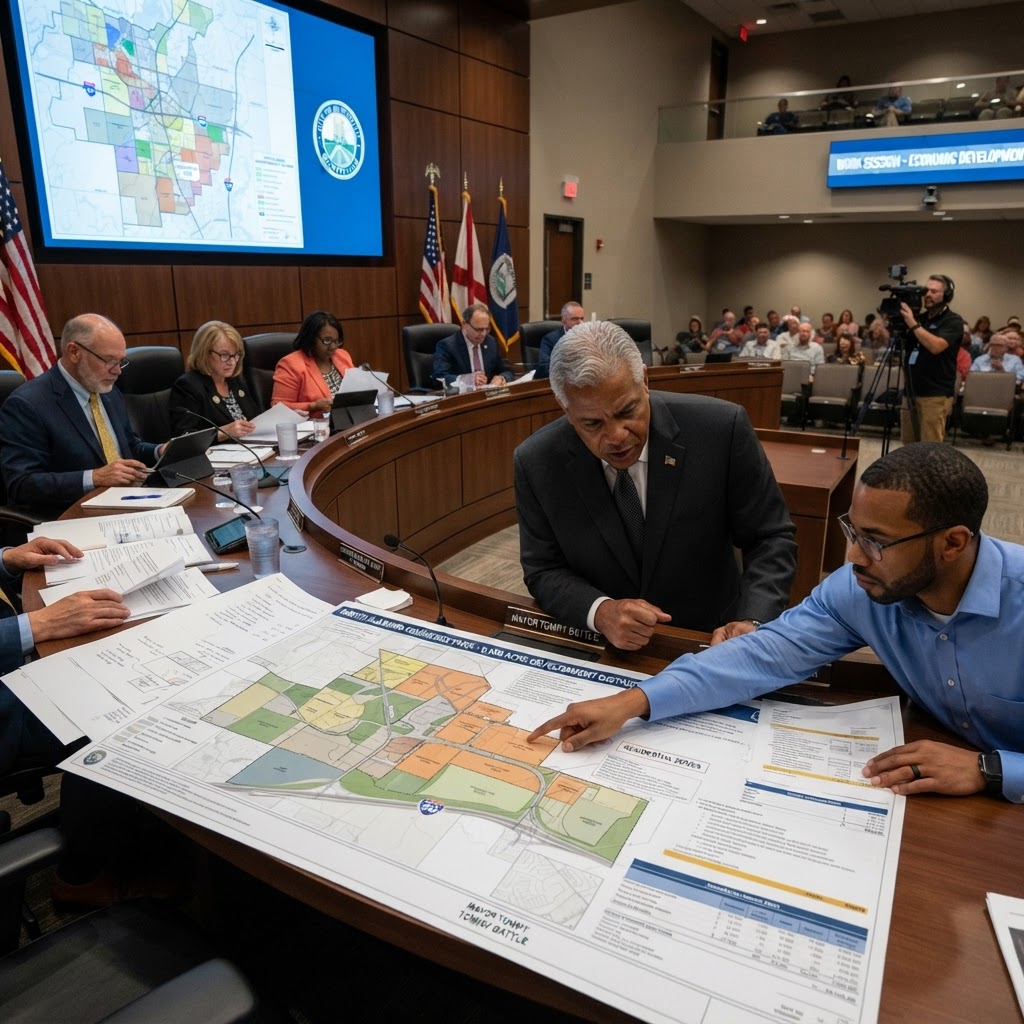
Huntsville Proposes $230M Tax District to Fuel Growth
Huntsville municipal leaders proposed a 9,000-acre tax increment financing district to fund up to $230 million in vital infrastructure projects.
WorthFighting.org News · 5 min read
Economy
RI Senate Committee Advances $15.2B Budget Plan
The Rhode Island Senate Finance Committee passed a $15.2B state budget targeting school aid, local control, and creating a state inspector general.
WorthFighting.org News · 5 min read
Economy
Wyoming Energy Authority Launches Power Grid Study
Wyoming selects Energy Strategies to run a major statewide transmission study to secure grid reliability, map power infrastructure, and spur economic growth.
WorthFighting.org News · 5 min read
More from Economy
Economy
Denver Budget Crisis Deepens as City Faces $200M Gap
Denver faces a massive $200 million budget shortfall for 2026, forcing the city to consider layoffs and furloughs after years of rapid government expansion.
WorthFighting.org News · 6 min read

Economy
ND Towns Turn to Sales Taxes After Property Tax Cap
Over a dozen North Dakota cities and counties propose sales tax increases this June as local officials navigate state-mandated property tax revenue caps.
WorthFighting.org News · 5 min read

Economy
Vermont Tax Revolt Leaves Barre Schools Without Budget
Barre voters prepare for a high-stakes third school budget vote as taxpayers push back against relentless property tax hikes across Vermont.
WorthFighting.org News · 6 min read
Take Action
This country is worth fighting for. Get involved today.