Education
Who Represents You? A Guide to Dawson County School Board Districts
Juno, Dawson County County, Georgia
Dawson County School Board controls two-thirds of local property tax revenue. Learn how the district map impacts Juno residents and fiscal accountability.

Key Takeaways
- •District 1 represents the Juno, Westside, and Amicalola communities in Dawson County.
- •The School Board controls approximately two-thirds of all local property tax revenue.
- •Over 61% of the Dawson County School District's $69.2 million revenue comes from local sources.
- •Georgia HB 581 and SB 472 provide new layers of property tax protection and financial accountability for the board.
For the residents of Juno, Georgia, the power to shape the future of the community—and the size of their tax bills—rests largely in the hands of five individuals. As the 2026-2027 school year commences, understanding the Dawson County School Board Districts is no longer just a matter of civic trivia; it is a necessity for fiscal survival. The Dawson County Board of Education (BOE) currently manages a budget where local taxpayers shoulder the lion's weight, contributing over 61% of the district's total revenue. With the board controlling approximately two-thirds of all local property tax revenue, the representation of unincorporated communities like Juno is the front line of the battle for parental rights and limited government.
What Happened
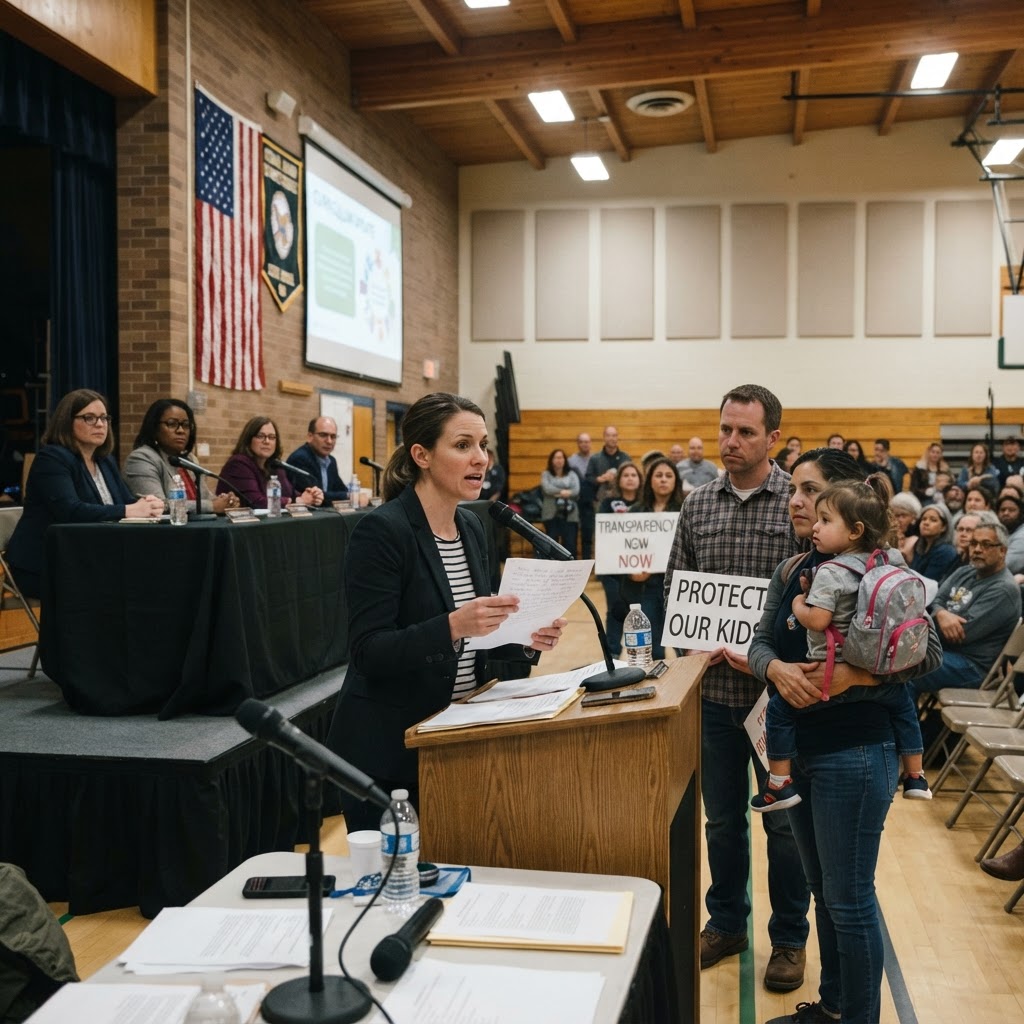
In recent weeks, as the Dawson County Board of Education finalized its fiscal planning for the current year, the spotlight has returned to the geographic boundaries that define local representation. The county is divided into five distinct districts, each sending one representative to the board meeting room at 28 Main Street in Dawsonville. For the citizens of Juno, located in the rugged, high-elevation northwest corner of the county, representation is tied to District 1.
District 1, currently represented by Doris Cook, encompasses the communities of Juno, Westside, and Amicalola. This district is unique in its composition, balancing the rural interests of the Amicalola Falls area with the growing residential needs of the western corridor. While the board operates as a collective body under Superintendent Nicole LeCave, the district-based system is designed to ensure that the specific concerns of Juno parents—ranging from bus routes on State Route 183 to the preservation of traditional values in the classroom—are not drowned out by the more densely populated areas of Dawsonville (District 2) or the southern reaches of the county near the Forsyth line.
Recent board activity has focused heavily on the 2026-2027 budget, which reflects a total revenue of approximately $69.2 million. Of that, a staggering $42.2 million is generated through local sources, primarily property taxes. This local reliance places a heavy burden on the board to demonstrate transparency, much like the ongoing discussions regarding Jackson County School Board work sessions where taxpayers are demanding a clearer accounting of how instruction dollars are prioritized over administrative overhead.
The Context
To understand why these districts matter, one must look at the lopsided nature of local taxation. Dawson County Board of Commissioners Chairman Billy Thurmond recently noted that while the county government manages essential services like roads and public safety, they only receive about one-third of property tax revenue. The remaining two-thirds go directly to the School Board. This makes the BOE the most powerful taxing entity in Dawson County.
For a Juno homeowner with a property valued at $525,000, even a marginal shift in the millage rate can result in significant annual increases. The context of these tax decisions is further complicated by the implementation of Georgia House Bill 581, the "Save Our Homes Act." As District 2 Commissioner Chris Gaines pointed out, this legislation—approved by voters—aims to limit annual property assessment increases to the rate of inflation. However, the School Board’s ability to set the millage rate remains the primary lever for determining the final bill.
Currently, the district spends roughly $18,084 per student, with $31.1 million allocated to direct instruction. However, with $22.4 million flowing into "support services," conservative watchdogs in Juno are increasingly questioning whether the bureaucracy is expanding at the expense of the classroom. This fiscal tension is similar to the recent updates regarding the Hall County Property Tax 2026 assessments, where regional neighbors are also grappling with the balance between school funding and taxpayer relief.
The Implications
The implications of the current district map are profound for the "America First" movement within Dawson County. When the board controls the majority of local funds, they also control the ideological direction of the schools. For Juno residents, having a dedicated representative for District 1 means having a direct line to challenge the introduction of divisive ideologies or to advocate for the protection of parental rights.
Under the leadership of the current board, Dawson County has maintained a focus on being "Ready Georgia" prepared, but the shift toward state-mandated programs like the Georgia Early Literacy Act (HB 1193) requires local oversight to ensure that state funds for literacy coaches are used to improve merit-based outcomes rather than social engineering. The district system ensures that if the board moves toward a "backdoor tax hike" by refusing to adopt a full rollback rate, the voters in Juno know exactly which seat at the table is responsible for their specific geographic area.
Furthermore, the recent passage of GA SB472 provides a new layer of accountability. This law allows for the suspension of local school board members in the event of audit findings that suggest financial mismanagement. For a district handling nearly $70 million, the threat of state intervention serves as a necessary check on local power, ensuring that the 61% of revenue provided by Dawson County families is not squandered.
What to Watch
Moving forward, Juno residents should keep a close eye on the upcoming fall board work sessions. With the 2026 election cycle approaching, the performance of representatives in Districts 1, 2, and 4 will be under intense scrutiny. Taxpayers should watch for whether the board will commit to a true rollback of the millage rate in the next budget cycle to offset the rising property values that have plagued North Georgia.
Additionally, the progress of renovations at Black’s Mill Elementary School remains a key indicator of the board's ability to manage capital projects without requesting further tax increases. As the community grows, the pressure to build new facilities will mount. The challenge for the District 1 representative will be to advocate for Juno’s students while resisting the urge to expand the district's debt profile.
Finally, the implementation of the new state audit requirements will be a litmus test for the board’s transparency. Will they welcome the oversight, or will they retreat behind closed-door sessions? For the families in Juno, the answer to that question will determine whether their two-thirds share of property taxes is an investment in the next generation or merely a subsidy for a growing administrative state.
More Dawson County Coverage
For more reporting from across Dawson County — Dawsonville, Juno, Kilough, Lumpkin, Amicalola, and every community in the county — visit our Dawson County news hub, or browse all local news from WorthFighting.org.
Sources
Explore Georgia
Explore more news, elections, representatives, and information from Georgia.
Visit Georgia State ProfileMore Dawson County coverage
Explore the Schools hub, the Dawson County hub, and related topic hubs.