
Local Government
Dauphin Island Beach Easements: What West End Property Owners Are Being Asked to Sign — and What Happens if They Refuse
Dauphin Island, Mobile County County, Alabama
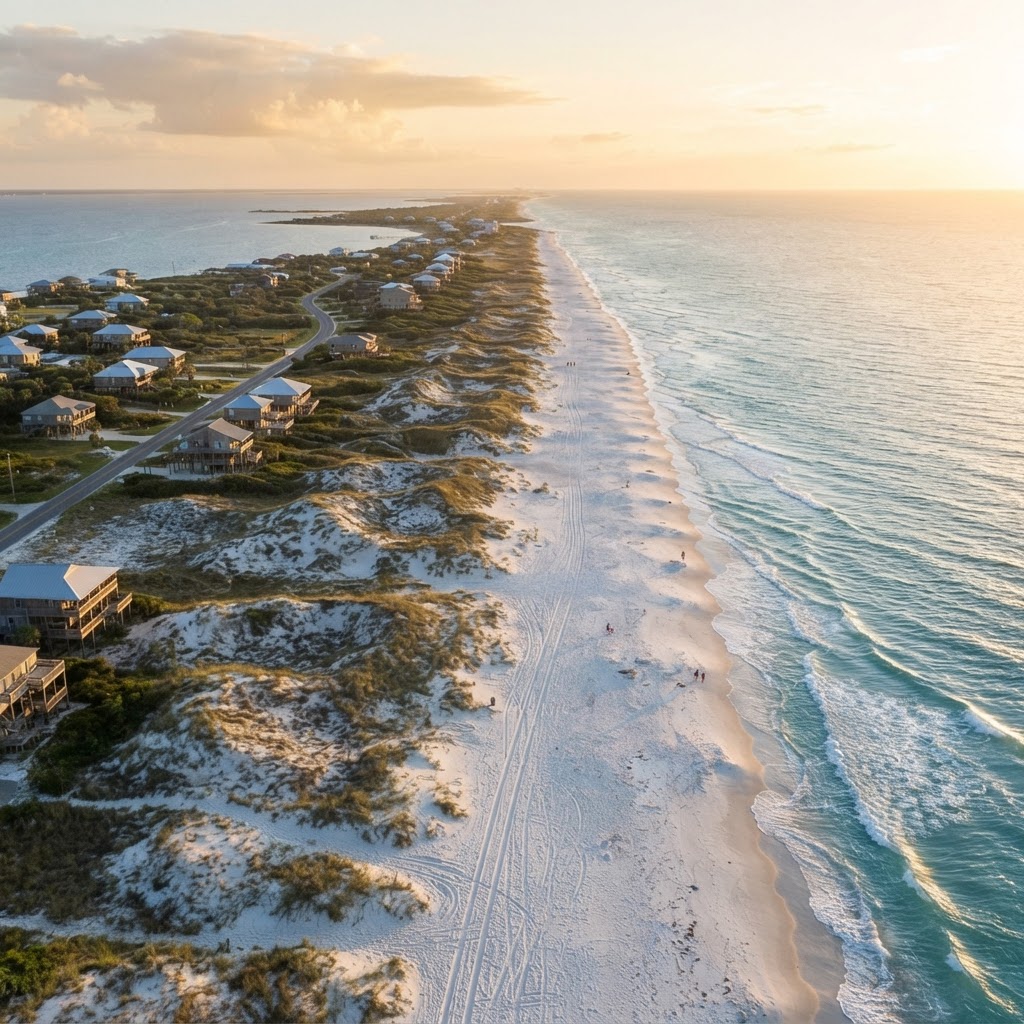
The Town of Dauphin Island is asking West End property owners to sign construction easements for a beach restoration project that will place sand on private property. The easements come with a designated mean high tide line that establishes the public-private boundary in perpetuity. Here is what the easements say, what rights they grant, and what happens if you do not sign.
Key Takeaways
- •The West End Beach and Dune Restoration Project will widen 3.5 miles of shoreline from 170 to 590 feet and create 200 acres of new public beach
- •The town is seeking construction easements from West End property owners from May 2026 through December 2026
- •The easement area extends from the southern property boundary to approximately the +5-foot elevation contour
- •A designated mean high tide line (MHTL) establishes the public-private beach boundary in perpetuity — even if erosion occurs in the future
- •Property owners who refuse the easement will not receive sand on their property and may face water retention issues at their own expense
- •The project has $5 million in federal funding and all required USACE, ADEM, and Alabama Beach Act permits have been issued
The Town of Dauphin Island is asking West End property owners to sign construction easements that will allow the town to place sand on private beachfront as part of a $5 million beach restoration project. The easements are voluntary — but the consequences of refusing are significant.
The West End Beach and Dune Restoration Project, the first-ever restoration project on the island's West End, will widen 3.5 miles of shoreline, create 200 acres of new beach habitat, and construct a protective dune system. Construction is scheduled to begin in winter 2027.
But the project cannot proceed across private property without easements from the owners of that property. And one feature of the project — a designated mean high tide line that establishes the boundary between public and private beach "in perpetuity" — has raised questions about what property owners are agreeing to when they sign.
The Project: What Is Being Built
The West End Beach and Dune Restoration Project is designed to:
- Widen the beach from approximately 170 feet to 590 feet
- Create 200 acres of new public beach habitat
- Construct a protective dune system similar to the one built on the East End in 2024
- Protect town infrastructure including roads, water, and sewer lines along Bienville Boulevard
- Reduce erosion that has been steadily eating away at the West End for decades
The project was identified as a priority in the U.S. Army Corps of Engineers (USACE) Final Alabama Barrier Island Restoration Assessment Report, published in 2020. Without the project, the town says, erosion will persist and the beach is "unlikely to recover naturally."
The project covers 3.5 miles of the barrier island's western end. The design includes a dune feature with walkovers where the completed dune affects beach access from private property, similar to the dune walkovers installed at the Audubon Place neighborhood on the East End.
The Funding: Where the Money Comes From
The town has secured construction funding for the full project, including:
- $5 million in federal funding through Energy and Water Development (EWD) Congressionally-directed spending
- State and local matching funds (specific amounts not publicly detailed in the sources reviewed)
- Potential future FEMA funding — an engineered beach constructed under the Alabama Beach Act qualifies the town to seek additional FEMA funding for future storm recovery
The town will hold responsibility for maintaining the renourished beach after construction is complete. Engineered beaches already exist in Gulf Shores, Orange Beach, and along the East End of Dauphin Island.
The Permits: What Has Been Approved
The required permits have been issued:
- U.S. Army Corps of Engineers (USACE) Standard Permit
- Alabama Department of Environmental Management (ADEM) permit
- Alabama Beach Act permit
A joint public meeting was held to present the project and answer questions from property owners. The POA (Property Owners Association) Construction Easement has been recorded.
The Easements: What Property Owners Are Being Asked to Sign
The town is seeking construction and monitoring easements from West End Gulf-side property owners. Here is what the easements involve, based on the town's own project materials:
What the Easement Allows
The easement authorizes the town to:
- Place sand on private property at no cost to the property owner
- Construct and maintain improvements that enhance shoreline protection
- Access the property periodically for monitoring and maintenance activities, such as surveying and minor maintenance work
Where the Easement Applies
The easement area is limited and generally extends from the southern boundary of the property to approximately the +5-foot elevation contour, or to existing structures such as porches, pilings, or similar features.
This means the easement covers the beachfront portion of the property — not the entire lot. The town's materials describe the easement area as "limited" and state that it "supports the long-term value and stability of the property."
What Happens If You Do Not Sign
The town's project materials are explicit about the consequences of refusing to sign the easement:
"If a property owner chooses not to sign the easement, sand will not be placed on that property. The project will proceed seaward of the property line, and the lot will not receive the same beach improvements. In that case, existing conditions between the structure and the start of the project would remain unchanged. This could result in a low area that retains water, which would need to be addressed by the property owner at their discretion and expense."
In other words, property owners who refuse the easement will not receive sand on their beachfront. The project will continue around their property, potentially leaving their lot lower than the adjacent restored beach — creating a low area that could retain water, which the owner would need to address at their own expense.
The Easement Timeline
The town is obtaining construction and monitoring easements from affected property owners from May 2026 through December 2026. Property owners should have received an easement package at the mailing address listed in the tax records. If you have not received a package, contact the town at westend@townofdauphinisland.org.
The Mean High Tide Line: The "In Perpetuity" Question
The most significant — and least understood — feature of the project is the designated mean high tide line (MHTL).
Under the Alabama Beach Act, creating an engineered beach requires establishing a designated MHTL. This line establishes the separation between private and public property.
The town's project materials state:
"The designated MHTL establishes the separation between private and public property in perpetuity — even if more erosion occurs in the future."
This means that once the MHTL is established, the public-private boundary is fixed — regardless of whether the beach erodes again in the future. The boundary does not move with the tides or the shoreline. It is permanent.
What This Means for Property Owners
For property owners seaward of the new MHTL, the project could effectively transfer the beachfront portion of their property to public ownership. The sand placed on that area becomes part of the public beach.
One West End property owner, Sam Mason, told FOX 10 News in March 2025: "My lot is going to be fully restored and I'll come down and look at it — but I won't own it anymore. It's sad."
This is the central tension of the project: property owners gain a wider, more stable beach, but may lose ownership of the portion of their property that becomes public beach below the MHTL.
What the MHTL Does Not Do
The MHTL does not:
- Affect the upland portion of the property above the +5-foot elevation contour
- Change the ownership of structures such as houses, porches, or pilings
- Prevent property owners from using their property as they currently do (with the limitations of the easement)
But it does establish a permanent boundary that cannot be reversed, even if the beach erodes again. This is the trade-off the town is asking property owners to accept.
The West Surf Beach Easement Vote
Separate from the individual property easements, the town has also proposed making the West Surf Beach — the beach along the southern shoreline between Pirates Cove and the western end of Bienville Boulevard — a permanent easement for the town.
The West Surf Beach is owned by the Dauphin Island Property Owners Association (DIPOA). It is a private beach that may be used by all of the island's approximately 3,000 property owners and their guests, regardless of where on the island the property is owned.
The DIPOA was asked to vote on granting the town a permanent easement for the West Surf Beach, for the stated purpose of obtaining legal access to perform shoreline and beach restoration on the West End. This vote took place in April and May 2025.
The Project Timeline
| Phase | Timeline |
|---|---|
| Permits issued | Completed (USACE, ADEM, Alabama Beach Act) |
| POA Construction Easement recorded | Completed |
| Private construction easements | May 2026 – December 2026 |
| Final design | Fall 2026 |
| Bidding | Fall 2026 |
| Construction begins | Winter 2027 |
What to Do If You Are a West End Property Owner
If you own property on the West End of Dauphin Island, here are the steps you should take:
-
Check your mail: Easement packages were sent to the mailing address on file with the tax assessor. If you have not received one, email westend@townofdauphinisland.org.
-
Review the easement documents carefully: Understand exactly what rights you are granting, where the easement applies on your property, and what the MHTL means for your property boundaries.
-
Ask questions: Contact the town at westend@townofdauphinisland.org with any questions about the easement, the MHTL, or the project.
-
Review the project fact sheets: The town has published multiple fact sheets and a FAQ document on its website.
-
Consider legal advice: The easement and MHTL have permanent legal consequences. Property owners may want to consult a real estate attorney before signing.
-
Attend public meetings: The town has held public meetings about the project and may hold additional meetings as construction approaches.
Why This Matters
The West End Beach and Dune Restoration Project is the most significant coastal infrastructure project in Dauphin Island's history. It will protect roads, water lines, and sewer infrastructure from erosion. It will create 200 acres of new public beach. It will strengthen the island's defenses against storms.
But it asks property owners to give up something permanent: the portion of their beachfront that falls below the new mean high tide line. The broader question of who pays to save Dauphin Island — and what property owners give up in exchange — is at the heart of the island's future.
The town's materials are clear that the easements are voluntary. No property owner will be forced to sign. But the consequences of not signing — no sand, potential water retention, no beach improvements — are significant enough that most owners are expected to participate.
The question is whether they fully understand what they are agreeing to when they do.
Frequently Asked Questions
What is the Dauphin Island West End beach restoration project?
The West End Beach and Dune Restoration Project will widen 3.5 miles of shoreline from approximately 170 feet to 590 feet, create 200 acres of new beach habitat, and construct a protective dune system. Construction is scheduled to begin in winter 2027.
What is a construction easement on Dauphin Island?
A construction easement allows the Town of Dauphin Island to place sand on private property and perform monitoring and maintenance activities. The easement area extends from the southern boundary of the property to approximately the +5-foot elevation contour.
What happens if I do not sign the easement?
Sand will not be placed on your property. The project will proceed seaward of your property line, and your lot will not receive beach improvements. This could result in a low area that retains water, which you would need to address at your own expense.
What is the mean high tide line (MHTL)?
The MHTL is the designated boundary between private and public beach property. Under the Alabama Beach Act, the MHTL for an engineered beach is established "in perpetuity" — meaning the boundary is permanent and does not move even if the beach erodes again.
Does the easement affect my entire property?
No. The easement area is limited to the beachfront portion of the property, generally from the southern boundary to the +5-foot elevation contour or to existing structures. The upland portion of the property is not affected.
How much will the project cost?
The town has secured $5 million in federal funding through Energy and Water Development Congressionally-directed spending, plus state and local matching funds. The sand placement is at no cost to property owners who sign the easement.
When will construction begin?
Construction is scheduled to begin in winter 2027, following final design and bidding in fall 2026.
Who maintains the beach after construction?
The Town of Dauphin Island holds responsibility for maintaining the renourished beach.
Sources & Primary Documents
- Town of Dauphin Island, West End Nourishment Project page, townofdauphinisland.org/westendnourishment
- Town of Dauphin Island, Project Fact Sheets #1-7 (PDFs)
- Town of Dauphin Island, FAQ document (PDF)
- Town of Dauphin Island, USACE Standard Permit application (PDF)
- Town of Dauphin Island, Notice of Joint Public Meeting (PDF)
- FOX 10 News, "Dauphin Island looks to construct first-ever restoration project on West End Beach," March 7, 2025
- MyNBC15, "$5M in federal funding to boost Dauphin Island west end restoration"
- Dauphin Island Real Estate, West End Beach Restoration page
- Dauphin Island Restoration, News page, dauphinislandrestoration.org/news
- Outdoor Alabama, "Public Meeting Announced for West End Beach Renourishment Project on Dauphin Island"
- USACE Final Alabama Barrier Island Restoration Assessment Report, 2020
Maintained project tracker: For our continuously updated, source-backed tracker of the full West End restoration — funding, permits, easements, design, bidding, and the planned construction timeline — see Dauphin Island West End Restoration: Project Status, Funding and Construction Timeline.
Sources
Explore Alabama
Explore more news, elections, representatives, and information from Alabama.
Visit Alabama State Profile