Education
Sparta School District Proposes Referendum to Bridge $1.7 Million Gap
Sparta, Monroe County, Wisconsin
Sparta school officials are considering a $750,000 recurring referendum to address a looming $1.7 million deficit, sparking debate over taxpayer fatigue.

Key Takeaways
- •Sparta Area School District faces a projected $1.7 million budget deficit for the upcoming cycle.
- •The Board of Education is considering a $750,000 recurring referendum for the November 2026 ballot.
- •Declining state aid and the end of federal COVID-19 grants are cited as primary drivers of the shortfall.
- •Local residents are expressing concerns over the permanent nature of a recurring tax increase on property owners.
- •Failure to pass the referendum could lead to significant cuts in staffing and student programs by 2027.
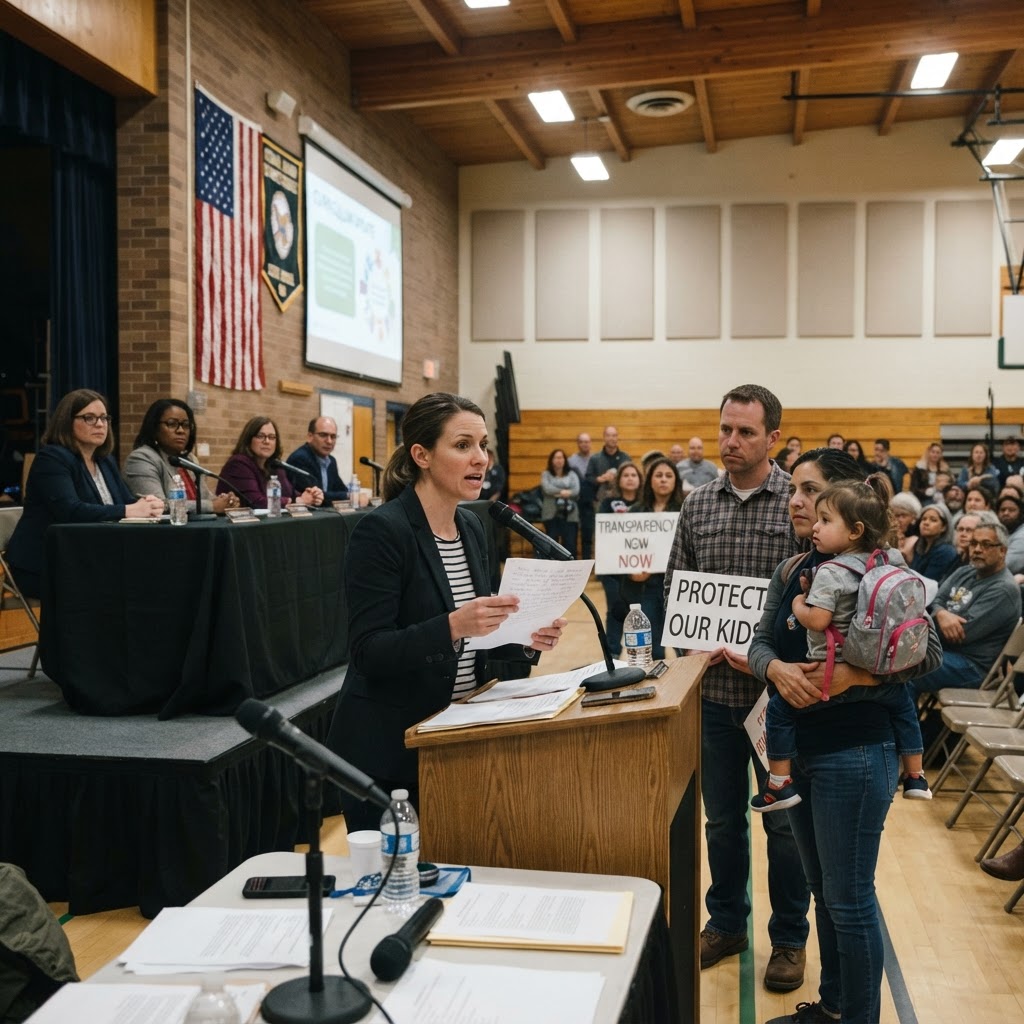
Families in Sparta are facing a familiar but daunting crossroads as the Sparta Area School District (SASD) grapples with a $1.7 million budget shortfall. During a tense Board of Education meeting held late Monday evening at the District Administration Building on Walrath Street, administrators laid out a plan to ask voters for more money this November. The proposal—a $750,000 recurring operational referendum—has ignited a debate among Monroe County taxpayers who are already feeling the squeeze of a cooling but still-difficult economy.
Superintendent Sam Russ and the school board spent hours dissecting the fiscal reality of the district, which serves approximately 3,000 students in this rural community. The core of the problem, according to district officials, is a combination of stagnant state aid, declining enrollment in specific grade levels, and the sunsetting of federal pandemic-era grants that many local governments used to plug holes over the last few years.
Fiscal Responsibility vs. Rising Costs
For many in Sparta, the prospect of a recurring referendum is a tough pill to swallow. Unlike a non-recurring referendum, which has an expiration date, a recurring one permanently raises the tax levy. Conservative residents attending the meeting voiced concerns that once the tax floor is raised, it never comes back down. One local parent, speaking during the public comment period, noted that while they support the teachers, the district must look at administrative overhead before asking for another dime from families struggling with their own grocery and energy bills.
“We see the same cycle every few years,” said one resident who has lived in Monroe County for three decades. “The state doesn't give enough, or the district spends too much on non-instructional initiatives, and then the burden is shifted directly onto the property owners. We need to see a real plan for efficiency, not just a blank check.”
The district argues that without the $750,000 injection, deep cuts to programs, athletics, and even staffing levels are inevitable by the 2027 school year. The board is currently weighing whether to place the question on the November 2026 ballot, a move that would coincide with high-turnout elections. This strategy is similar to the pushback seen in other communities where residents are questioning the long-term sustainability of local government expansion, much like the Lebanon Growth Management: Citizens Protest High-Density Rezoning efforts where taxpayers are demanding a say in how their communities evolve.
The State Funding Quagmire
Wisconsin’s school funding formula remains a point of contention for rural districts like Sparta. The “per-pupil” funding model often favors growing suburban districts while leaving smaller, stable communities in a lurch when inflation hits. Sparta officials pointed out that the cost of diesel for school buses and the price of heating the various campus buildings have surged by double digits, outpacing any modest increases provided by Madison.
Board President Anthony Bernabei noted during the session that the district has already trimmed several hundred thousand dollars from the preliminary budget through attrition and delaying certain maintenance projects. However, those “low-hanging fruit” cuts are no longer sufficient to bridge a gap nearing the two-million-dollar mark.
The board is also navigating the political reality of parental rights and curriculum transparency. Over the last two years, Sparta has seen an uptick in parents attending meetings to ensure that the district remains focused on core academics rather than social engineering. This heightened engagement means that any request for additional funding will be met with intense scrutiny regarding exactly where those dollars are going. If the referendum fails, the board warned of “unprecedented” changes to the district’s operational footprint, potentially including larger class sizes and the elimination of elective courses at the high school level.
Why This Matters
This isn't just a story about a budget spreadsheet; it’s about the fundamental relationship between a community and its government. In small towns across Wisconsin, the school district is often the largest employer and the largest consumer of local tax dollars. When districts face a $1.7 million deficit, the easy answer is to ask for a referendum. But for the “America First” taxpayer, the priority is fiscal sanity and ensuring that hard-earned money stays in the pockets of families.
If Sparta voters approve a recurring referendum, they are committing future generations to a higher tax floor. If they reject it, they are demanding that the district innovate and live within its means, even if it means making difficult choices about what the district can actually afford to provide. This struggle reflects a broader national movement where citizens are no longer accepting “business as usual” from local boards. Whether it's fighting for parental rights or demanding lower property taxes, the residents of Sparta are proving that local oversight is the most important tool we have to protect the American way of life.
As the board prepares to finalize the ballot language in the coming weeks, the eyes of Monroe County will be on them. Sparta has always been a town that takes care of its own, but in 2026, taking care of the community might mean holding the line on spending to ensure the town remains affordable for the very families the schools are meant to serve.
Explore Wisconsin
Explore more news, elections, representatives, and information from Wisconsin.
Visit Wisconsin State Profile