Faith & Family
Faith Still Matters in DeSoto County: Why Christian Values Remain Central to One of Mississippi's Fastest-Growing Communities
Olive Branch, DeSoto County County, Mississippi
DeSoto County has grown nearly 23% since 2010, making it one of Mississippi's fastest-growing counties. Yet churches remain at the center of community life — from Southaven to Olive Branch to Hernando. Here's why faith still matters here, and what it means for the county's political future.
Key Takeaways
- •DeSoto County has grown nearly 23% since 2010, making it one of Mississippi's fastest-growing counties
- •Major multisite churches like Compel Church operate across Olive Branch, Southaven, Horn Lake, and Hernando
- •The Association of Religion Data Archives documented hundreds of congregations in DeSoto County in its 2020 census
- •Churches provide food pantries, recovery programs, counseling, and community services that government cannot replicate
- •Conservative voters in DeSoto County prioritize religious liberty as foundational to other liberties
DeSoto County does not look like the Mississippi most Americans picture. It is not rural or declining. It is booming — a suburban powerhouse of nearly 199,000 residents in the Memphis metropolitan area, growing 6.8% since 2020 and nearly 23% since 2010. New subdivisions, logistics warehouses, and strip malls spread across Southaven, Olive Branch, Hernando, Horn Lake, and Walls at a pace that would be familiar to residents of fast-growing Sun Belt counties in Texas or Florida.
But beneath the growth, something older endures. DeSoto County remains a deeply Christian community, and its churches — not its shopping centers or distribution centers — are the institutions that most reliably organize its civic life, shape its values, and sustain its families.
A County Built on Churches
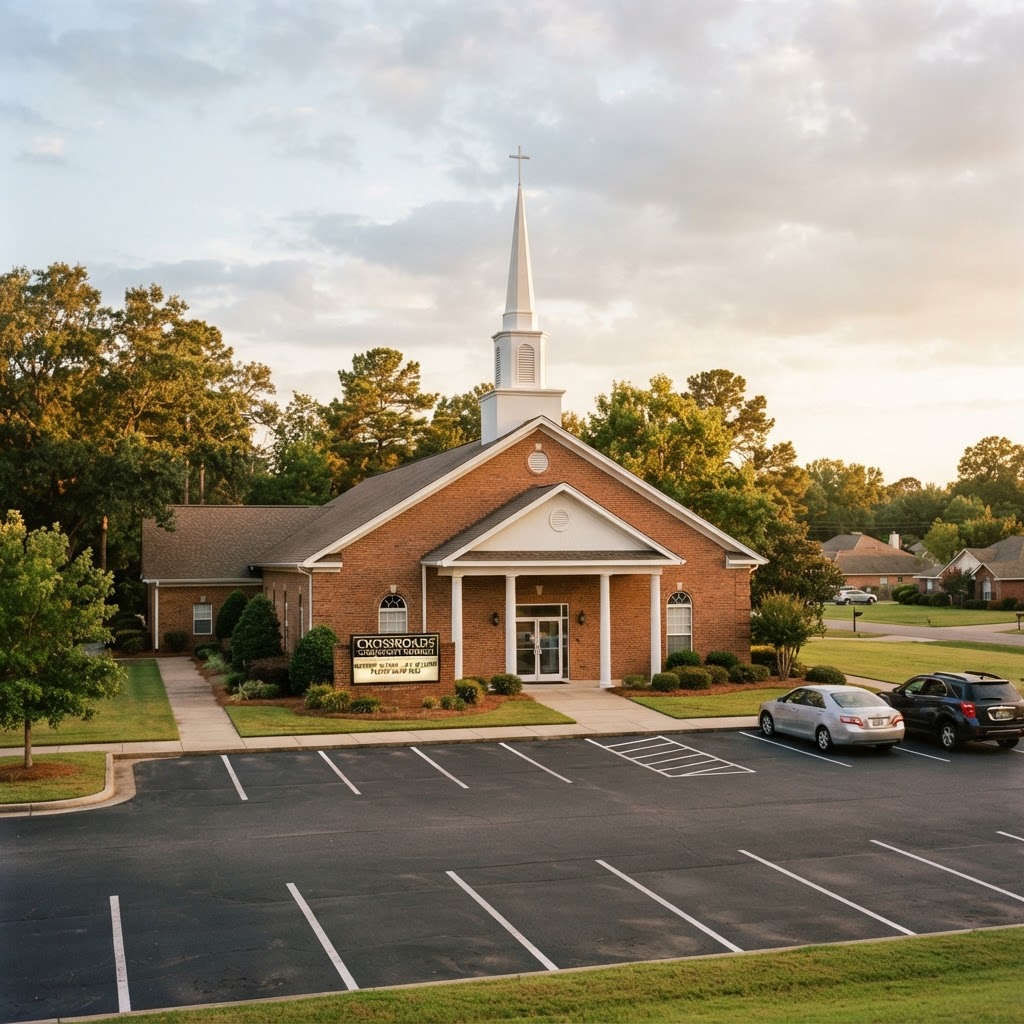
The evidence is visible on every major road. Compel Church, one of the county's largest congregations, operates multiple campuses across Olive Branch, Southaven, Horn Lake, and Hernando, having grown from 75 people in a leased storefront in 2002 to a multisite ministry reaching thousands. Great Commission Church sits off Goodman Road in Olive Branch, serving families from Southaven, Germantown, Collierville, and Byhalia. Eastpoint Church in Lewisburg offers expository preaching and community groups. SouthPoint Church, Life Fellowship, First Presbyterian, Cornerstone, and Bethel Baptist in Walls round out a landscape of congregations that spans every major denomination and non-denominational tradition.
The Association of Religion Data Archives, in its 2020 U.S. Religion Census, documented hundreds of congregations and tens of thousands of adherents across DeSoto County — a density of religious participation that places it firmly within the Bible Belt tradition even as its population diversifies.
This is not incidental. The people who moved to DeSoto County over the past two decades — many of them fleeing Shelby County, Tennessee, for better schools, lower taxes, and safer neighborhoods — brought their faith with them. New churches planted themselves alongside new subdivisions. The result is a county where Sunday morning still shapes the week.
What Churches Actually Do Here
To understand why faith matters in DeSoto County, look past the buildings and at the work. Local churches run food pantries, clothing drives, and back-to-school supply giveaways. They host recovery programs, marriage counseling, and financial literacy classes. They operate or support Christian schools and homeschooling cooperatives. They mobilize volunteers for disaster relief, prison ministry, and international missions.
The DeSoto Times has documented how DeSoto County churches participate in state-wide faith initiatives, including joining more than 235 Mississippi faith communities in prayer events for orphans and vulnerable children. That kind of organized compassion — faith communities acting on conviction — is the social infrastructure that government programs cannot replicate.
For conservative voters in DeSoto County, this is the point. When churches feed the hungry, counsel the addicted, and mentor the fatherless, they do what government does badly or not at all. The conservative case for religious freedom is not abstract; it is practical. A community that relies on its churches for social goods has every reason to protect those churches from government interference.
Christian Education and Parental Choice
DeSoto County's faith landscape includes Christian education alongside its public schools. While the DeSoto County School District is the third-largest in Mississippi, many families supplement or replace public education with church-based programs, homeschooling co-ops, and private Christian academies. The growth of school choice — supported by Mississippi's ESA (Education Scholarship Account) program — has given parents more tools to align their children's education with their values.
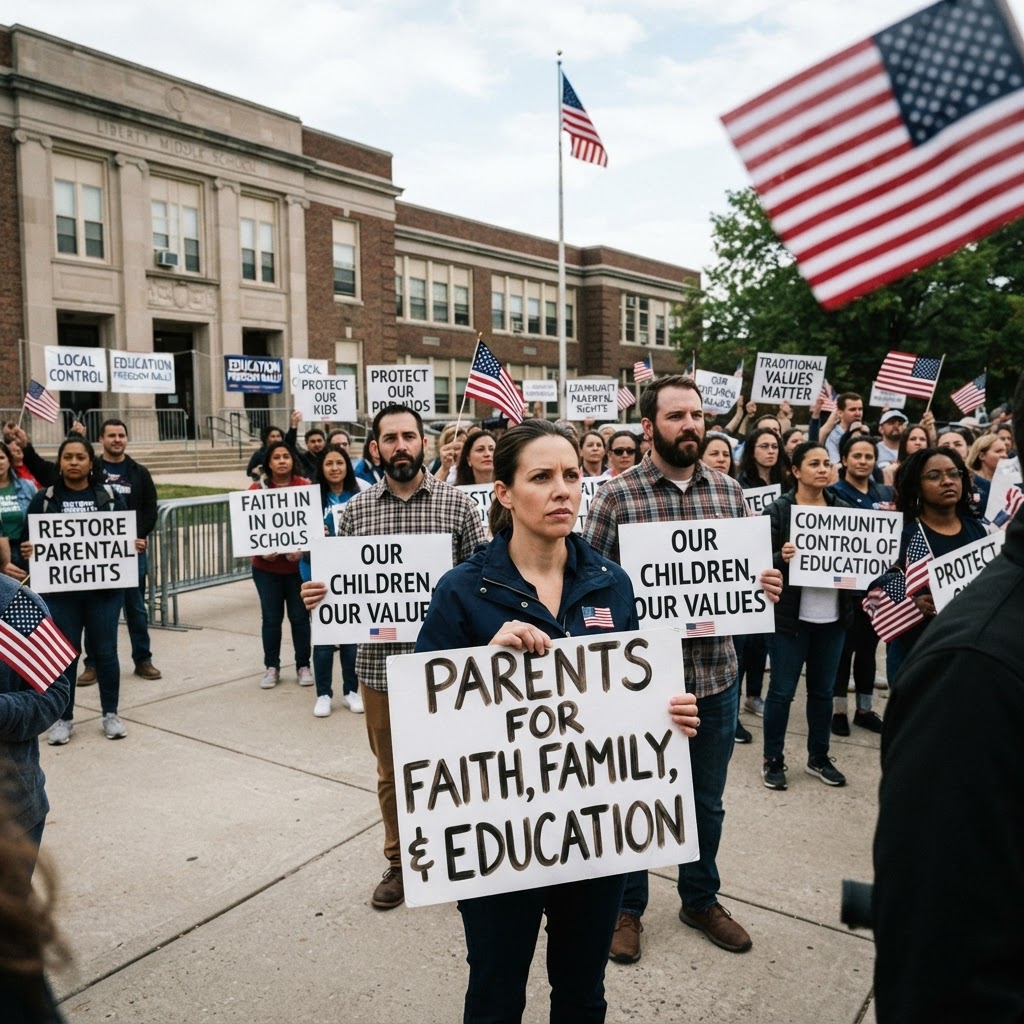
This matters politically. Parents who choose Christian education or homeschooling tend to be politically engaged on issues of curriculum transparency, parental rights, and religious liberty. They are the constituency that has pushed Mississippi lawmakers to pass protections for faith-based organizations and to resist federal overreach on education policy.
Religious Liberty as a Political Issue
Religious liberty is not a theoretical concern in DeSoto County. It is a live political question. Conservative voters here follow cases involving faith-based organizations, wedding vendors, foster care agencies, and school employees whose religious convictions conflict with government mandates. They supported Mississippi's laws protecting religious organizations from being forced to participate in activities that violate their beliefs.
The constitutional framework is clear: the First Amendment protects both the free exercise of religion and prohibits government establishment of religion. In practice, that means DeSoto County's churches can preach, evangelize, and operate ministries without government interference — and government cannot favor one denomination over another. The tension arises when government policy and religious conviction collide, as they have on issues of marriage, sexuality, and education.
For DeSoto County's conservative voters, the resolution is usually the same: when in doubt, protect the church. The political energy behind religious liberty is not about imposing theocracy; it is about preventing government from forcing believers to choose between their faith and their participation in public life.
Growth, Change, and the Challenge to Faith
Rapid growth brings challenges that DeSoto County's churches are still working through. New residents do not always share the faith of long-time families. Suburbanization can produce anonymity that makes community harder. The pressures of modern life — longer commutes, screen time, youth sports on Sundays — compete with church attendance. Some churches struggle to reach younger generations who are less likely to join institutions than their parents were.
Yet the evidence suggests DeSoto County's faith communities are adapting rather than declining. Multisite churches like Compel have grown precisely because they meet people where they are — in multiple locations, with contemporary worship, and with ministries designed for unchurched and de-churched populations. New church plants continue. The county's religious density, as measured by the ARDA, remains high.
The deeper question is whether DeSoto County's traditional culture can survive its own growth. When a county grows 23% in 15 years, the newcomers can outnumber the old-timers. The values that made the county attractive — strong schools, safe neighborhoods, low taxes, family-friendly communities — are themselves products of the faith culture that built them. If the churches weaken, the culture follows.
Why Conservative Voters Care
For conservative voters in DeSoto County, religious freedom is not a single-issue concern. It is a foundation. The same worldview that protects a church's right to operate a foster care ministry according to its beliefs also protects a parent's right to know what their child is taught in school, a business owner's right to operate according to conscience, and a citizen's right to speak freely in the public square.
That is why DeSoto County voters consistently elect officials who support religious liberty protections. It is why the county's Republican organizations — from the DeSoto County Republican Party to the DeSoto Republican Women — treat faith and family as central themes. And it is why national debates over religious liberty resonate so strongly here: DeSoto County residents see their own community in the headlines.
The Constitutional Boundary
It is worth being precise about what the Constitution does and does not allow. Government cannot establish a state religion. Public schools cannot proselytize. County funds cannot be used to promote one denomination. These are settled principles.
But government also cannot discriminate against religious organizations simply because they are religious. Churches can use public facilities on the same terms as secular groups. Faith-based organizations can compete for government grants on equal footing. Students can pray and form religious clubs in public schools. These, too, are settled principles — and they are the ones most often tested in a growing, diversifying county.
Why This Matters to DeSoto County
DeSoto County's future will be shaped by whether its churches remain strong. The county's schools, its charities, its civic organizations, and its political culture all draw on the moral formation that faith communities provide. If the churches hold, the county's traditional values hold with them. If they do not, the fastest-growing county in Mississippi will eventually look like every other suburban county — prosperous, diverse, and culturally unmoored.
For now, the evidence points toward resilience. The churches are full on Sunday. The ministries are active through the week. The voters are engaged. And the community, for all its growth, has not forgotten what built it.
For more on DeSoto County's civic and political life, see our DeSoto County hub, our elected officials directory, and our national Religious Freedom hub. For how DeSoto County's law enforcement is engaging with federal immigration policy, read our investigation into ICE cooperation. For the education debate shaping local families, see what Mississippi parents need to know about transgender policies in schools.
Frequently Asked Questions
How religious is DeSoto County, Mississippi?
DeSoto County has a high density of Christian congregations relative to its population, consistent with its location in the Bible Belt. The Association of Religion Data Archives documented hundreds of congregations and tens of thousands of adherents in its 2020 U.S. Religion Census. Major multisite churches like Compel Church operate across multiple DeSoto County cities.
What is the constitutional limit on religion in government?
The First Amendment protects the free exercise of religion and prohibits government establishment of religion. Government cannot promote one religion over another or compel religious participation, but religious organizations have equal access to public facilities and programs on the same terms as secular groups.
How has population growth affected DeSoto County's faith community?
DeSoto County has grown nearly 23% since 2010, bringing new residents who do not always share the faith of long-time families. However, churches have largely adapted through multisite campuses, contemporary worship, and outreach to unchurched populations, and the county's religious density remains high.
What role do churches play in DeSoto County's civic life?
DeSoto County churches operate food pantries, clothing drives, recovery programs, counseling services, school supply giveaways, and disaster relief efforts. They also support Christian education, homeschooling cooperatives, and community events that government programs cannot replicate.
Why do conservative voters in DeSoto County prioritize religious liberty?
Conservative voters see religious freedom as foundational to other liberties — parental rights, free speech, and freedom of conscience. They support laws protecting faith-based organizations from government mandates that conflict with their beliefs and elect officials who prioritize those protections.
Sources
Explore Mississippi
Explore more news, elections, representatives, and information from Mississippi.
Visit Mississippi State Profile