Faith & Family
Alpena School Board Reinstates Christmas Holiday After Parent Backlash Over Secularization
Alpena, Alcona County, Michigan
Facing intense pressure from hundreds of parents, the Alpena School Board reversed its decision to rename the Christmas break as a 'winter holiday' and reinstated the traditional designation, marking a victory for parents who pushed back against the secularization of public schools.

Key Takeaways
- •Alpena School Board voted 5-2 to reverse its decision to rename Christmas Break as 'Winter Holiday Break'
- •Parents gathered 1,200+ petition signatures — roughly 15% of Alpena's population of 10,000
- •200+ people attended the July board meeting, the largest turnout in recent memory
- •Multiple school districts nationwide have reversed similar holiday renaming decisions after parent pushback
The Alpena School Board voted 5-2 Monday evening to reverse its earlier decision to rename the Christmas break as "winter holiday," reinstating the traditional "Christmas Break" designation on the school calendar following weeks of intense parent backlash.
The reversal marks a significant victory for parents in this northeastern Michigan community who mobilized after the board voted in May to adopt a more secular school calendar — a move that critics said was part of a broader effort to erase Christian traditions from public life.
The Original Decision
In May, the Alpena School Board voted 4-3 to adopt a revised school calendar that renamed "Christmas Break" as "Winter Holiday Break" and "Easter Break" as "Spring Holiday Break." The decision was part of a broader calendar revision that also adjusted the start and end dates of the school year.
Board member Sarah Thompson, who introduced the calendar revision, said at the time that the change was intended to be more inclusive of families who celebrate different holidays. "Not all of our students celebrate Christmas or Easter," Thompson said. "By using more neutral language, we're making sure all families feel welcome in our schools."
But the decision sparked immediate and sustained opposition from parents, many of whom viewed the change as an unnecessary erasure of a cultural and religious tradition that has been part of American public life for generations.
Parent Backlash
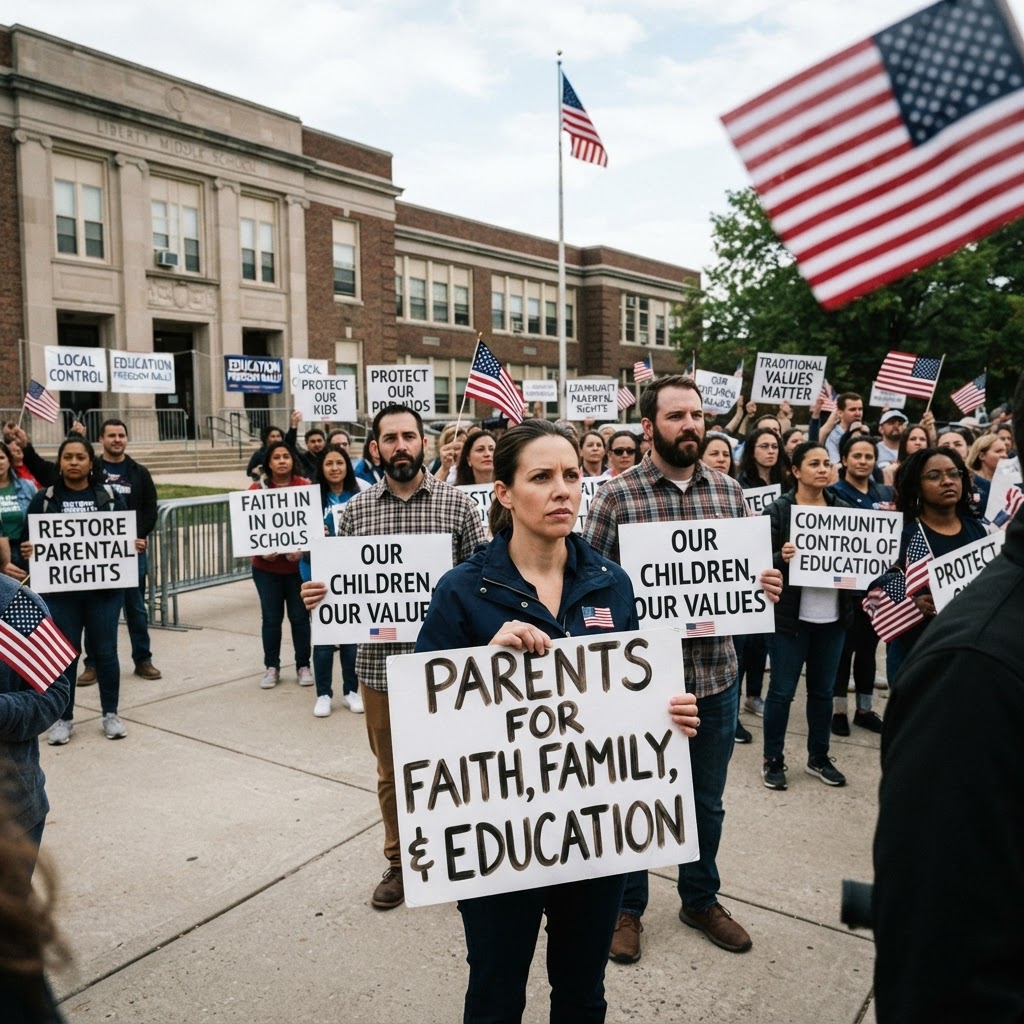
Within days of the May vote, a group of parents organized as "Alpena Parents for Traditional Values" and launched a petition drive to reverse the decision. The petition gathered more than 1,200 signatures — roughly 15% of Alpena's population of approximately 10,000.
"This was never about exclusion," said parent organizer Michelle Carpenter, who has two children in Alpena Public Schools. "It was about common sense. Christmas is a federal holiday. It's recognized in the U.S. Code. The school calendar always called it Christmas Break. Why change it? What problem were they trying to solve?"
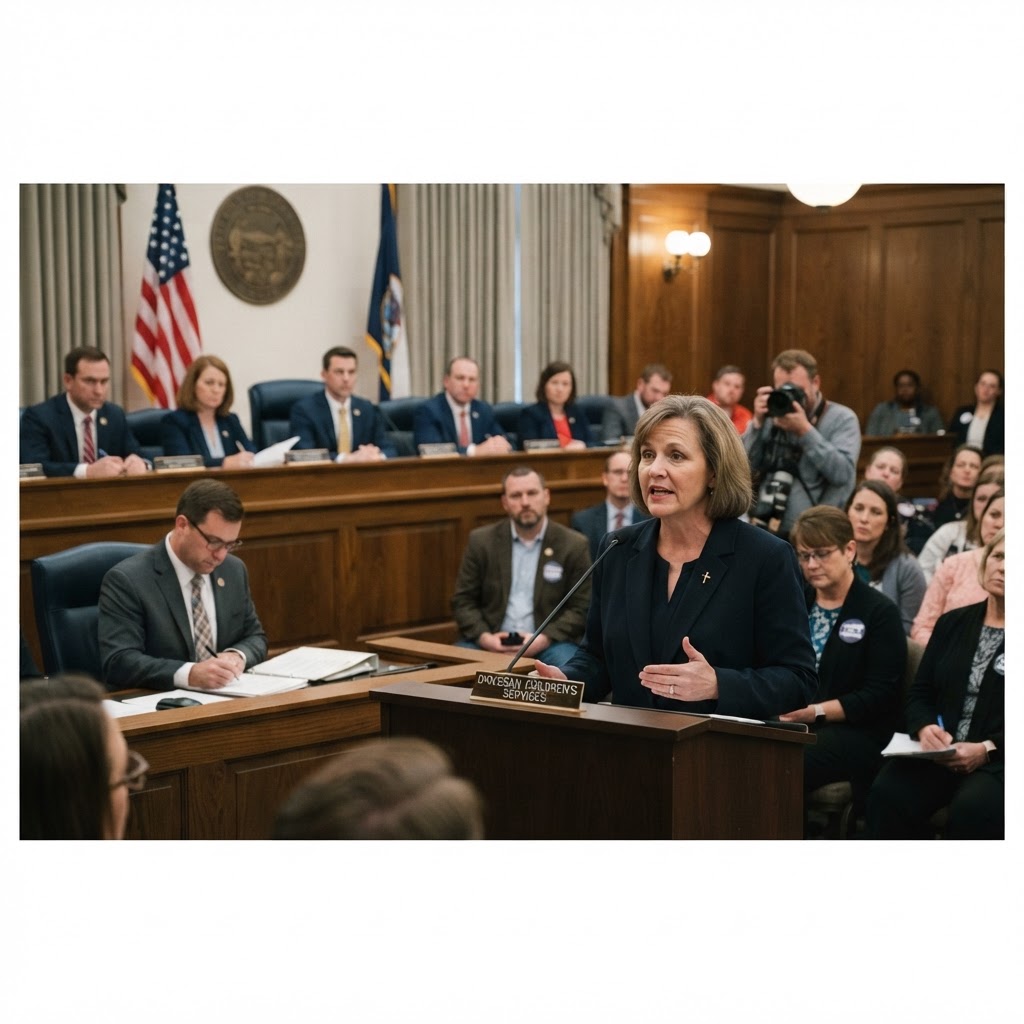
Carpenter and other parents attended every school board meeting between May and July, speaking during public comment periods and presenting the petition at each meeting. At Monday's meeting, more than 200 people packed the Alpena High School auditorium — the largest turnout for a school board meeting in recent memory.
Of the 23 speakers who addressed the board during the public comment period, 19 urged the board to reinstate the "Christmas Break" designation.
"Christmas has been celebrated in this country since before it was a country," said Alpena resident and grandfather David Kowalski. "George Washington celebrated Christmas. Abraham Lincoln celebrated Christmas. Now a school board in a town of 10,000 people decides it's offensive? That's not inclusivity. That's erasure."
The Board Reverses Course
Board members who voted in favor of the reversal acknowledged that the community had spoken clearly.
"I heard from hundreds of constituents," said Board Member Robert Schultz, who voted for the reversal after voting against the original name change. "Parents, grandparents, community members — they told me, loud and clear, that this change was unnecessary and unwanted. I was elected to represent this community, and this community wants Christmas Break back."
Board President Janet Diaz, who also voted for the reversal, said the board had underestimated the community's attachment to the traditional calendar. "We made a decision in good faith," Diaz said. "But I've come to realize that this was a solution in search of a problem. Christmas is a national holiday. It's a cultural tradition. Calling it Christmas Break doesn't exclude anyone — it simply names a holiday that 90% of Americans celebrate."
Board members Sarah Thompson and Michael Benson voted against the reversal, maintaining that the secularized language was more appropriate for a diverse public school system.
"I understand the community's perspective," Thompson said. "But I believe public schools should use inclusive language whenever possible. I'm disappointed, but I respect the board's decision."
A Broader National Debate
The Alpena debate reflects a broader national conversation about the role of religion in public institutions. Across the country, school districts have grappled with questions about holiday designations, religious displays, and the acknowledgment of Christian traditions in public schools.
In recent years, several high-profile cases have drawn national attention. In 2024, a school district in Texas passed a resolution affirming the right to call the December break "Christmas Break," drawing both praise and criticism. In 2025, a school district in Massachusetts reversed its decision to rename Christmas Break after parent pushback, similar to Alpena's experience. The Liberty Counsel, a national religious liberty legal organization, has sent letters to school districts across the country asserting that calling the break "Christmas Break" is constitutionally permissible, citing the Supreme Court's acknowledgment that Christmas has both religious and secular dimensions.
"Calling it Christmas Break is not a violation of the Establishment Clause," said Liberty Counsel founder Mat Staver. "Christmas is a federal holiday. The Supreme Court has acknowledged that Christmas has secular and cultural dimensions in addition to its religious significance. Schools are not establishing a religion by acknowledging a federal holiday."
Community Response
The reversal was met with enthusiastic applause from the crowd at Monday's meeting. Parents who had organized the petition drive said they were gratified by the outcome.
"This is what happens when parents get involved," said Michelle Carpenter. "We showed up, we spoke up, and the board listened. This is democracy in action. And it's a reminder that we don't have to accept decisions that go against our values. When we stand together, we can make a difference."
Pastor Robert Nguyen of Alpena's First Presbyterian Church, who attended the meeting, said the reversal was a positive sign for the community. "I don't think anyone is trying to force their faith on others," Nguyen said. "But there's a difference between acknowledging a national holiday and imposing religion. Christmas is part of American culture. Calling it by its name isn't an imposition — it's just honest."
What Happens Next
The revised calendar will go into effect for the 2026-2027 school year, which begins in August. The Christmas Break designation will be reinstated, and the spring break will be listed as "Spring Break" rather than "Spring Holiday Break."
Board President Diaz said the board has learned from the experience and will seek greater community input before making future calendar changes. "We heard the community," Diaz said. "And we're going to do a better job of listening going forward."
Explore Michigan
Explore more news, elections, representatives, and information from Michigan.
Visit Michigan State Profile