Faith & Family
Abilene County Commissioners Vote to Keep Ten Commandments Monument on Courthouse Lawn
Abilene, Dickinson County, Kansas
Dickinson County commissioners voted unanimously to keep a Ten Commandments monument on the courthouse lawn in Abilene, pushing back against an out-of-state legal challenge that threatened to force its removal.

Key Takeaways
- •Dickinson County commissioners voted 3-0 to keep a Ten Commandments monument on the Abilene courthouse lawn
- •The monument has stood since 1958 when it was donated by the Fraternal Order of Eagles
- •The Freedom From Religion Foundation demanded removal, citing the Establishment Clause
- •A local petition supporting the monument collected 1,800+ signatures in a town of 6,500
Dickinson County commissioners voted 3-0 Tuesday to keep a Ten Commandments monument on the courthouse lawn in Abilene, pushing back against a legal challenge from an out-of-state organization that demanded its removal.
The vote, which came after more than two hours of public comment from a standing-room-only crowd of approximately 200 residents, directs the county attorney to defend the monument against any legal action and affirms the commission's position that the display is a historical and cultural artifact, not a government endorsement of religion.
A Monument with Deep Roots
The six-foot-tall granite monument has stood on the Dickinson County Courthouse lawn since 1958, when it was donated by the Fraternal Order of Eagles, a civic organization that placed similar monuments in communities across the United States during the 1950s and 1960s. At the time, the monuments were part of a broader effort to promote moral values and civic virtue, and many were inspired by Cecil B. DeMille's 1956 film "The Ten Commandments."
"We're not talking about something that was put up last year to make a political statement," said Commission Chair Brad Andrews. "This monument has been part of the courthouse lawn for nearly 70 years. It's part of the history of this community. Generations of Abilene residents have walked past it. It's a fixture."
The Legal Challenge
In March, the Madison, Wisconsin-based Freedom From Religion Foundation (FFRF) sent a letter to Dickinson County demanding the monument's removal, arguing that its presence on government property violates the Establishment Clause of the First Amendment.
"Religious displays on public property send a message of exclusion to non-Christian residents," the letter stated. "The government should not be in the business of promoting one religion over another."
The FFRF's letter cited a 2005 U.S. Supreme Court decision in McCreary County v. ACLU, which struck down Ten Commandments displays in Kentucky courthouses. However, the same year, in Van Orden v. Perry, the Supreme Court upheld a Ten Commandments monument on the Texas State Capitol grounds, ruling that historical context and longevity could justify such displays.
County Attorney Boyd Ishmael said he believes Abilene's monument falls on the Van Orden side of that legal line. "Our monument has been here for nearly 70 years," Ishmael said. "It was placed as part of a broader cultural and historical movement. It's not a recent attempt to proselytize. The Supreme Court has acknowledged that context matters, and we believe the context here supports keeping it."
Community Turns Out in Force
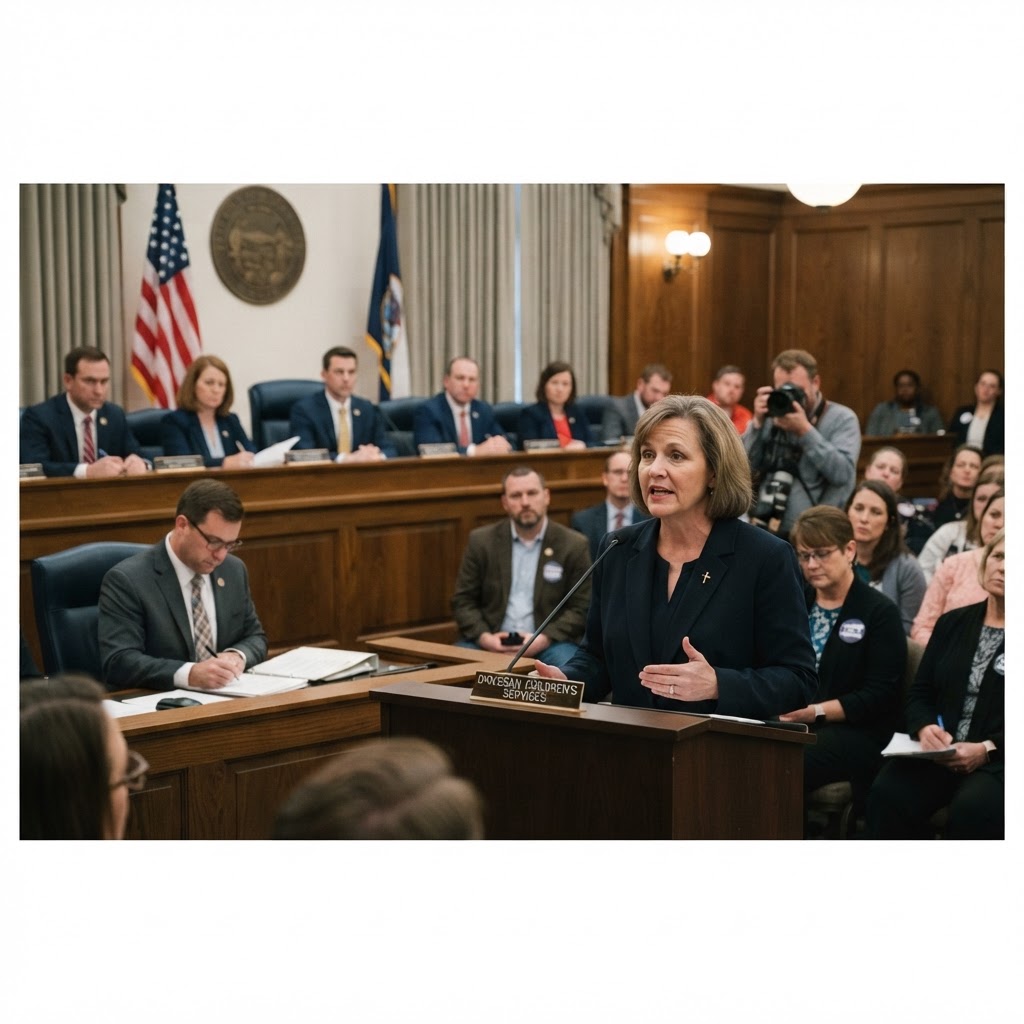
The public comment period drew an overflow crowd to the commission chambers, with residents lining the hallways of the courthouse. Of the 24 speakers who addressed the commission, 21 spoke in favor of keeping the monument.
Pastor David Whitfield of Abilene's First Baptist Church told commissioners that the monument represents the moral foundation of American law. "The Ten Commandments are not just a religious text," Whitfield said. "They are one of the foundational documents of Western civilization and American jurisprudence. You can't separate our legal system from the moral principles that shaped it."
Retired teacher Margaret Sullivan agreed. "I've lived in Abilene my entire life, and that monument has always been there," Sullivan said. "It's part of who we are. If someone from Wisconsin doesn't like it, they don't have to come here."
Three speakers urged the commission to consider the monument's removal, citing the separation of church and state. "I'm a Christian, and I love the Ten Commandments," said Abilene resident Tom Harris. "But I also believe that government property should be neutral. If we allow one religion's text on the courthouse lawn, we have to allow all of them."
A Broader National Debate
The Abilene vote comes amid a broader national conversation about religious displays on public property. In June 2024, Louisiana became the first state to require the Ten Commandments to be displayed in every public school classroom. Similar legislation has been proposed in Texas, Oklahoma, and several other states.
In 2025, the U.S. Supreme Court heard oral arguments in a case challenging Louisiana's law, and a ruling is expected later this year. Legal observers say the outcome could reshape the legal landscape for religious displays on government property nationwide.
Commissioner Andrews said the commission is prepared to defend the monument regardless of what happens at the national level. "We're not going to let an out-of-state group dictate what happens in Abilene, Kansas," Andrews said. "This community will decide what stands on its courthouse lawn."
What Happens Next
The commission's vote directs County Attorney Ishmael to prepare a legal defense of the monument and to seek assistance from the Liberty Justice Center, a national nonprofit law firm that has offered to represent the county pro bono.
Ishmael said he expects the FFRF to file a federal lawsuit within the next 60 days. If a lawsuit is filed, the case would be heard in the U.S. District Court for the District of Kansas.
In the meantime, a local group called "Friends of the Monument" has organized a petition supporting the display, collecting more than 1,800 signatures — roughly 30% of Abilene's population of 6,500.
"The people of Dickinson County have spoken," Andrews said. "We heard them, and we stand with them."
Explore Kansas
Explore more news, elections, representatives, and information from Kansas.
Visit Kansas State Profile