
Wisconsin School Funding Deal Collapses in Senate Vote
A $1.8B education funding and tax relief package backed by Gov. Tony Evers failed in the Wisconsin Senate after bipartisan opposition defeated the measure.
WorthFighting.org News
Staff Writer

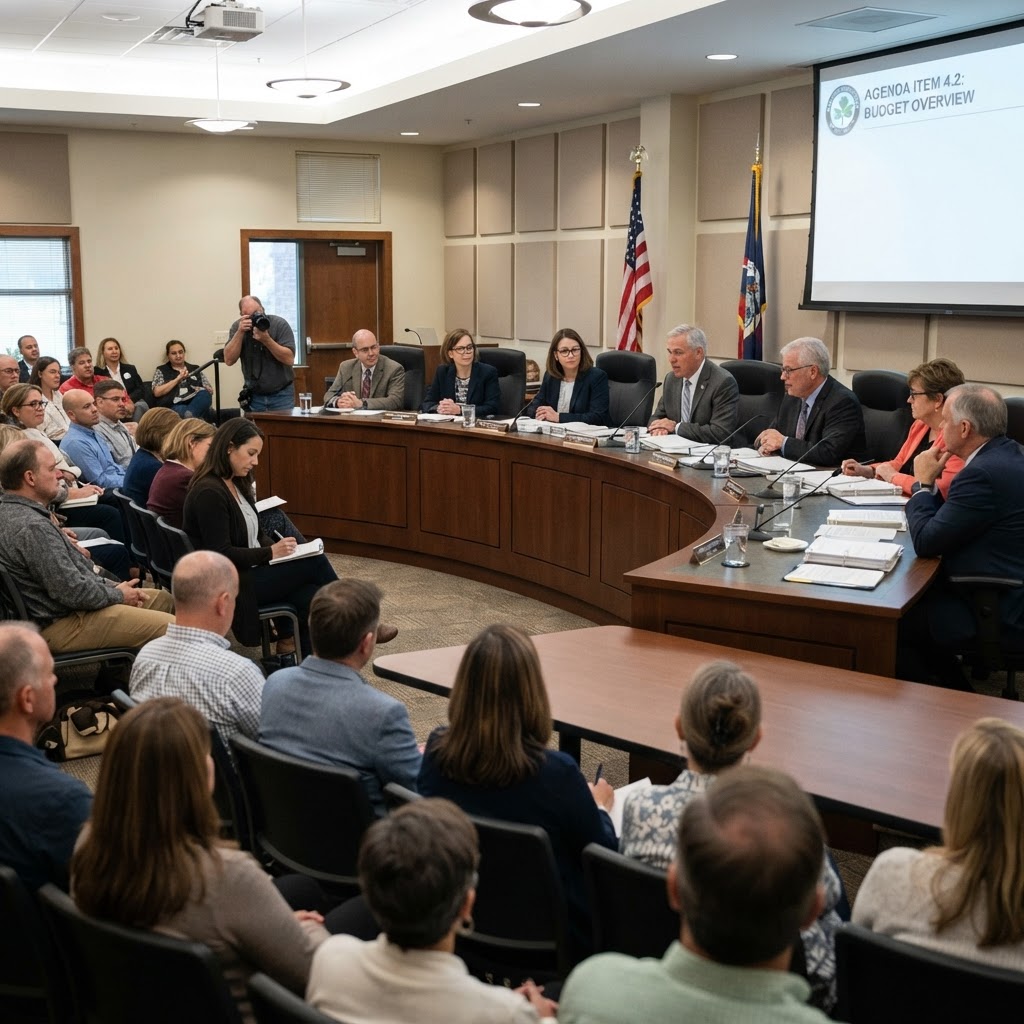
A high-stakes compromise aimed at pairing tax relief with education funding collapsed on the floor of the Wisconsin State Senate, leaving taxpayers and local school leaders in limbo.
The sweeping $1.8 billion legislative package, which had previously cleared the Wisconsin State Assembly, succumbed to a 15-18 vote in the upper chamber. The defeat marked an abrupt conclusion to months of tense back-room negotiations between Democratic Governor Tony Evers and legislative leaders under the Capitol dome in Madison, Dane County.
Opposition to the measure produced an unusual bipartisan coalition. Every voting member of the Democratic caucus opposed the legislation, accompanied by conservative Republican state Senators Steve Nass of Whitewater, Chris Kapenga of Delafield, and Rob Hutton of Brookfield. The pushback reflected differing fiscal concerns over how the state ought to allocate its multi-billion-dollar surplus without placing future burdens on the local economy.
Division Across the Aisle
The compromise framework had promised approximately $610 million in direct assistance to K-12 public classrooms across the Badger State. That sum included a mix of general school aids intended to ease the property tax burden on homeowners, alongside enhanced reimbursement rates to help local districts pay for federally mandated special education programs.
Despite Governor Evers putting his weight behind the plan, members of his own party voiced sharp resistance. Assembly Minority Leader Greta Neubauer publicly expressed hesitation during a post-vote briefing in Madison, arguing that her caucus viewed the proposed multi-billion-dollar outlay as unsustainable for long-term fiscal planning.
"It would have been great to get something done now, but we could have been in a position of cutting schools next year if we’d passed that bill yesterday," Neubauer told reporters, noting that Democrats preferred a significantly narrower footprint before depleting state reserve funds.
At the same time, fiscal conservatives rejected the spending targets as an overreach that failed to provide durable structural tax reform. The resistance from three key Senate Republicans ultimately doomed the bill’s chances of clearing the Senate floor.
Capitol Leadership in Flux
Political analysts noted that the sudden failure underscored shifting dynamics within Wisconsin state government. With Governor Evers, Assembly Speaker Robin Vos, and Senate Majority Leader Devin LeMahieu all concluding their respective tenures in office, the typical leverage used by party leadership appeared diminished.
University of Wisconsin-La Crosse associate professor Anthony Chergosky observed that the lame-duck posture among the central dealmakers removed the political discipline typically wielded by the governor's office.
"If Governor Evers were running for re-election, there would have been tremendous pressure on Democratic lawmakers to support the deal because this would have been a real political win for him going into the November election," Chergosky said, adding that public defeats of pre-arranged leadership bills remain a rare sight on the Senate floor.
Governor Evers issued a blunt rebuke following the late-night breakdown, lamenting the lost aid package for communities struggling with educational overhead.
"So many Wisconsinites feel left behind, frustrated, and disillusioned by politics these days because they think a lot of politicians in the Capitol are only here to serve themselves," Evers said in an official statement. "Today, they’re right."
Impact on Local School Districts
The deadlock leaves districts throughout southeastern and central Wisconsin confronting immediate budget strain. While state leaders debated in Dane County, local boards across the state have weighed operational referendums, staff reorganizations, and facility adjustments to address rising classroom expenses.
Many communities have argued that without predictable state assistance or structural reform in the education system, the burden will continuously fall on hardworking homeowners through localized property tax increases. For detailed analysis on educational accountability across states, visit our education coverage.
With lawmakers returning to their respective districts, any renewed efforts to deploy the state's budget reserves will likely remain stalled until the next legislative term convenes.
Why This Matters
The defeat of the Wisconsin compromise demonstrates how state-level gridlock directly impacts working families and homeowners. When legislators fail to deliver targeted, fiscally sound solutions for public instruction, school boards frequently resort to local property tax hikes or severe spending cutbacks. For taxpayers advocating for transparent, America First stewardship of public funds, the outcome serves as a reminder that surplus dollars must be managed prudently to safeguard local classrooms without ballooning long-term government liabilities.
Comments (0)
Be the first to comment.
Related Stories
Education
Ohio School Districts Face Financial Crisis at the Ballot
Across Ohio, multiple school districts are heading to the November ballot with critical tax levies, warning of severe budget cuts and potential consolidation.
WorthFighting.org News · 6 min read
Education
Iowa City Schools Face $32.5M Deficit and Potential Closures
The Iowa City Community School District is launching a boundary review committee as it grapples with a massive $32.5 million budget shortfall.
WorthFighting.org News · 6 min read

Education
Kentucky Education Fund Offers New Tax Credit Opportunity
A new initiative allows Kentucky taxpayers to support the Kentucky Education Fund while receiving tax credits through the Education Freedom Tax Credit program.
WorthFighting.org News · 5 min read
Education
Minneapolis Schools Face Potential Closure of 16 Campuses
Minneapolis Public Schools is considering closing 16 schools to address a $40 million deficit and declining enrollment. Families are bracing for major changes.
WorthFighting.org News · 6 min read
What People Are Reading

DHS Border Encounter Statistics: June 2026 Report
Wyoming Energy Authority Launches Power Grid Study
Iowa City School Board Approves $7.5M in Budget Cuts
Trump administration proposes stripping tax-exempt status from schools using race-based programs

California
Take Action
This country is worth fighting for. Get involved today.