
Greensboro Looks to an America First Revival After Decades of Trade-Deal Decline
Greensboro was once one of North Carolina’s great manufacturing engines, but decades of bad trade policy helped hollow out that legacy. Now, with America First trade ideas back at the center of the debate, many in the city see a real path to industrial renewal.
Daniel H. Mercer
Senior Staff Writer
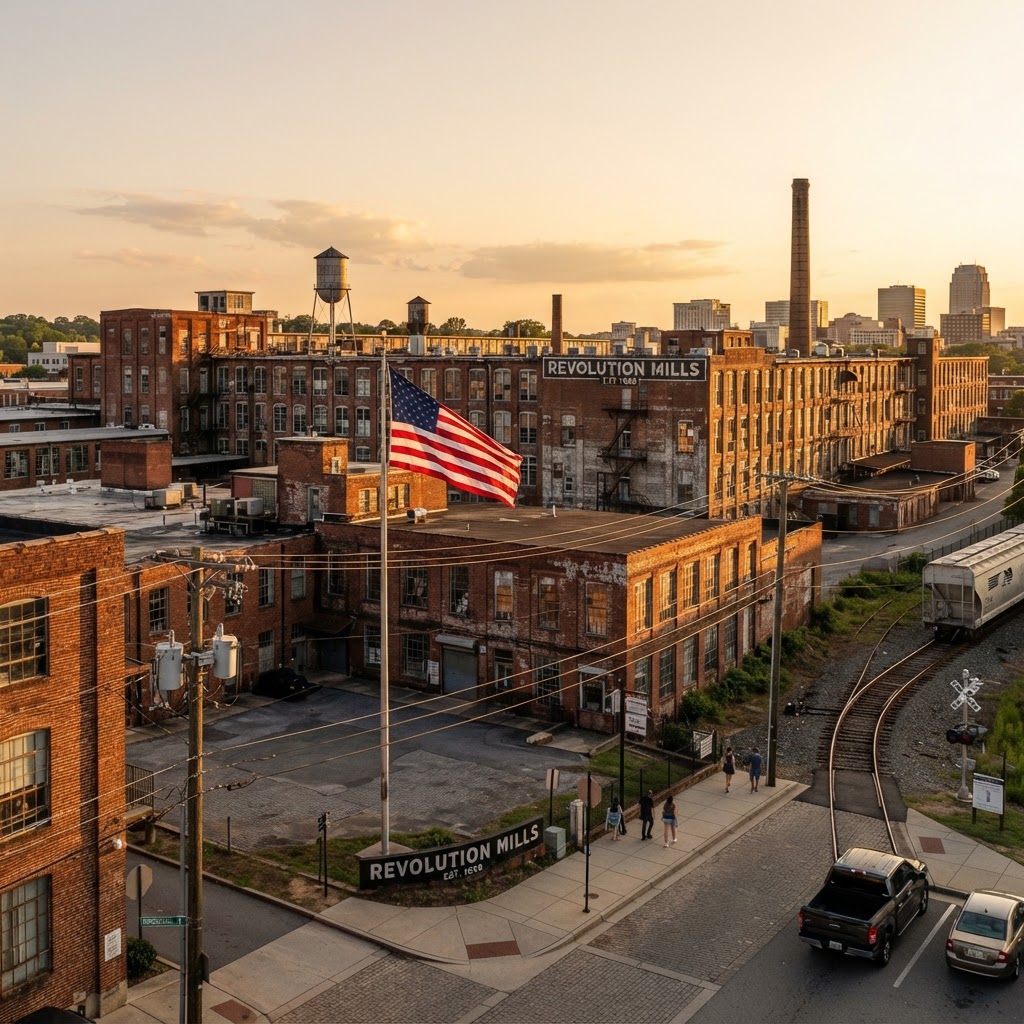
Greensboro, North Carolina, a city of roughly 300,000 residents in the heart of the Piedmont, was built by American industry. For generations, factories, mills, machine shops, and distribution hubs gave local families stable paychecks, upward mobility, and pride in honest work. But like so many once-thriving industrial cities across the country, Greensboro paid a heavy price for the bipartisan trade consensus that shipped jobs overseas and treated American workers as disposable.
Today, after years of plant closures, offshoring, and economic drift, a different vision is gaining ground: America First trade policy. For local business leaders, workers, and conservative advocates, the argument is straightforward. If Washington will put American production ahead of multinational profits, cities like Greensboro can build again.
From Mill Town Strength to Trade-Deal Pain
Greensboro’s economic identity was forged in manufacturing. Textiles, apparel, machinery, and related industries once helped define the city and the broader Triad region. Families could buy homes, raise children, and support churches and civic life on the strength of industrial wages.
Then came the familiar story of “free trade” promises that never materialized for working Americans. Agreements championed by establishment politicians opened the door for companies to chase cheap labor abroad, while China’s rise as a manufacturing giant intensified the pressure. Local plants faced impossible competition from countries with lower wages, weaker environmental standards, and governments willing to manipulate markets.
The result in Greensboro was not academic. It was personal.
Shuttered facilities, downsizing, and the slow erosion of the industrial base left scars that are still visible today. Older residents remember when a young man or woman could graduate, go to work, and build a life without leaving town. Too often now, that ladder has been kicked away.
“Greensboro didn’t fail its workers,” said Mark Ellison, a fictional but plausible manufacturing policy analyst with the Carolina Renewal Institute. “Washington failed them by signing trade deals that benefited Wall Street, global corporations, and foreign competitors while asking American communities to absorb the losses. The so-called experts promised efficiency. What Greensboro got was decline.”
That assessment resonates in a region where economic pain has often been softened in public language but rarely reversed in reality. Warehouse growth and service-sector hiring have helped, but many local conservatives argue those jobs have not fully replaced the wages, stability, and community strength generated by manufacturing.
“A country that can’t make what it needs is not truly secure, and a city that loses its industrial backbone loses more than payrolls,” said Councilman David Mercer, a fictional conservative local official. “It loses confidence, skills, and independence.”
America First Policies Change the Conversation
What makes this moment different, many say, is that America First trade policy has changed the terms of debate. Instead of treating offshoring as inevitable, the new approach asks a basic question: Why should the United States continue rewarding countries and corporations that undercut American labor and hollow out our productive base?
Tariffs, targeted trade enforcement, stronger Buy American rules, energy abundance, and incentives for reshoring have all become part of a broader industrial strategy. Critics in elite circles still complain that these policies disrupt the old global order. But in cities like Greensboro, that “old order” is remembered less as a success story and more as a long-managed decline.
There are practical reasons for optimism. Greensboro still has major strengths that make it attractive for a manufacturing comeback, including:
- Access to major highways, rail, and East Coast markets
- A long industrial tradition and skilled workforce base
- Nearby technical colleges and workforce training capacity
- Strategic proximity to the broader Piedmont Triad logistics corridor
- Lower costs than many larger metro areas competing for industrial investment
According to Rachel Boone, a fictional conservative economist and small-business adviser in Guilford County, the city is better positioned than many outsiders realize.
“Greensboro has the bones for a comeback,” Boone said. “What held it back was not a lack of talent or location. It was a federal policy environment that made it easier to build in Asia than in North Carolina. Reverse those incentives, and this region can compete with anybody.”
America First advocates also point out that rebuilding manufacturing is about more than economics. It is about national resilience. The supply chain shocks of recent years exposed how dangerous it is for the United States to depend on foreign adversaries or unstable overseas networks for critical goods. From machinery to electronics components to defense-related materials, domestic production is increasingly viewed as a matter of national security.
That message resonates strongly with conservative voters who understand that a nation with weak borders, weak industry, and dependence on foreign powers is a nation inviting vulnerability.
A Local Blueprint for a New Industrial Era
Still, hope alone will not reopen a plant floor. Greensboro’s path to a manufacturing renaissance will require discipline, leadership, and a rejection of the failed assumptions that got the country here in the first place.
Local leaders who want lasting growth should focus on several priorities:
- Encouraging industrial investment instead of overregulating it
- Partnering with community colleges to train welders, machinists, and technicians
- Supporting dependable, affordable energy that keeps production costs competitive
- Streamlining permitting for factories and industrial expansion
- Backing federal trade policies that penalize offshoring and reward domestic production
Conservatives in the region argue that rebuilding manufacturing also strengthens the social fabric. Stable industrial work supports marriage, homeownership, church life, and local civic institutions. It gives young people alternatives to debt-heavy college pathways and restores dignity to skilled trades that built the American middle class.
That is one reason the debate over trade is no longer confined to economists and corporate boards. It has become a kitchen-table issue. Parents want to know whether their children can find meaningful work close to home. Veterans want to know whether the country they served can still produce what it needs. Small business owners want to know whether Washington will finally stop privileging global conglomerates over domestic producers.
Greensboro cannot turn back the clock, and no serious observer claims every lost job will return overnight. But the city does not need nostalgia. It needs a strategy rooted in reality, patriotism, and a willingness to put American workers first.
For too long, communities like Greensboro were told to accept decline as the cost of “progress.” That was never acceptable, and it is even less acceptable now. If federal and state leaders stay serious about trade enforcement, industrial growth, and national self-reliance, Greensboro could once again become a place where American manufacturing is not a memory, but a future.
The lesson from this North Carolina city is one the country should heed: when government stops serving global interests first and starts fighting for its own citizens, industrial revival is not only possible — it is worth fighting for.
Comments (0)
Be the first to comment.
Related Stories
Economy
Nebraska Property Tax Reform Remains Top Priority for Voters
As Nebraska voters head toward the 2026 election, property tax relief remains a central issue. Legislative efforts continue to address the state's tax burden.
WorthFighting.org News · 6 min read

Economy
Florida Homeowners Remain Skeptical of Insurance Reforms
Despite state claims of a stabilizing insurance market, a new survey reveals that many Florida homeowners continue to struggle with high premiums and coverage
WorthFighting.org News · 6 min read
Economy
Denver Budget Standoff: Mayor Rejects Key Council Requests
Denver Mayor Mike Johnston has rejected major City Council budget requests, leaving critical public safety and infrastructure funding in a state of uncertainty.
WorthFighting.org News · 6 min read
Economy
Portland Budget Proposal Sparks Outrage Over Tax Hikes
Portland officials have unveiled a $363.9 million budget for 2027 that includes property tax increases and job cuts, leaving residents struggling with costs.
WorthFighting.org News · 6 min read
Economy
South Dakota Residents Push Back Against Energy Rate Hikes
South Dakota customers are organizing against a proposed 8.2% rate increase from MidAmerican Energy, citing concerns over rising costs for families and
WorthFighting.org News · 5 min read
Economy
East Providence Taxpayers Hit With 3.5% Property Tax Hike
East Providence residents face a 3.5% property tax increase following the approval of a $209.9 million budget by the City Council and Mayor Bob DaSilva.
WorthFighting.org News · 5 min read
Related Resources
Related Articles
8 itemsSame category: Economy
Same category: Economy
Same category: Economy
Related Breaking News
2 itemsRelated Watchlist Issues
1 itemRelated Issue Hubs
2 itemsRelated States
3 itemsShared keywords: north, carolina
Shared keywords: north
Shared keywords: carolina
What People Are Reading

DHS Border Encounter Statistics: June 2026 Report

Wyoming Energy Authority Launches Power Grid Study
Iowa City School Board Approves $7.5M in Budget Cuts
Trump administration proposes stripping tax-exempt status from schools using race-based programs

California
Take Action
This country is worth fighting for. Get involved today.