
Chicago's Summer of Blood: 210 Homicides and the Progressive Policies Killing the Windy City
Chicago homicides are up 6% in 2026 with 210 killed by June. Weekend shootings left 7 dead and 38 injured. Soft-on-crime policies and progressive prosecutors are destroying the city families once called home.
WorthFighting Editorial Team
Senior Editor

The Numbers Chicago Cannot Hide
The Chicago Police Department's own data tells a story that city officials have been desperately trying to spin. Through the end of June 2026, 210 homicides were recorded in Chicago — a nearly 6% increase over the same period in 2025. The city's first summer weekend alone saw 7 people killed and 38 injured in a spate of shootings that has become grimly routine for residents of the South and West Sides.
Mayor Brandon Johnson inherited a city in crisis and has made it worse. His administration has continued the failed policies of his predecessor — policies that prioritize the comfort of criminals over the safety of law-abiding citizens. While the mayor's office issues press releases about "community investment" and "violence interruption programs," bodies continue to pile up in neighborhoods that the political class would prefer to forget.
Chicago has some of the strictest gun laws in the nation. It also has one of the highest murder rates. The progressive response to this contradiction is always the same: demand more gun laws, defund the police, and release violent offenders back onto the streets. The result is a city where law-abiding citizens are disarmed and criminals operate with impunity.
The Progressive Prosecutor Problem
The single biggest factor in Chicago's crime crisis is the office of the Cook County State's Attorney. Progressive prosecutor policies — including the elimination of cash bail, the refusal to charge felons with gun crimes at the federal level, and the systematic downgrading of felony charges — have created a revolving door justice system that emboldens criminals and endangers communities.
When violent offenders are released within hours of arrest, they commit more crimes. When repeat offenders are treated as first-time offenders, they reoffend. When prosecutors refuse to seek maximum sentences for violent crimes, criminals learn that consequences are optional. These are not opinions — they are observable, documented patterns that have played out repeatedly under progressive prosecutorial regimes.
Cook County's bail reform experiment was supposed to reduce incarceration while maintaining public safety. Instead, it has released dangerous individuals back into communities that are already struggling with violence. The victims of this experiment are disproportionately Black and Hispanic — the very communities that progressive prosecutors claim to be protecting.
The Disappearance of Police
The Chicago Police Department has been hemorrhaging officers. Retirement rates have surged, recruitment has plummeted, and morale has collapsed. Officers who put their lives on the line every day have been demonized by politicians, investigated by oversight bodies with agendas, and second-guessed by media outlets that have never walked a beat.
The anti-police rhetoric from City Hall has consequences. When officers are afraid to do their jobs because any use of force could end their careers, they become reactive rather than proactive. When specialized units are disbanded because they are deemed too aggressive, the criminal elements they suppressed return. When officers leave for departments in jurisdictions that support law enforcement, response times increase and neighborhoods suffer.
The defund movement may have been rebranded, but its effects are still being felt. Budget cuts, hiring freezes, and the elimination of specialized units have all contributed to a department that is stretched thinner than ever. The citizens who suffer most are the ones who need police protection the most — residents of high-crime neighborhoods who cannot afford private security or a move to the suburbs.
The Human Stories Behind the Statistics
Every homicide number represents a life lost and a family destroyed. The 210 people killed in Chicago through June 2026 were sons, daughters, parents, and friends. Their deaths were not abstract policy failures — they were human tragedies that could have been prevented with competent governance and a functioning criminal justice system.
A 12-year-old boy killed by a stray bullet while sitting in his living room. A grandmother shot during a carjacking outside her church. A teenager gunned down waiting for a bus. These are the stories that do not make national headlines because they do not fit the narrative that progressive policies are working.
The neighborhoods most affected by Chicago's violence are also the neighborhoods most neglected by city government. Failing schools, shuttered businesses, inadequate city services — these are the conditions that breed crime, and they are the direct result of decades of one-party rule by politicians who take minority votes for granted while delivering nothing but excuses.
What Chicago Needs
The solutions to Chicago's crime crisis are not complicated. They require political courage, not new programs.
Support and rebuild the police department. CPD needs adequate staffing, competitive compensation, and political support from City Hall. Officers should know that the mayor and the state's attorney have their backs, not just their badges under a microscope. Specialized units that target violent offenders and illegal weapons should be restored and expanded.
Replace the progressive prosecutor. The Cook County State's Attorney's office needs a leader who will prosecute crimes, seek appropriate sentences for violent offenders, and prioritize the safety of victims over the comfort of criminals. Elections have consequences, and the next state's attorney election is an opportunity for Chicago voters to demand accountability.
End the catch-and-release system. Violent offenders should not be released within hours of arrest. Cash bail reform has been a disaster in jurisdictions that implemented it without safeguards. Dangerous individuals should be held pending trial, and the rights of victims should be prioritized over the convenience of defendants.
Invest in neighborhoods, not consultants. The millions spent on "violence interruption" programs and consulting contracts have produced no measurable results. That money should be invested in the communities that need it most — through school choice, business development incentives, and infrastructure improvements that make neighborhoods livable.
The Warning for Every American City
Chicago is not unique — it is a warning. The progressive policies that have devastated Chicago are being implemented in cities across the country. New York, Philadelphia, San Francisco, Portland, Seattle — the pattern is the same wherever defund-the-police, cashless bail, and progressive prosecution have been tried.
The good news is that the pendulum is swinging. Voters in cities across America are rejecting soft-on-crime policies and demanding public safety. Progressive prosecutors are being recalled. Law-and-order candidates are winning elections. But in Chicago, the crisis continues, and every weekend brings more funerals.
The Windy City deserves better than politicians who tweet about gun control while their streets run red. It deserves leaders who will support law enforcement, prosecute criminals, and prioritize the safety of citizens over the approval of progressive activists. Until that happens, Chicago's summer of blood will continue — and the victims will be the people who can least afford it.
Comments (0)
Be the first to comment.
Related Stories

Crime
Seattle Police Budget Hike Sparks Staffing Concerns
Seattle City Council members are clashing over Mayor Katie Wilson's proposed 13.9% police budget increase, questioning if it will truly boost officer numbers.
WorthFighting.org News · 6 min read
Crime
Rhode Island Sues Meta Over Rampant Scam Advertising
Attorney General Peter Neronha has filed a lawsuit against Meta, alleging the tech giant profits from billions of dollars in fraudulent ads on its platforms.
WorthFighting.org News · 6 min read
Crime
Louisiana Supreme Court Weighs In on AG Records Dispute
The Louisiana Supreme Court has prioritized a legal battle over grand jury records involving Attorney General Liz Murrill, marking a major development in the
WorthFighting.org News · 5 min read
Crime
Portland Police Struggle With Critical Staffing Shortages
Portland faces a public safety crisis as police staffing shortages lead to delayed response times and uninvestigated crimes across the city.
WorthFighting.org News · 6 min read
Crime
Rhode Island Implements New Rules for License Plate Readers
The McKee administration has released new guidance for automated license plate readers to ensure consistent data sharing and privacy standards across the state.
WorthFighting.org News · 5 min read
Crime
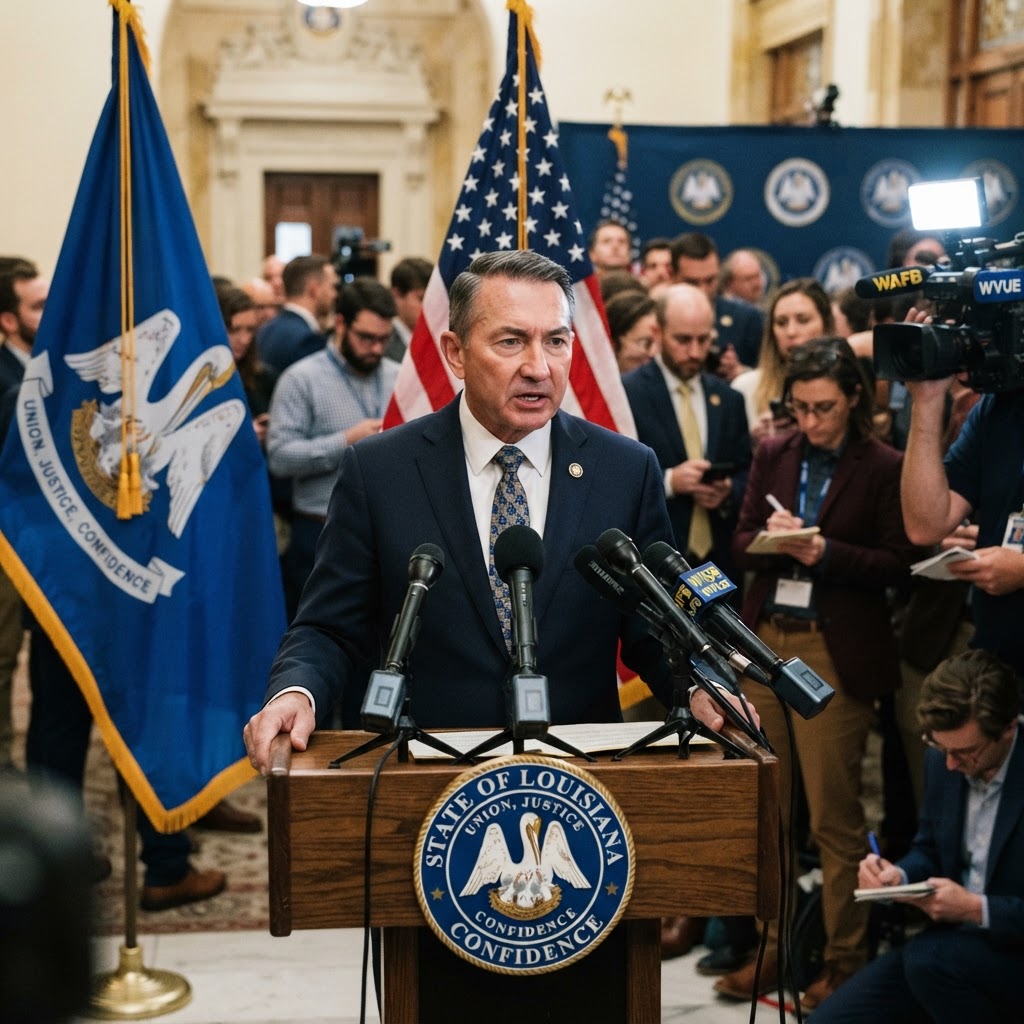
Governor Landry Declares Emergency Over Police Shortage
Governor Jeff Landry has declared a state of emergency in Louisiana to address a critical shortage of law enforcement officers across the state.
WorthFighting.org News · 6 min read
Related Resources
Related Articles
9 itemsSame category: Crime
Same category: Crime
Same category: Crime
Related Breaking News
2 itemsRelated Official Documents
2 items
What People Are Reading

DHS Border Encounter Statistics: June 2026 Report

Wyoming Energy Authority Launches Power Grid Study

Iowa City School Board Approves $7.5M in Budget Cuts
Trump administration proposes stripping tax-exempt status from schools using race-based programs

California
Take Action
This country is worth fighting for. Get involved today.