Elections
Claremont Voters Approve Measures to Strengthen Election Integrity at the Polls
Claremont, Sullivan County, New Hampshire
Residents of this Sullivan County city voted overwhelmingly to support photo identification requirements and enhanced ballot chain-of-custody procedures, adding Claremont to the list of New Hampshire communities pushing for tighter election security.

Key Takeaways
- •Claremont voters approved an advisory question supporting photo voter ID by 67%
- •The petition was organized by a local Army veteran who collected 400+ signatures
- •The measure calls for government-issued photo ID and enhanced ballot chain-of-custody procedures
- •Results will be sent to Claremont's state representatives with a request for legislation
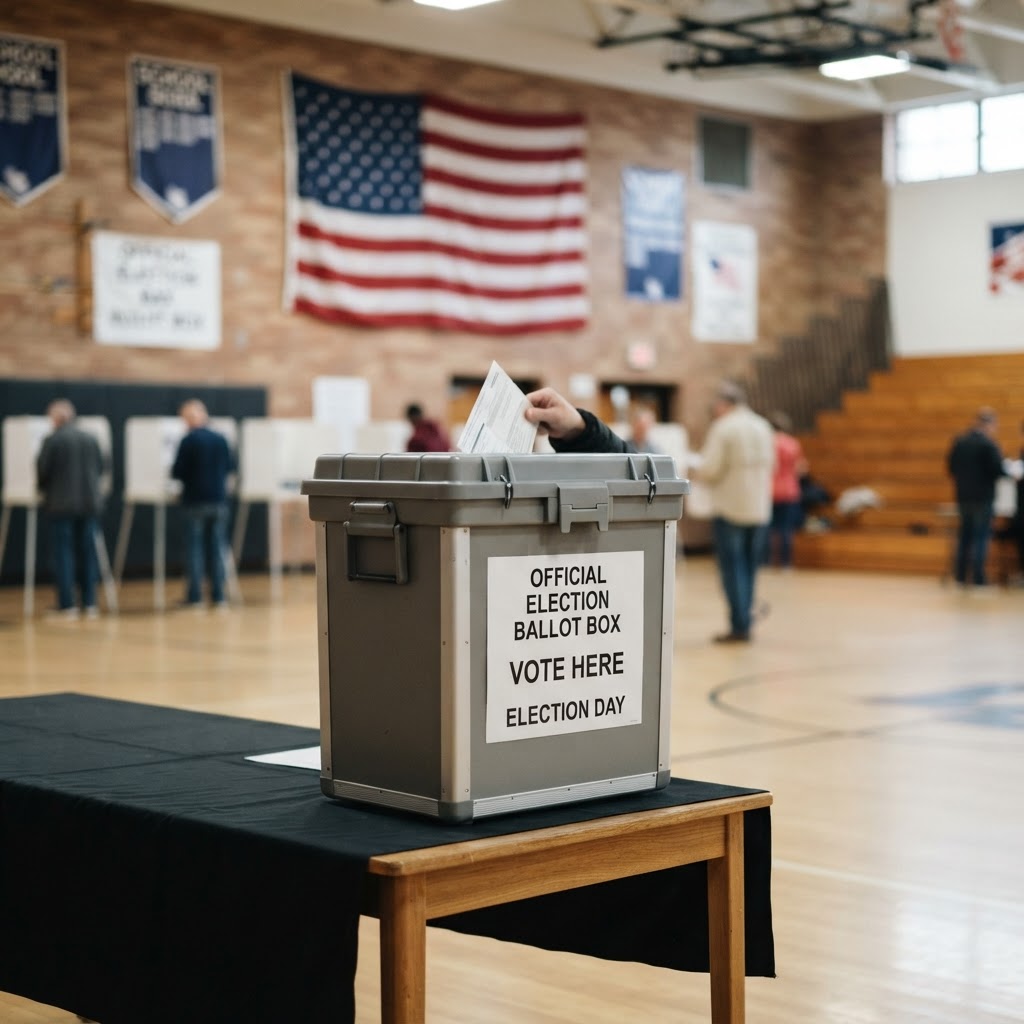
Voters in Claremont overwhelmingly approved a non-binding ballot question supporting photo identification requirements and enhanced ballot chain-of-custody procedures at local polling places, making this Sullivan County city the latest New Hampshire community to weigh in on the election integrity debate.
The advisory question, placed on the municipal ballot by petition, passed with 67% of the vote — 2,847 in favor and 1,398 opposed. While the result does not change state election law, it sends a clear signal to state representatives that Claremont residents want stricter safeguards at the polls.
A Community-Driven Effort
The petition was organized by Claremont resident and Army veteran Tom Bradley, who collected more than 400 signatures to place the question on the ballot. Bradley said he was motivated by what he sees as a lack of transparency in the voting process.
"Every legal vote should count, and every illegal vote dilutes the legal ones," Bradley said at a rally outside City Hall before the vote. "This isn't about any one candidate or any one election. It's about making sure the people of Claremont — and the people of New Hampshire — can trust that their elections are fair and secure."
New Hampshire already requires some form of identification to vote, but the advisory question asks the state legislature to strengthen the requirement to mandate a government-issued photo ID and to implement enhanced chain-of-custody procedures for all ballots, including absentee ballots.
Support Crosses Party Lines
While election integrity has become a national partisan flashpoint, supporters in Claremont note that the issue resonates across party lines in this working-class city of approximately 13,000 residents.
Donna Perkins, a registered Democrat who voted in favor of the measure, said she doesn't see photo ID as a partisan issue. "I need an ID to pick up a prescription, to board a plane, to cash a check," Perkins said. "Showing an ID to vote doesn't seem like too much to ask. I want to know my vote is protected."
Claremont Mayor Dale Gubbins, who supported the advisory question, said the city has a long tradition of civic engagement. "Claremont has always been a place where people speak their minds," Gubbins said. "The voters have spoken clearly, and now it's up to our representatives in Concord to listen."
What the Data Shows
New Hampshire's current voter ID law, passed in 2017, allows voters without a photo ID to sign an affidavit affirming their identity. Critics of the affidavit system argue it creates a loophole that could be exploited.
According to data from the New Hampshire Secretary of State's office, approximately 2,400 voters statewide used affidavit ballots in the 2024 general election — a small fraction of the more than 800,000 ballots cast. However, supporters of stricter ID requirements argue that even a small number of potentially fraudulent votes can make a difference in close elections.
New Hampshire Secretary of State David Scanlan has maintained that the state's elections are secure, citing post-election audits and same-day registration procedures as evidence of the system's integrity. However, he has also acknowledged that there is room for improvement in ballot-tracking procedures.
Opponents Raise Concerns
Not everyone in Claremont supported the measure. The New Hampshire Democratic Party and several progressive organizations campaigned against the advisory question, arguing that strict photo ID requirements disproportionately affect elderly voters, low-income residents, and students.
"These measures sound reasonable on the surface, but they create barriers for people who have every right to vote," said Claremont resident Linda Marsh. "We should be making it easier to vote, not harder."
Bradley dismissed the concern, noting that New Hampshire already offers free voter IDs through the Division of Motor Vehicles. "If someone can't get to the DMV for a free ID, we should help them get there — not lower the bar for everyone," he said.
What Happens Next
The advisory vote results will be sent to Claremont's state representatives — Rep. Michael O'Connor, Rep. Jonathan Spalter, and Sen. Lorraine Fenton — with a formal request that they support legislation to strengthen voter ID requirements and ballot-tracking procedures when the legislature convenes next session.
Mayor Gubbins said he plans to send a letter to each representative personally. "The people of Claremont have spoken," Gubbins said. "67% is not a narrow margin. I hope our representatives will carry our voice to Concord."
Explore New Hampshire
Explore more news, elections, representatives, and information from New Hampshire.
Visit New Hampshire State Profile