
DeSoto County · Mississippi · Property Tax Guide
DeSoto County Property Taxes: What Homeowners Actually Pay
A permanent, evergreen guide to DeSoto County property taxes — millage rates, assessment rules, homeowner examples for every city, homestead exemptions, and how to read your tax bill. Sourced from official Mississippi and DeSoto County records.
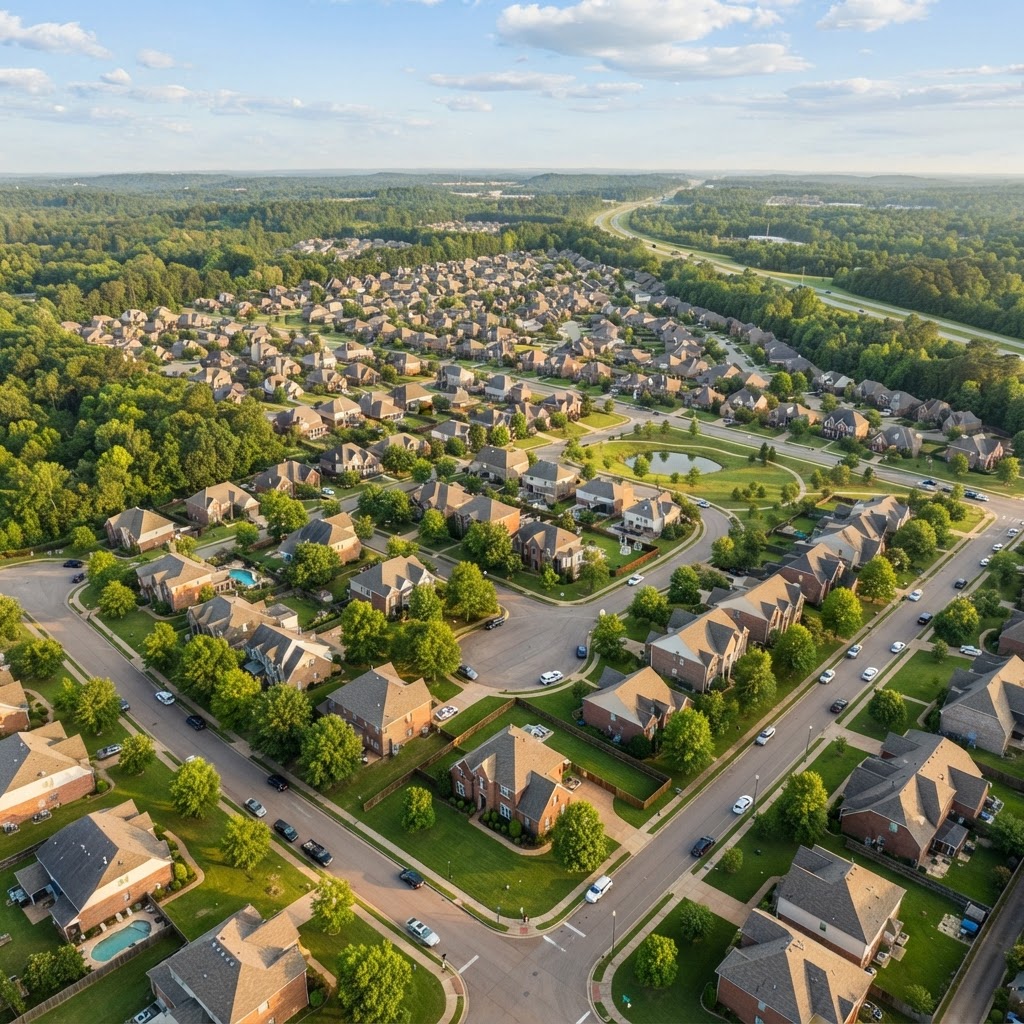
Property taxes are the primary funding source for DeSoto County government, the DeSoto County School District, and each of the county's five municipalities. Understanding how your tax bill is calculated — and why it can change even when elected officials hold the line on rates — is essential for every homeowner in Southaven, Olive Branch, Hernando, Horn Lake, Walls, and unincorporated DeSoto County.
This guide breaks down the Mississippi property tax system using official sources: the Mississippi Department of Revenue, the DeSoto County Economic Development Council, the DeSoto County Tax Assessor's Office, and the Mississippi State University Extension Service. Every figure is sourced and verified. Where data could not be independently confirmed, we say so clearly.
What Determines Your DeSoto County Property Tax?
Your property tax bill depends on three things: your property's true value (what the assessor says it's worth), the assessment ratio (set by Mississippi law based on property type), and the millage rate (set by each taxing jurisdiction — county, school district, and city — based on their budget needs).
Mississippi Property Tax Formula
True Value × Assessment Ratio × Millage Rate = Tax
One mill = $1 of tax per $1,000 of assessed value. Example: 80 mills on $30,000 assessed value = $2,400.
How Mississippi Assesses a Home
Mississippi's Constitution divides all property into five classes, each with its own assessment ratio. For most DeSoto County homeowners, the key distinction is between Class I (owner-occupied residential at 10%) and Class II (all other real property at 15%). If you live in the home you own, your assessment ratio is 10%. If you rent it out, use it as a second home, or leave it vacant, it falls to Class II at 15% — a 50% higher assessment.
| Class | Property Type | Assessment Ratio |
|---|---|---|
| Class I | Single-family, owner-occupied residential real property | 10% |
| Class II | All other real property (rental, commercial, land, second homes) | 15% |
| Class III | Personal property (inventory, equipment, furniture — not motor vehicles) | 15% |
| Class IV | Public utility property (excluding railroads and motor vehicles) | 30% |
| Class V | Motor vehicles (tag/tag renewal) | 30% |
Source: Mississippi Constitution (Miss. Code Ann. § 27-35-3); confirmed by MS Dept. of Revenue FAQ and MSU Extension Service. Class I is highlighted because it applies to most DeSoto County homeowners.
DeSoto County Millage
The DeSoto County Economic Development Council publishes the combined county + school millage rate for unincorporated areas. This is the base rate that every DeSoto County resident pays, regardless of city. City residents pay this base plus their city's millage.
| Fund | Mills | Abatable? |
|---|---|---|
| DeSoto County Schools | 46.49 | No |
| Road & Bridge | 6.00 | No |
| Debt Service | 1.50 | No |
| General County Levy | 4.00 | No |
| Other county funds (abatable) | 22.75 | Yes (industrial) |
| Total (County + School, average) | 80.74 | — |
Source: DeSoto County Economic Development Council (desotocounty.com). Rates effective October 1, 2025. There are 80 taxing areas in the county and the rate varies by area — this is a county average.
City Millage
Each DeSoto County city sets its own millage rate based on its budget. City residents pay the county + school base (80.74 mills) plus their city's millage. The table below shows the total combined millage for a homeowner in each city.
| Location | County + School | City | Total |
|---|---|---|---|
| Unincorporated DeSoto County | 80.74 | — | 80.74 |
| Hernando | 80.74 | 35.76 | 116.50 |
| Horn Lake | 80.74 | 45.00 | 125.74 |
| Olive Branch | 80.74 | 35.05 | 115.79 |
| Southaven | 80.74 | 40.45 | 121.19 |
| Walls | 80.74 | 40.00 | 120.74 |
Source: DeSoto County Economic Development Council (desotocounty.com). City millage rates effective October 1, 2025. County + school base is a county average and varies by taxing area.
Homeowner Tax Examples
The table below shows estimated annual property taxes for owner-occupied homes at four price points in each DeSoto County location. These are examples, not individual tax bills. Actual taxes depend on your assessed value, homestead status, specific taxing district, and any special-district levies.
| Location | Total Mills | $200,000 | $300,000 | $400,000 | $500,000 |
|---|---|---|---|---|---|
| Unincorporated DeSoto County | 80.74 | $1,615 | $2,422 | $3,230 | $4,037 |
| Hernando | 116.50 | $2,330 | $3,495 | $4,660 | $5,825 |
| Horn Lake | 125.74 | $2,515 | $3,772 | $5,030 | $6,287 |
| Olive Branch | 115.79 | $2,316 | $3,474 | $4,632 | $5,790 |
| Southaven | 121.19 | $2,424 | $3,636 | $4,848 | $6,060 |
| Walls | 120.74 | $2,415 | $3,622 | $4,830 | $6,037 |
Calculated using: True Value × 10% (Class I assessment ratio) ÷ 1,000 × Total Mills = Tax. No homestead exemption applied. Actual taxes will be lower for most homeowners who claim homestead exemption — see the homestead exemption guide.
Why Taxes Can Rise Even If Millage Falls
Your tax bill is the product of two numbers: your assessed value and the millage rate. If either goes up, your bill goes up — even if the other goes down.
DeSoto County is one of the fastest-growing counties in Mississippi. The 2025 reassessment raised many property values to reflect market growth. When values rise sharply, even a millage rate reduction can produce a higher tax bill. This is why some DeSoto County residents saw their taxes increase in 2025 even though the Board of Supervisors held the county millage rate flat for the 21st consecutive year.
Mississippi law requires Tax Assessors to revalue real property at least once every four years. The DeSoto County Tax Assessor chose to set new values at approximately 85–100% of market value in the 2025 reassessment, as mandated by the state. When your assessed value jumps, the millage rate would need to drop by a proportional amount to keep your bill flat — and that rarely happens.
Homestead Exemption
Mississippi offers three tiers of homestead exemption that can reduce your property taxes. Every homeowner who lives in their home should apply — the savings can be significant, especially for seniors and disabled residents.
Tier 1 — Regular Exemption
Eligibility: Homeowners under 65 who do not qualify for a disability exemption. Must own and occupy the home as their primary residence on January 1.
Benefit: Tax credit of up to $300 against property taxes owed. The credit is split across taxing jurisdictions (e.g., $150 county + $150 school). The credit applies to the first $7,500 of assessed value.
Tier 2 — Age / Disability Exemption
Eligibility: Homeowners who are at least 65 years old by January 1 of the tax year, OR who are totally disabled. Must provide proof of age (driver's license or birth certificate) or proof of total disability.
Benefit: Exempt from property taxes on the first $75,000 of true value. At the 10% assessment ratio, this exempts $7,500 of assessed value from all property taxes (county, school, and city).
Tier 3 — Veterans & Surviving Spouses
Eligibility: Honorably discharged American veterans age 90+ by January 1; unremarried surviving spouses of U.S. Armed Forces members killed or died on active duty; unremarried surviving spouses of reserve/National Guard members killed or died on active duty for training.
Benefit: Same $75,000 true-value exemption as Tier 2.
How to Check Your Tax Bill
DeSoto County provides an online Tax Receipt Inquiry where you can look up your current and prior year tax bills by name, parcel number, or property address.
- DeSoto County Tax Receipt Inquiry — official online lookup
- DeSoto County Tax Calculator — estimate taxes on a specific property
- DeSoto County Tax Assessor's Office — contact for assessment questions
How to Appeal an Assessment
If you believe your property has been over-assessed, you have the right to appeal. The process in Mississippi generally works as follows:
- Contact the Tax Assessor's Office first. Many disputes are resolved by reviewing the assessment records for errors (wrong square footage, incorrect lot size, etc.).
- File a formal appeal with the DeSoto County Board of Supervisors if the Assessor cannot resolve the issue. Deadlines are strict — contact the Assessor's office immediately upon receiving your assessment notice.
- Appeal to the Chancery Court if the Board of Supervisors denies your appeal. You will likely need an attorney for this step.
Contact the DeSoto County Tax Assessor's Office for specific appeal deadlines and procedures.
Important Dates
| Date | Event |
|---|---|
| January 1 | Homestead exemption filing period opens |
| April 1 | Homestead exemption filing deadline (5:00 PM) |
| February 1 | Property taxes due (for prior year assessment) |
| First Monday in April | Tax sale (if applicable) |
| Last Monday in August | Tax sale (if applicable) |
| October 1 | County/municipal fiscal year begins |
Source: Mississippi Dept. of Revenue Property Tax FAQ. The county/municipal fiscal year runs October 1 – September 30.
Frequently Asked Questions
What is the property tax assessment ratio for owner-occupied homes in Mississippi?
Owner-occupied single-family residential property (Class I) is assessed at 10% of true value. All other real property (Class II, including rental and commercial) is assessed at 15%.
What is the average millage rate in DeSoto County?
The average combined county + school millage for unincorporated DeSoto County is 80.74 mills (effective October 1, 2025). City residents pay additional city millage on top of this base. There are 80 taxing areas in the county and the rate varies by area.
When are DeSoto County property taxes due?
Property taxes are due on or before February 1 for property assessed the preceding year. If February 1 falls on a weekend or holiday, taxes may be paid the next business day without penalty.
How do I apply for homestead exemption in DeSoto County?
Apply at the DeSoto County Tax Assessor's Office between January 1 and April 1. You must own and occupy the home as your primary residence on January 1 of the tax year. Bring your date of birth, physical address, purchase price, and vehicle tag numbers.
Do seniors get a property tax break in DeSoto County?
Yes. Homeowners 65 or older (or totally disabled) are exempt from property taxes on the first $75,000 of true value. At the 10% assessment ratio, this exempts $7,500 of assessed value from all property taxes.
How can my property taxes go up if the millage rate stays the same?
Property taxes depend on both the millage rate and your assessed value. If your property value increases due to reassessment, market growth, or improvements, your tax bill can rise even if the millage rate is unchanged. Mississippi law requires reassessment at least once every four years.
Official Sources & Methodology
All millage rates, assessment ratios, and homestead exemption rules on this page are sourced from official government publications. Tax examples are calculated by WorthFighting using the official Mississippi property tax formula and verified millage rates. We distinguish clearly between official government data and WorthFighting calculations.
More DeSoto County Coverage
Homestead Exemptions
How to lower your property taxes
County Budget
Where taxpayer money goes
Elected Officials
Who represents DeSoto County
Election Results
Voting trends and certified results
DeSoto County Hub →
All DeSoto County News
Latest articles, politics, and community coverage
Republicans →
DeSoto Republicans
Events, organizations, and political resources
Featured DeSoto County Reporting
Crime & Safety →
DeSoto County and ICE: Local Immigration Enforcement
How the DA and Sheriff partner with federal immigration authorities.
Education →
Transgender Policies and DeSoto County Schools
What Mississippi parents need to know about Title IX and parental rights.
Faith & Family →
Faith Still Matters in DeSoto County
Why Christian values endure in Mississippi's fastest-growing county.