
Yuma's Warning: How the Border Crisis Crippled a Small Arizona Town and Why It Could Happen to Yours
Yuma, Arizona — population 100,000 — was overwhelmed by thousands of migrants crossing its border. Even as crossings fell, the impact remains. Here's what every American should learn from Yuma's ordeal.
WorthFighting Editorial Team
Senior Editor

The Town That Became a Border Crossing
Yuma, Arizona, is a small desert city of about 100,000 people on the Colorado River, just 30 miles from the Mexican border. For most of its history, it was known for agriculture, military installations, and as a winter destination for retirees escaping northern cold. Then the border crisis hit, and Yuma became ground zero for one of the most dramatic influxes of illegal border crossings in American history.
At the height of the crisis, over 6,000 migrants entered the United States near Yuma in a single five-day span. The Deseret News reported that border crossings in Yuma surged to levels that overwhelmed every system the small city had — law enforcement, healthcare, social services, and infrastructure. The Border Patrol's Yuma Sector, which covers 126 miles of border, was processing thousands of migrants per day, with agents pulled from field operations to process paperwork, leaving the actual border less secure.
Even as national headlines focused on larger border cities like El Paso and San Diego, Yuma was experiencing its own crisis on a scale that a community of 100,000 people was never designed to handle. The story of Yuma is the story of what happens when federal policy fails and small communities are left to deal with the consequences.
The Scale of the Surge
The numbers from Yuma's border crisis are staggering. During the peak months, the Yuma Sector was encountering more migrants per mile of border than almost any other sector in the country. Migrants from dozens of countries — not just Mexico and Central America, but Africa, the Middle East, and Asia — crossed into the Yuma area, taking advantage of gaps in border infrastructure and the administration's catch-and-release policies.
The impact on the local community was immediate and severe. The Yuma Regional Medical Center, the only hospital in the area, was overwhelmed with migrants needing medical care — from injuries sustained during the crossing to communicable diseases to pregnancies. Local law enforcement was stretched thin responding to incidents involving migrants, from property crimes to traffic accidents. Schools were strained by the arrival of non-English-speaking children. Local food banks and charities were depleted.
The humanitarian crisis at the border was real, but it was a crisis created by policy choices, not by circumstance. When the federal government signals that the border is open, that migrants who cross will be released into the interior rather than returned, and that there are no consequences for illegal entry — the result is entirely predictable. People come. They come in numbers that overwhelm the systems designed to process them. And small communities like Yuma bear the brunt.
The Fentanyl Pipeline
Beyond the humanitarian crisis, Yuma's proximity to the border made it a corridor for drug trafficking, particularly fentanyl. The cartels that control the human smuggling routes also use those routes to move drugs — and fentanyl, which is cheap to produce and extraordinarily profitable, has become their primary product.
Border Patrol agents in the Yuma Sector regularly interdict vehicles loaded with fentanyl, methamphetamine, and other drugs. On June 30, 2026, Yuma Station agents stopped a vehicle near Araby Road and Gila Ridge Road, arresting a U.S. citizen driver for smuggling. But for every vehicle intercepted, many more get through. The Border Patrol itself estimates that it interdicts only a fraction of the drugs that cross the border.
The fentanyl that makes it through Yuma and other border crossings ends up in communities across America. It kills over 100,000 Americans per year. It destroys families, devastates communities, and fuels an addiction crisis that has no precedent in American history. Every gram of fentanyl that crosses the border near Yuma has the potential to kill hundreds of Americans — and the policies that allowed the border crisis to occur are directly responsible for those deaths.
The Impact That Lingers
Even as border crossings in the Yuma sector have decreased — the Deseret News noted that "Border Crossings Fell In Yuma. The Impact Didn't" — the effects of the crisis linger. The community has been changed in ways that may take years to fully understand.
The hospital system, which was pushed to the brink during the peak of the crisis, is still recovering financially from the uncompensated care it was forced to provide. Local law enforcement budgets were strained by the overtime and equipment costs associated with the migrant surge. Schools are still dealing with the enrollment impact of students who arrived during the crisis. The trust between the community and federal authorities has been damaged by the perception — accurate — that Washington abandoned Yuma to deal with a crisis it created.
And the security concerns remain. The cartels that operate in the Yuma area have not gone away. The smuggling routes are still active. The vulnerabilities that allowed the surge still exist. A change in federal policy — or a change in administration — could trigger another wave at any time.
The Lesson for Every American
Yuma's story is not just a border story. It is a story about what happens when the federal government makes policy decisions without regard for the communities that bear their consequences. And it is a warning for every American community, because the effects of the border crisis do not stay at the border.
The migrants who crossed near Yuma did not stay in Yuma. They were processed, given court dates, and released to destinations across the country. The fentanyl that crossed near Yuma did not stay in Yuma. It was distributed to communities in every state. The cartel networks that operated through Yuma did not limit their activities to Arizona. They extended their reach into communities across America.
When the border is not secure, every American community is a border community. The crisis that overwhelmed Yuma is the same crisis that has overwhelmed schools in New York, hospitals in Chicago, and neighborhoods in Denver. The difference is that Yuma experienced it first and most intensely — because it was at the actual border.
What Yuma Teaches Us About Border Security
The Yuma experience offers several clear lessons for American border policy.
Physical barriers work. Where border wall construction was completed near Yuma, crossings in those sectors dropped dramatically. The wall funneled traffic to areas where Border Patrol could respond effectively. The sections of border that remained unfenced were the sections where the surge was most intense.
Enforcement, not processing, deters illegal crossing. When migrants who crossed near Yuma were detained and returned to Mexico under the Remain in Mexico policy, crossings dropped. When the policy changed to catch-and-release, crossings surged. The policy determines the flow — and the current administration's policies created the surge.
Small communities cannot absorb federal policy failures. A city of 100,000 cannot process thousands of migrants, provide medical care, house the overflow, and maintain public safety without federal support that was never provided. The federal government owes Yuma and communities like it for the costs they bore as a result of federal policy choices.
Border security is national security. The fentanyl that flows through border towns like Yuma kills Americans in every state. The individuals on the terror watch list who were encountered at the border represent threats that extend far beyond the border region. A secure border is not just a local issue — it is a national imperative.
The Fight for Yuma — and for America
Yuma, Arizona, is a small city that was thrust onto the front lines of a national crisis by federal policy failures. Its residents — law enforcement officers, healthcare workers, teachers, farmers, and ordinary citizens — bore the consequences of decisions made in Washington by politicians who have never visited the border and do not understand its impact.
The fight for Yuma is the fight for every American community affected by the border crisis — which is to say, every American community. The border must be secured. The wall must be completed. Catch-and-release must end. The cartels must be dismantled. The fentanyl that is killing Americans by the tens of thousands must be stopped at its source.
Yuma's warning is clear: without border security, no community is safe. The fight for the border is the fight for the safety, sovereignty, and prosperity of every American. It is a fight we cannot afford to lose.
Comments (0)
Be the first to comment.
Related Stories
Border Security
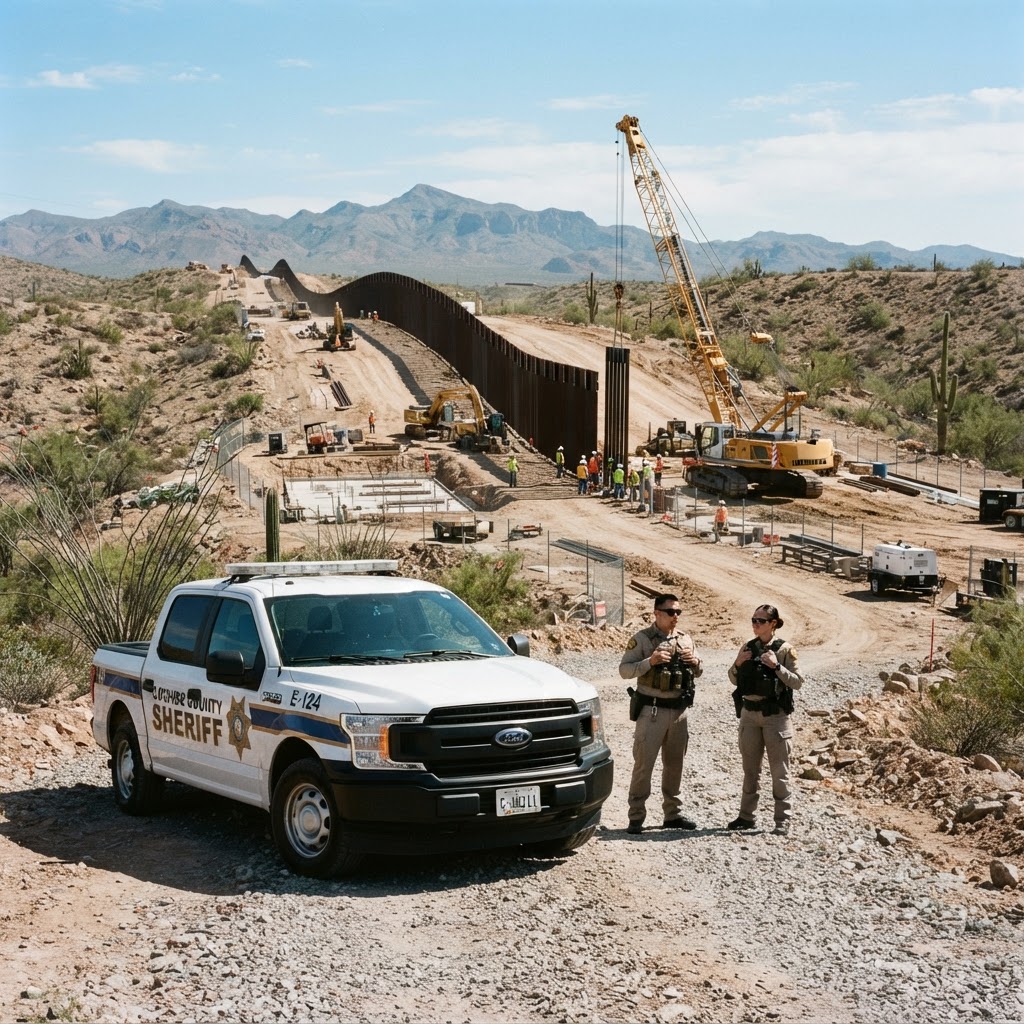
Cochise County Deputies Arrest Protesters at Border Wall Site
Cochise County law enforcement arrested three individuals protesting the construction of the new federal border wall, citing safety and security concerns.
WorthFighting.org News · 6 min read
Crime
Seattle Police Budget Hike Sparks Staffing Concerns
Seattle City Council members are clashing over Mayor Katie Wilson's proposed 13.9% police budget increase, questioning if it will truly boost officer numbers.
WorthFighting.org News · 6 min read
Economy
Nebraska Property Tax Reform Remains Top Priority for Voters
As Nebraska voters head toward the 2026 election, property tax relief remains a central issue. Legislative efforts continue to address the state's tax burden.
WorthFighting.org News · 6 min read
Economy
Florida Homeowners Remain Skeptical of Insurance Reforms
Despite state claims of a stabilizing insurance market, a new survey reveals that many Florida homeowners continue to struggle with high premiums and coverage
WorthFighting.org News · 6 min read
Crime
Rhode Island Sues Meta Over Rampant Scam Advertising
Attorney General Peter Neronha has filed a lawsuit against Meta, alleging the tech giant profits from billions of dollars in fraudulent ads on its platforms.
WorthFighting.org News · 6 min read
Economy
Denver Budget Standoff: Mayor Rejects Key Council Requests
Denver Mayor Mike Johnston has rejected major City Council budget requests, leaving critical public safety and infrastructure funding in a state of uncertainty.
WorthFighting.org News · 6 min read
Related Resources
Related Articles
12 itemsSame category: Border Security
Same category: Border Security
Same category: Border Security
Related Breaking News
1 itemRelated Official Documents
9 itemsRelated Watchlist Issues
1 itemRelated Issue Hubs
1 itemRelated States
1 itemShared keywords: arizona
What People Are Reading
East Providence Taxpayers Hit With 3.5% Property Tax Hike
Florida Homeowners Remain Skeptical of Insurance Reforms
Chicago Aldermen Clash Over Mayor Johnson’s Budget Cuts
Alabama Supreme Court Weighs Absentee Ballot Law
Wyoming Energy Authority Launches Power Grid Study
Take Action
This country is worth fighting for. Get involved today.