
Utah Supreme Court Limits Legislative Power on Redistricting
The Utah Supreme Court ruled that the state legislature cannot ignore voter-approved initiatives, a landmark decision impacting redistricting and voter rights.
WorthFighting.org News
Staff Writer
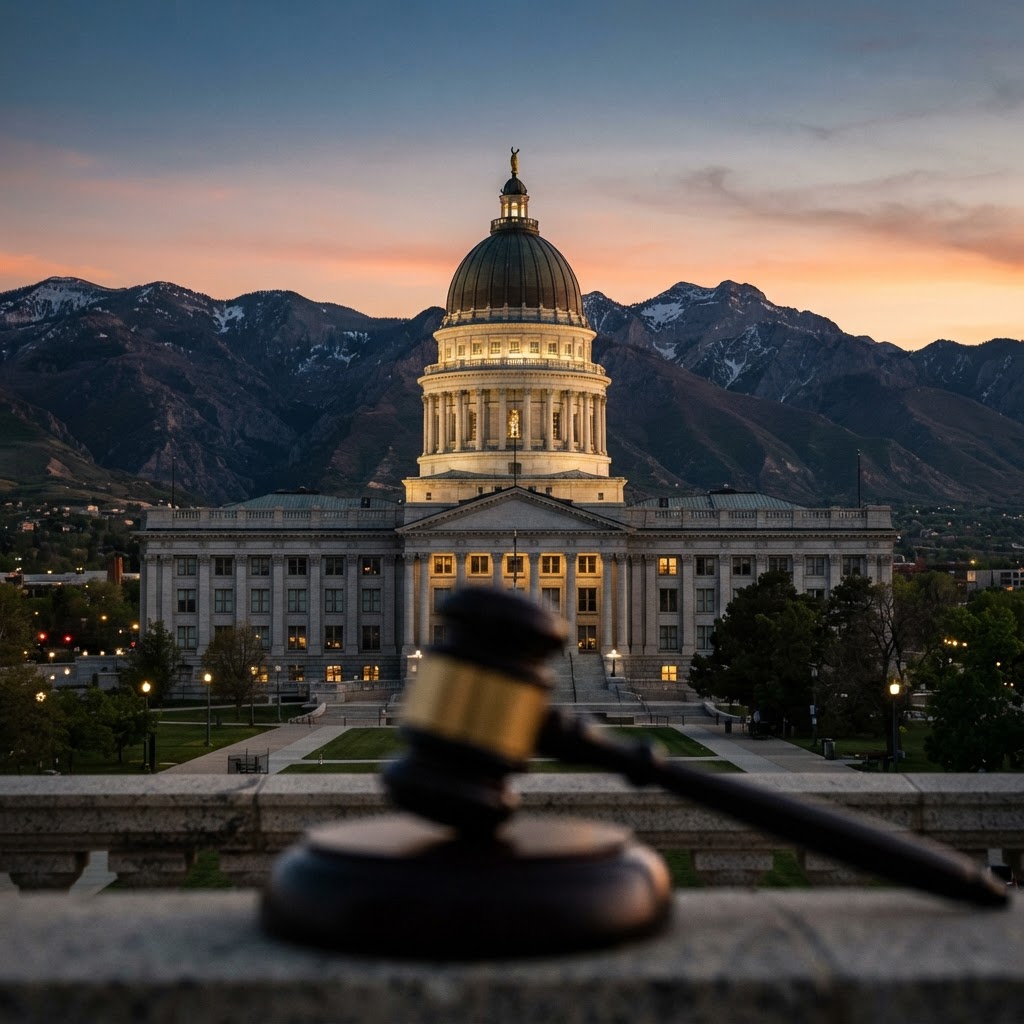
A major ruling from the Utah Supreme Court is reshaping the fight over who truly controls redistricting in the Beehive State.
On Thursday, July 11, 2024, the court unanimously ruled that the Utah Legislature went too far when it repealed key parts of Proposition 4, a voter-approved 2018 initiative designed to create an independent redistricting commission. The decision sends the case back to a lower court, where judges will now decide whether the congressional maps adopted by lawmakers in 2021 violate the Utah Constitution.
For Salt Lake City, Salt Lake County, and the rest of Utah, the ruling marks a significant moment in the long-running battle over voter initiatives, the power of the state legislature, and the future of redistricting.
Utah Supreme Court Draws a Clear Constitutional Line
In its opinion, the Utah Supreme Court said the state constitution protects the people’s authority to change their government through the initiative process. The justices wrote, “The people’s right to alter or reform their government is a fundamental right.”
That language is the heart of the court’s decision.
The justices concluded that lawmakers exceeded their constitutional authority when they dismantled the core purpose of Proposition 4 after Utah voters had approved it. Rather than allowing the independent commission created by the initiative to guide the process as intended, the Republican-led Utah Legislature altered the law in 2020, reducing the commission to an advisory role.
The following year, lawmakers approved their own congressional maps.
Now, the Supreme Court has made clear that the legislature cannot simply erase the substance of a voter-backed reform effort without running into constitutional limits.
What Proposition 4 Was Meant to Do
Utah voters passed Proposition 4 in 2018 amid growing public frustration over partisan map-drawing. The initiative aimed to curb gerrymandering by establishing an independent redistricting commission.
Supporters of the measure argued that voters, not politicians, should have a stronger voice in how district boundaries are drawn. The commission was intended to provide a more neutral process and reduce the chance that elected officials would choose voters instead of voters choosing their representatives.
That debate became especially intense in Salt Lake County, where the congressional map adopted in 2021 divided the county into four separate districts. Critics argued that splitting the state’s population center that way diluted the influence of voters in and around Salt Lake City.
The legal challenge that followed became one of the most closely watched cases in Utah politics, combining questions about redistricting with broader concerns about constitutional self-government.
Legislature Changed the Rules After Voters Spoke
The dispute traces back to actions taken after Proposition 4 passed.
In 2020, the Utah Legislature modified the law approved by voters. Those changes made the independent commission advisory rather than binding, and lawmakers retained the final say over the maps. In 2021, legislators then replaced the voter-backed map framework with maps of their own.
That sequence set up the current constitutional clash: can the legislature revise or repeal a citizen initiative in a way that effectively nullifies what voters approved?
The Utah Supreme Court’s answer, at least in this case, was no.
The ruling does not immediately throw out the current maps. Instead, it sends the case back to a lower court to determine whether the 2021 congressional maps are unconstitutional under the standards laid out by the Supreme Court.
That means the legal fight is not over, but the framework has changed dramatically.
A Broader Fight Over Voter Initiatives
The importance of this case goes beyond district lines.
At stake is the balance of power between Utah citizens and elected officials in the state capitol. The ruling reinforces the idea that voter initiatives are not merely symbolic acts that can be brushed aside once lawmakers return to session.
That is why the case has drawn intense attention from those tracking elections and constitutional disputes across the country.
The decision could become a reference point in future cases involving ballot initiatives, especially in states where legislatures have sought to revise or weaken measures approved directly by the people.
The court’s opinion centers on the Utah Constitution’s protection of the people’s ability to alter or reform government. By framing that right as fundamental, the justices elevated the constitutional standing of citizen-led political action.
At the same time, the case reflects the tension that often exists between direct democracy and representative government. One argument raised in the case warned that “This decision strips away the ability of state, county, and municipal authorities to enact policies.” But the Supreme Court’s ruling indicates that legislative power still has limits when it collides with constitutional protections reserved to the people.
What Happens Next
The case now returns to a lower court, which will examine whether the congressional maps enacted in 2021 are unconstitutional.
That next phase will matter greatly for Utah voters, particularly in Salt Lake County, where the map design became a central issue in the gerrymandering lawsuit. If the lower court ultimately finds the maps unconstitutional, the state could face another round of redistricting battles with significant political consequences.
For now, the Supreme Court has not issued a final ruling on the map lines themselves. Its decision instead establishes that the legislature’s treatment of Proposition 4 crossed a constitutional boundary.
That distinction is important. The justices did not resolve every dispute in the case, but they did settle a critical principle: voter-approved reforms carry real constitutional weight.
Why This Matters
This Utah redistricting ruling is a landmark decision because it strengthens the ability of citizens to use voter initiatives to shape state policy without seeing their work immediately undone by the political class.
For conservatives who believe government should remain accountable to the people, the ruling underscores a basic constitutional truth: public power ultimately flows from the consent of the governed, not from entrenched institutions protecting themselves.
The decision also has practical consequences. It puts fresh scrutiny on the 2021 maps, reopens the debate over how Salt Lake County was divided, and signals that future attempts to weaken voter-approved reforms may face serious judicial resistance.
Most importantly, the ruling changes the balance of power in Utah. It protects grassroots political action, reinforces constitutional limits on the Utah Legislature, and ensures that when voters in Salt Lake City, Salt Lake County, and across the state approve reforms at the ballot box, those decisions cannot be casually set aside.
In a time when trust in public institutions is under pressure nationwide, that message could carry far beyond Utah.
Comments (0)
Be the first to comment.
Related Stories
America First
Salem City Council Imposes Moratorium on AI Data Centers
The Salem City Council has approved a temporary moratorium on new AI data centers to address concerns regarding water, electricity, and land-use impacts.
WorthFighting.org News · 6 min read
Crime
Seattle Police Budget Hike Sparks Staffing Concerns
Seattle City Council members are clashing over Mayor Katie Wilson's proposed 13.9% police budget increase, questioning if it will truly boost officer numbers.
WorthFighting.org News · 6 min read
Economy
Nebraska Property Tax Reform Remains Top Priority for Voters
As Nebraska voters head toward the 2026 election, property tax relief remains a central issue. Legislative efforts continue to address the state's tax burden.
WorthFighting.org News · 6 min read

Economy
Florida Homeowners Remain Skeptical of Insurance Reforms
Despite state claims of a stabilizing insurance market, a new survey reveals that many Florida homeowners continue to struggle with high premiums and coverage
WorthFighting.org News · 6 min read
Crime
Rhode Island Sues Meta Over Rampant Scam Advertising
Attorney General Peter Neronha has filed a lawsuit against Meta, alleging the tech giant profits from billions of dollars in fraudulent ads on its platforms.
WorthFighting.org News · 6 min read
Economy
Denver Budget Standoff: Mayor Rejects Key Council Requests
Denver Mayor Mike Johnston has rejected major City Council budget requests, leaving critical public safety and infrastructure funding in a state of uncertainty.
WorthFighting.org News · 6 min read
Related Resources
Related Articles
13 itemsShared tags: Proposition 4, Utah Legislature, voter initiatives
Same category: America First
Same issue hub: election-integrity
Related Breaking News
2 itemsShared keywords: landmark, supreme, court
Related Official Documents
4 itemsRelated States
1 itemShared keywords: utah
What People Are Reading
East Providence Taxpayers Hit With 3.5% Property Tax Hike
Florida Homeowners Remain Skeptical of Insurance Reforms
Chicago Aldermen Clash Over Mayor Johnson’s Budget Cuts
Alabama Supreme Court Weighs Absentee Ballot Law
Wyoming Energy Authority Launches Power Grid Study
Take Action
This country is worth fighting for. Get involved today.