Trust or Tyranny: Can America's Election System Survive Mail-In Ballots in 2026?
Universal mail-in voting has eroded confidence in American elections. With 2026 approaching, voters must demand security, transparency, and integrity in the electoral process.
WorthFighting Editorial Team
Senior Editor

The Crisis of Confidence
Trust in the American electoral system has reached historic lows. Polling consistently shows that a significant percentage of Americans — across party lines — have doubts about the integrity of the electoral process. This crisis of confidence is not the result of one election or one candidate's claims. It is the predictable consequence of fundamental changes to how Americans vote — changes that were implemented rapidly, often without adequate safeguards, and frequently over the objections of state legislators.
The most significant of these changes has been the expansion of universal mail-in voting. Prior to 2020, mail-in voting was largely limited to absentee ballots requested by voters who could not vote in person. The pandemic was used as a justification to bypass normal legislative processes and implement universal mail-in voting in states across the country. In some cases, this was done by executive order or judicial fiat, bypassing the state legislatures that the Constitution explicitly designates as the bodies responsible for setting election rules.
The result has been an electoral system that is more vulnerable, less transparent, and more difficult to audit than at any point in modern American history.
The Security Problems with Mail-In Ballots
Mail-in voting introduces multiple vulnerabilities that do not exist with in-person voting.
Voter registration rolls are inaccurate. Mail-in ballots are sent to every name on the voter registration rolls, but those rolls are notoriously inaccurate. They contain the names of deceased individuals, people who have moved to other states, non-citizens, and duplicate registrations. When ballots are mailed to all registered voters, thousands of ballots are sent to addresses where the registered voter no longer resides. These ballots can be intercepted, filled out, and returned by someone other than the intended voter.
Signature verification is unreliable. The primary safeguard for mail-in ballots is signature verification, but this process is inherently subjective and inconsistent. Studies have shown that signature verification has high error rates — both in accepting fraudulent signatures and in rejecting legitimate ones. In some jurisdictions, signature verification requirements have been relaxed or eliminated entirely, removing even this minimal safeguard.
Chain of custody is broken. When a voter casts a ballot in person, the chain of custody is clear and secure. The voter presents identification, receives a ballot, marks it, and deposits it in a secure container in the presence of election officials. With mail-in voting, the ballot leaves the secure environment of the polling place and travels through the postal system, sits in mailboxes, and is handled by unknown individuals before being returned. The chain of custody is broken at every step.
Ballot harvesting creates opportunities for fraud. Many states allow third parties to collect and deliver mail-in ballots — a practice known as ballot harvesting. This creates obvious opportunities for coercion, intimidation, and fraud. A political operative who collects dozens or hundreds of ballots can discard those from voters who support the opposing candidate, alter ballots, or pressure vulnerable voters to vote a certain way.
The Transparency Problem
Beyond the security vulnerabilities, universal mail-in voting has created a transparency crisis. In-person voting produces results that are known on election night. The votes are counted in public, observed by representatives of both parties, and the results are typically available within hours of the polls closing.
Mail-in voting has changed this entirely. In many states, mail-in ballots cannot be processed until election day, meaning that counting takes days or even weeks. The extended counting period creates opportunities for manipulation and erodes public confidence. When results change dramatically in the days following an election, as happened in several high-profile cases, it naturally raises questions about the integrity of the process.
The refusal of some jurisdictions to allow meaningful observation of the counting process, the covering of windows at counting centers, the midnight ballot drops that overwhelmingly favor one candidate — these are not conspiracy theories. They are documented events that have contributed to the erosion of public trust.
The Constitutional Question
The United States Constitution is explicit about who has the authority to set election rules. Article I, Section 4 states: "The Times, Places and Manner of holding Elections for Senators and Representatives, shall be prescribed in each State by the Legislature thereof."
This means that state legislatures — not governors, not courts, not election officials — have the constitutional authority to set the rules for elections. Yet in 2020, many of the changes to election procedures were made without legislative approval. Executive orders, court rulings, and decisions by election officials bypassed the constitutional process.
This is not a partisan concern. It is a constitutional one. When the rules governing elections can be changed by officials who are not accountable to the people's elected representatives, the entire system of representative government is undermined. If the rules can be changed without legislative approval before one election, they can be changed before any election — by whichever party holds power.
What Election Integrity Requires
Restoring confidence in American elections requires implementing common-sense security measures that are standard in most developed democracies.
Voter ID requirements. Every American should be required to present identification to vote. This is not voter suppression — it is common sense. Identification is required to board a plane, rent an apartment, open a bank account, and pick up a prescription. The claim that requiring ID to vote is racist is itself racist — it implies that minority citizens are incapable of obtaining identification that every other citizen routinely possesses.
Eliminate universal mail-in voting. Mail-in voting should be available to those who genuinely need it — military personnel, overseas citizens, and those with documented medical conditions. But universal mail-in voting, where ballots are sent to every name on the voter rolls, is inherently insecure and should be ended.
Clean voter registration rolls. States should be required to regularly clean their voter rolls to remove deceased individuals, non-citizens, and those who have moved to other states. The failure to maintain accurate voter rolls is not just a security issue — it is a basic administrative responsibility.
Ban ballot harvesting. Third-party collection of ballots should be prohibited. Voters should mail or deliver their own ballots, with exceptions only for family members and caregivers. Allowing political operatives to collect and deliver ballots is an invitation to fraud.
Require meaningful observation. Representatives of all parties should be allowed to observe every step of the voting and counting process. Observation should be meaningful — not relegated to distances so great that observers cannot see what is happening.
Audit results. Post-election audits should be mandatory in every jurisdiction. Risk-limiting audits, which manually verify a sample of paper ballots, can provide confidence that machine counts are accurate. Audits should be conducted publicly and with full transparency.
The Stakes for 2026
The 2026 midterm elections will be a critical test of the American electoral system. The changes made to election procedures in 2020 are still in place in many states. The vulnerabilities they created have not been addressed. The same systems that produced a crisis of confidence will be used again.
This is not about any single candidate or party. It is about the fundamental principle that the legitimacy of government depends on the consent of the governed, and that consent is expressed through free, fair, and transparent elections. When the people lose faith in the integrity of their elections, the entire system of self-government is at risk.
Every American who cares about the future of this country must demand election integrity. Not because their preferred candidate lost, but because without secure elections, there is no accountability. Without accountability, there is no freedom. The fight for election integrity is the fight for the survival of the American republic itself.
The question is not whether America can survive disputed elections. The question is whether self-government can survive when the people no longer trust the system that makes it possible. That trust must be earned — through security, transparency, and integrity at every step of the electoral process.
Comments (0)
Related Stories

Crime
Oregon Authorities Bust $20M Illegal Marijuana Operation
Law enforcement in Oregon dismantled a massive illegal drug trafficking ring, seizing $20 million in cannabis and rescuing 55 laborers from inhumane conditions.
WorthFighting.org News · 6 min read

Education
Gillett Schools Slash Programs After Referendum Failure
The Gillett School District is moving forward with significant budget cuts following the recent failure of a local funding referendum by voters.
WorthFighting.org News · 5 min read

America First
Leslie County Secures Emergency Funds for Road Repairs
The Kentucky Transportation Cabinet has awarded over $161,000 in emergency aid to Leslie County to address critical road slides and ensure community safety.
WorthFighting.org News · 5 min read
Education
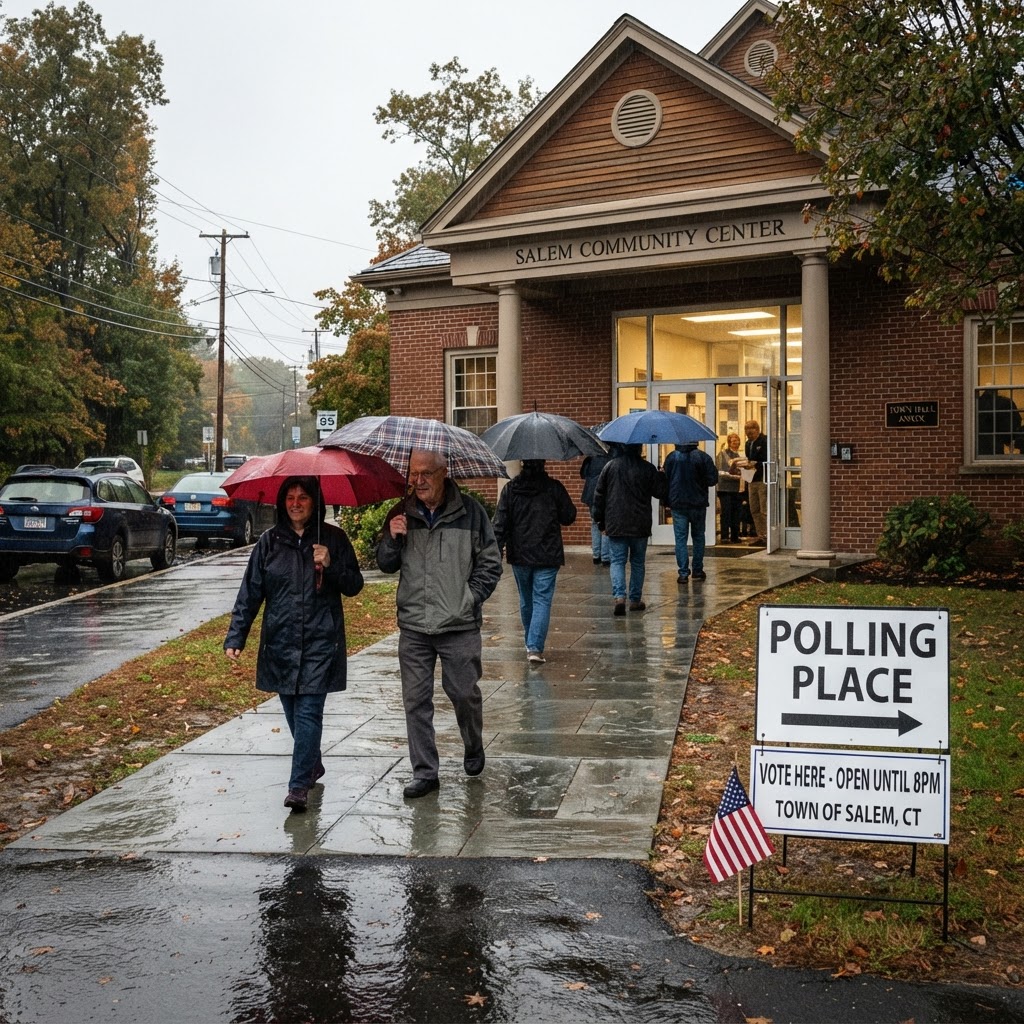
Plainfield Voters Secure School Funding in Second Ballot
Plainfield residents successfully passed a school budget in a second vote, effectively minimizing potential cuts to local education programs and staff.
WorthFighting.org News · 5 min read

Economy
Cheyenne Data Center Project Shifts to Google Ownership
A massive $17 billion data center project near Cheyenne has officially transitioned to Google, marking a significant shift in Wyoming's industrial landscape.
WorthFighting.org News · 6 min read
Economy
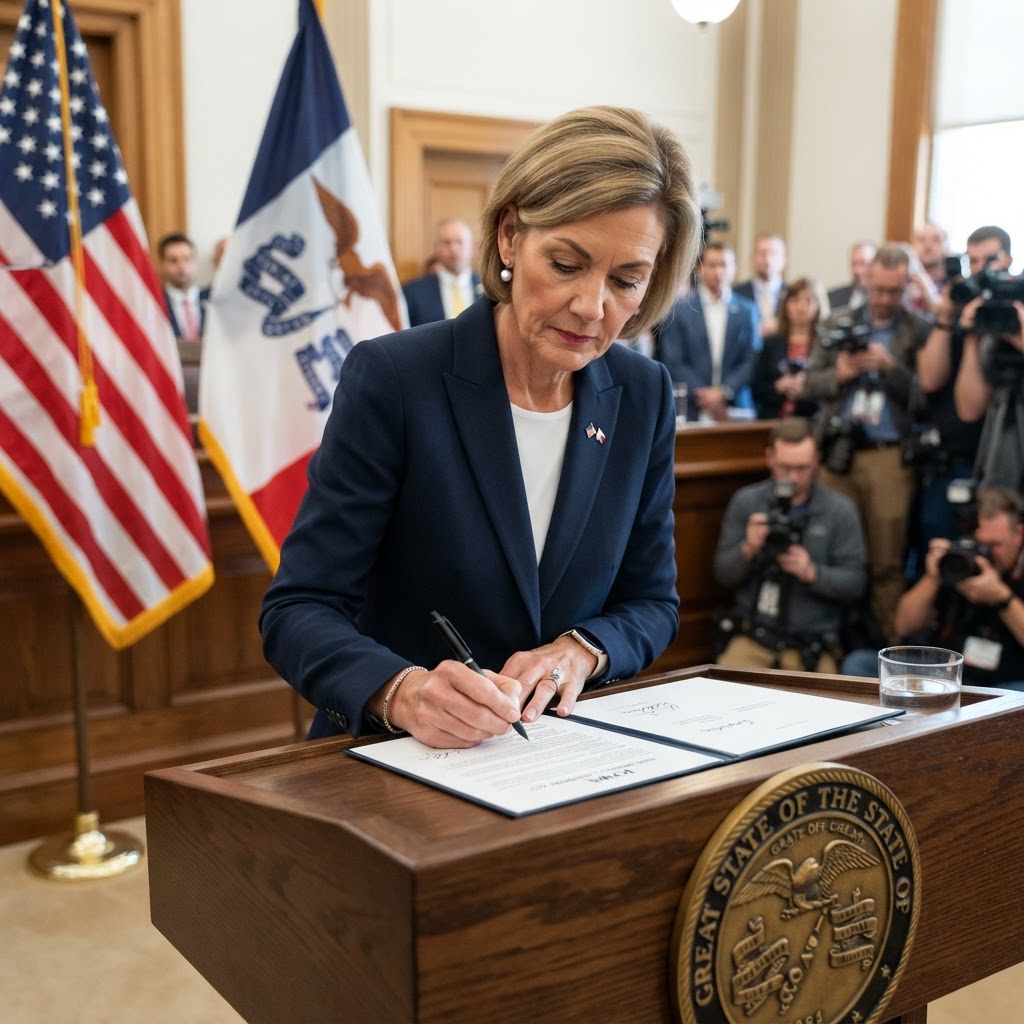
Iowa Leads Nation with Historic Property Tax Reform
Governor Kim Reynolds has signed landmark legislation providing $4.2 billion in property tax relief, marking the largest reduction of its kind in the nation.
WorthFighting.org News · 6 min read
Take Action
This country is worth fighting for. Get involved today.