
America's Manufacturing Renaissance: How the 'Buy American' Boom Is Reshaping the Heartland
A surge in domestic manufacturing investment is breathing new life into America's forgotten industrial towns, as reshoring accelerates and workers reclaim the dignity of making things in the USA. Conservatives say this is exactly what America First policy was designed to deliver.
Derek J
Admin - Senior Correspondent
The Factories Are Coming Back — and Washington Better Not Get in the Way
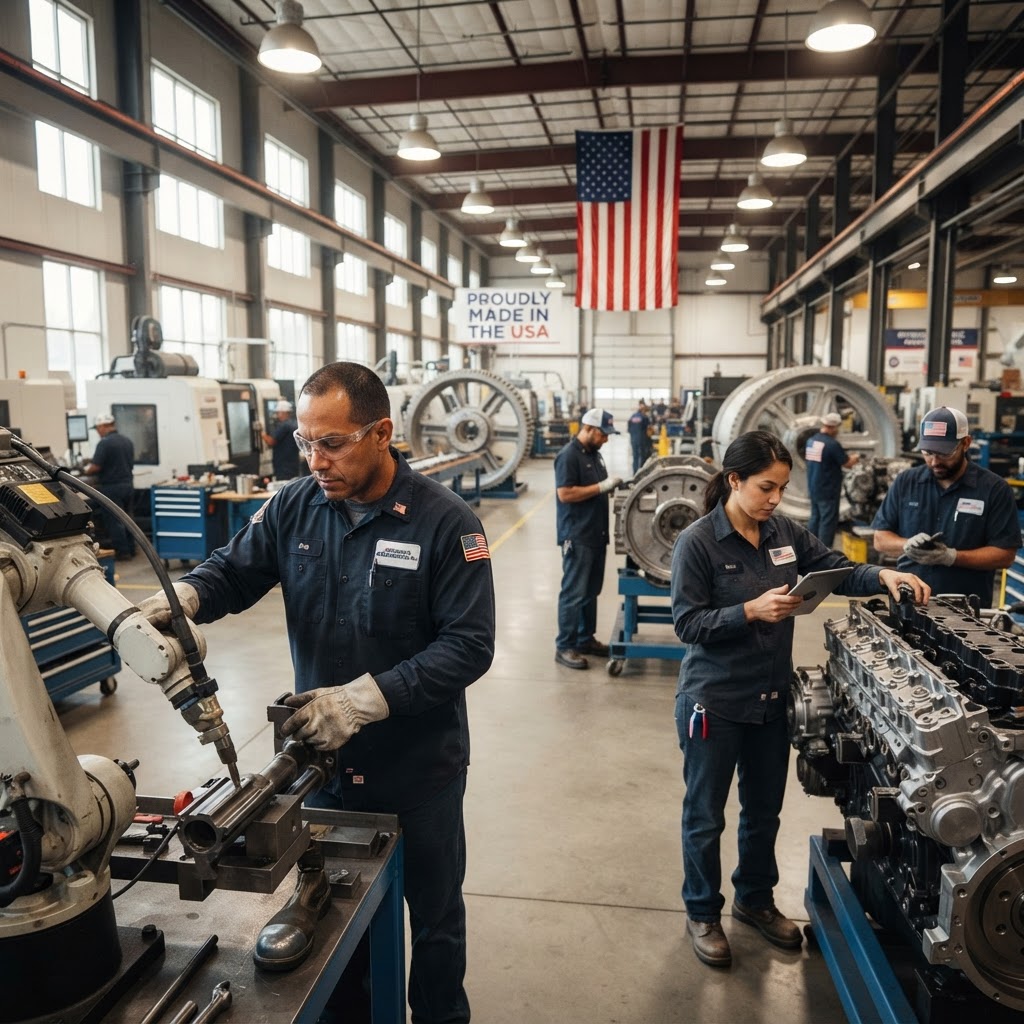
Walk through Youngstown, Ohio or Gadsden, Alabama today, and you'll notice something that would have seemed like a fever dream just five years ago: cranes on the horizon, help-wanted signs in windows, and the low thunder of factory floors humming back to life. Across the American heartland, a manufacturing renaissance is underway — and the America First movement that many in the corporate media once mocked is looking more prescient by the day.
According to the Reshoring Initiative's mid-2026 industry report, the United States has added over 340,000 manufacturing jobs in the past eighteen months alone, driven by a combination of strategic tariffs, domestic content requirements, and a growing corporate recognition that over-reliance on Chinese supply chains is a national security liability. For the communities that bore the brunt of deindustrialization over the past three decades, the turnaround can't come fast enough.
The Policy Framework That's Actually Working
The framework driving this revival isn't complicated — it's a return to common sense. Targeted tariffs on Chinese steel, semiconductors, and critical minerals have made domestic production cost-competitive again. Paired with streamlined permitting for domestic facilities and workforce incentive grants channeled through states rather than Washington bureaucracies, the results are measurable.
"What we're seeing isn't an accident. It's what happens when you align trade policy with the national interest instead of the interests of multinational corporations and foreign governments. The workers of this country were told for thirty years that their jobs were just gone — that's a lie that cost millions of families everything." — Marcus Tillman, Senior Fellow, American Economic Sovereignty Institute
Critics on the left have predictably cried that tariffs will drive up consumer prices and trigger a global trade war. While some inflationary pressure in select categories remains a legitimate concern, analysts at the Heritage-aligned Center for Constitutional Commerce point out that the long-term strategic gains — energy independence, supply chain resilience, and a rebuilt industrial base — far outweigh the transitional costs that free-trade ideologues continue to weaponize as talking points.
What's Actually Driving the Boom
The manufacturing surge isn't happening in a vacuum. Several converging forces are accelerating the trend:
- Geopolitical risk repricing: Corporate boards, burned by the COVID-era supply chain collapse and rattled by escalating tensions in the Taiwan Strait, are now treating supply chain geography as a board-level strategic risk.
- Workforce development investment: State-level technical college partnerships with manufacturers — particularly in Tennessee, Texas, and the Carolinas — are producing skilled tradespeople at a rate not seen since the post-WWII era.
- Energy cost advantage: America's domestic energy abundance, supercharged by deregulation of LNG exports and expanded oil and gas leasing, gives U.S. manufacturers a structural cost advantage over European and even many Asian competitors.
- Automation and AI integration: Contrary to the doom-and-gloom narrative, automation is adding net jobs in American factories by making domestic production competitive at scale — factories need engineers, technicians, supervisors, and logistics professionals.
- Reshoring tax incentives: Accelerated depreciation schedules and domestic investment credits are making the math work for mid-size manufacturers who couldn't previously justify the capital expenditure.
The Heartland Is Watching — and Voting
For working-class Americans in states like Pennsylvania, Michigan, Wisconsin, and Ohio, these aren't just abstract economic statistics. They are kitchen-table realities. The father who spent ten years in retraining programs that led nowhere is now running a CNC machine on a day shift. The small town that watched its last plant close in 2015 is negotiating a tax deal for a new facility. These are the voters who reshuffled the American political map — and they remember who fought for them and who didn't.
"There's a reason these communities kept faith with the America First message even when the establishment said it was hopeless," said Dr. Renata Voss, a labor economist at Hillsdale College's Center for American Commerce. "They understood intuitively what the credentialed class refused to admit: that trade policy is industrial policy, and industrial policy is national security policy. You cannot outsource your defense supply chain and call yourself a sovereign nation."
The Fight Isn't Over
Make no mistake — the forces that gutted American manufacturing over three decades have not surrendered. Globalist lobbying groups continue to press Congress for tariff rollbacks under the banner of "free trade." Multinational corporations, addicted to cheap overseas labor, are funding think tanks and media campaigns designed to convince Americans that economic nationalism is dangerous extremism.
And the regulatory state remains a stubborn obstacle. Environmental permitting delays at the federal level continue to slow facility construction by months or years. The EPA's patchwork of overlapping regulations, many of which were written specifically to disadvantage domestic heavy industry, must be reformed if America is to consolidate the gains it has made.
Conservatives in Congress are already pushing the American Production Security Act, a legislative package that would cap permitting timelines for critical manufacturing facilities at eighteen months and permanently codify domestic content requirements for federally contracted goods.
America First Is an Economic Philosophy — Not Just a Slogan
The manufacturing comeback of 2026 is proof of concept for a simple idea: when America's leaders put American workers first, America wins. The ideological battles over trade and industrial policy are far from finished, but the heartland is no longer waiting for Washington to catch up.
The cranes on the skyline of Youngstown aren't a political talking point. They're a promise kept — and a warning to anyone who wants to go back to the way things were.
Comments (0)
Be the first to comment.
Related Stories
America First
Salem City Council Imposes Moratorium on AI Data Centers
The Salem City Council has approved a temporary moratorium on new AI data centers to address concerns regarding water, electricity, and land-use impacts.
WorthFighting.org News · 6 min read

Crime
Seattle Police Budget Hike Sparks Staffing Concerns
Seattle City Council members are clashing over Mayor Katie Wilson's proposed 13.9% police budget increase, questioning if it will truly boost officer numbers.
WorthFighting.org News · 6 min read

Economy
Nebraska Property Tax Reform Remains Top Priority for Voters
As Nebraska voters head toward the 2026 election, property tax relief remains a central issue. Legislative efforts continue to address the state's tax burden.
WorthFighting.org News · 6 min read

Economy
Florida Homeowners Remain Skeptical of Insurance Reforms
Despite state claims of a stabilizing insurance market, a new survey reveals that many Florida homeowners continue to struggle with high premiums and coverage
WorthFighting.org News · 6 min read

Crime
Rhode Island Sues Meta Over Rampant Scam Advertising
Attorney General Peter Neronha has filed a lawsuit against Meta, alleging the tech giant profits from billions of dollars in fraudulent ads on its platforms.
WorthFighting.org News · 6 min read

Economy
Denver Budget Standoff: Mayor Rejects Key Council Requests
Denver Mayor Mike Johnston has rejected major City Council budget requests, leaving critical public safety and infrastructure funding in a state of uncertainty.
WorthFighting.org News · 6 min read
Related Resources
Related Articles
16 itemsShared tags: America First, Economy, Manufacturing, Trade Policy
Same category: America First
Shared tags: America First, Economy, Manufacturing
What People Are Reading

East Providence Taxpayers Hit With 3.5% Property Tax Hike
Florida Homeowners Remain Skeptical of Insurance Reforms
Chicago Aldermen Clash Over Mayor Johnson’s Budget Cuts

Alabama Supreme Court Weighs Absentee Ballot Law
Wyoming Energy Authority Launches Power Grid Study
Take Action
This country is worth fighting for. Get involved today.