Crime & Safety
Charlottesville Tables Anti-Camping Ordinance After Four-Hour Meeting
Charlottesville, Albemarle (independent city) County, Virginia
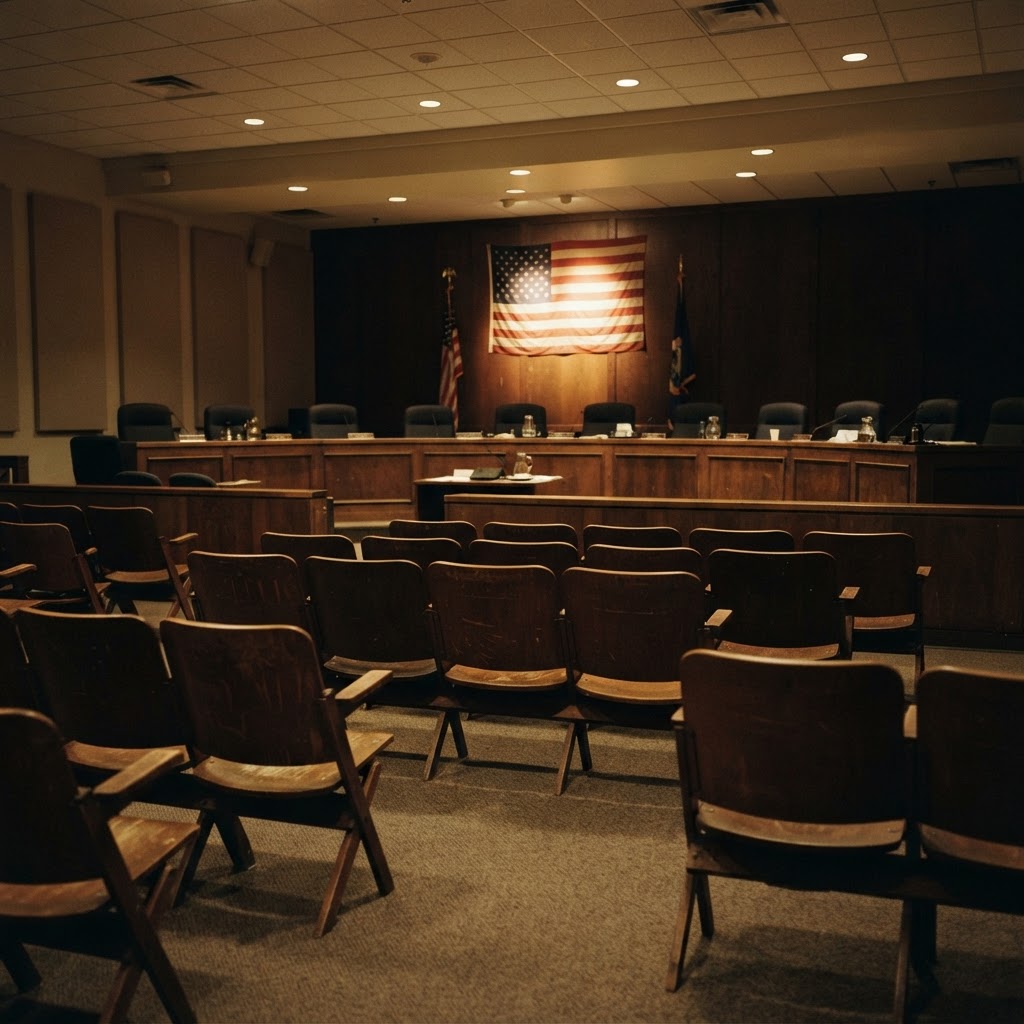
A four-hour Charlottesville City Council meeting ended with the council shelving its own anti-camping ordinance — leaving downtown business owners and residents who wanted action without a response.
Key Takeaways
- •Charlottesville City Council tabled an anti-camping ordinance on September 3, 2025 after a four-hour meeting.
- •Police Chief Michael Kochis introduced the measure citing rising quality-of-life complaints.
- •Violations would have been Class 4 misdemeanors with unspecified fines.
- •Only one speaker supported the ordinance; dozens opposed it.
- •Tabling means the ordinance must restart the hearing process if revived.
It was past 11 p.m. on a Tuesday when Charlottesville City Council ran out of speakers — and quietly walked away from its own proposal.
For more than four hours on September 3, 2025, residents filled the council chambers and spilled into the hallway to weigh in on an ordinance that would have banned sleeping, camping, and storing personal belongings on public property. Police Chief Michael Kochis had introduced the measure, writing in his policy briefing that it responded to "a marked increase in quality of life complaints around locations where unhoused community members are residing."
A violation would have been a Class 4 misdemeanor, punishable by a fine. But the ordinance text, the briefing summary, and the city's proposed encampment response protocol did not specify how large that fine would be — or what would happen to someone unable to pay.
By the end of the night, the council voted to table the ordinance indefinitely.
What the ordinance would have done
The proposal applied to all public property in Charlottesville, an independent city of roughly 46,000 surrounded by Albemarle County and the state of Virginia. It would have made it unlawful to camp, sleep, or store belongings in parks, on sidewalks, and in other public spaces without a permit.
Chief Kochis framed the measure as a tool to address deteriorating conditions downtown, where businesses and residents had reported growing encampments. Supporters argued that public spaces exist for everyone's use — and that allowing them to be occupied indefinitely compromises safety and access for the wider community.
One speaker, representing Friends of Charlottesville Downtown on behalf of some downtown business owners, spoke in favor.
The opposition
Dozens of residents spoke against the ordinance, calling it "cruel," "inhumane," "draconian," and "criminal," according to meeting reporting by Charlottesville Tomorrow and 29News. Critics argued that penalizing people who have nowhere to go does not solve homelessness — it merely moves it out of view — and that the city lacks sufficient shelter capacity to absorb those who would be displaced.
That is a serious argument. If the city orders people off public land and has nowhere to send them, the ordinance functions less as a solution than as a revolving door of citations. Critics are right that a fine a person cannot pay is not a plan.
But the conservative case for the ordinance does not depend on pretending homelessness is simple. It rests on a different principle: local government's first duty is to keep public spaces safe and usable for the law-abiding majority. Parks that families cannot visit and sidewalks that pedestrians cannot walk are not "compassionate" — they are failures of governance. A community cannot subsidize dysfunction indefinitely and call it kindness, as we have argued in our Crime & Public Safety coverage.
The strongest objection was not to enforcing rules, but to doing so without a credible shelter alternative. That is a fair charge — and one the council could have answered by pairing the ordinance with a firm timeline for opening additional shelter beds. Instead, it tabled the measure entirely.
What tabling means
City Attorney John Maddux told the council that tabling the ordinance means it does not have to appear on the next agenda and no date is required for a second hearing. Typically, an ordinance needs two public readings before a vote. Because this one was tabled after its first reading, anyone who wants to revive it — in this form or another — would have to start the process over.
In effect, the council chose inaction. The quality-of-life complaints Chief Kochis identified did not disappear; the council simply declined to act on them.
The broader pattern
Charlottesville is not alone in wrestling with this tension. Communities across the country have debated camping bans, with some tightening enforcement and others backing off under activist pressure. What makes the local case notable is how decisively the council folded: a four-hour meeting, a single supportive speaker, and a chief's ordinance shelved without a vote.
What happens next
For now, the ordinance is dormant. Residents who supported tougher enforcement — and business owners watching conditions deteriorate — are left without a response. Those who packed the chambers to oppose it claimed a victory, but the underlying problem the chief described remains.
Local government is supposed to be the level closest to the people. On this night, it was — just not the people who wanted something done. See how your representatives stand on public-safety issues in our Election Center.
Explore Virginia
Explore more news, elections, representatives, and information from Virginia.
Visit Virginia State Profile