South Dakota Counties Fight to Reclaim Local Control
Local officials and landowners in Spink County are challenging new state laws that limit their ability to regulate CO2 pipelines on private agricultural land.
WorthFighting.org News
Staff Writer
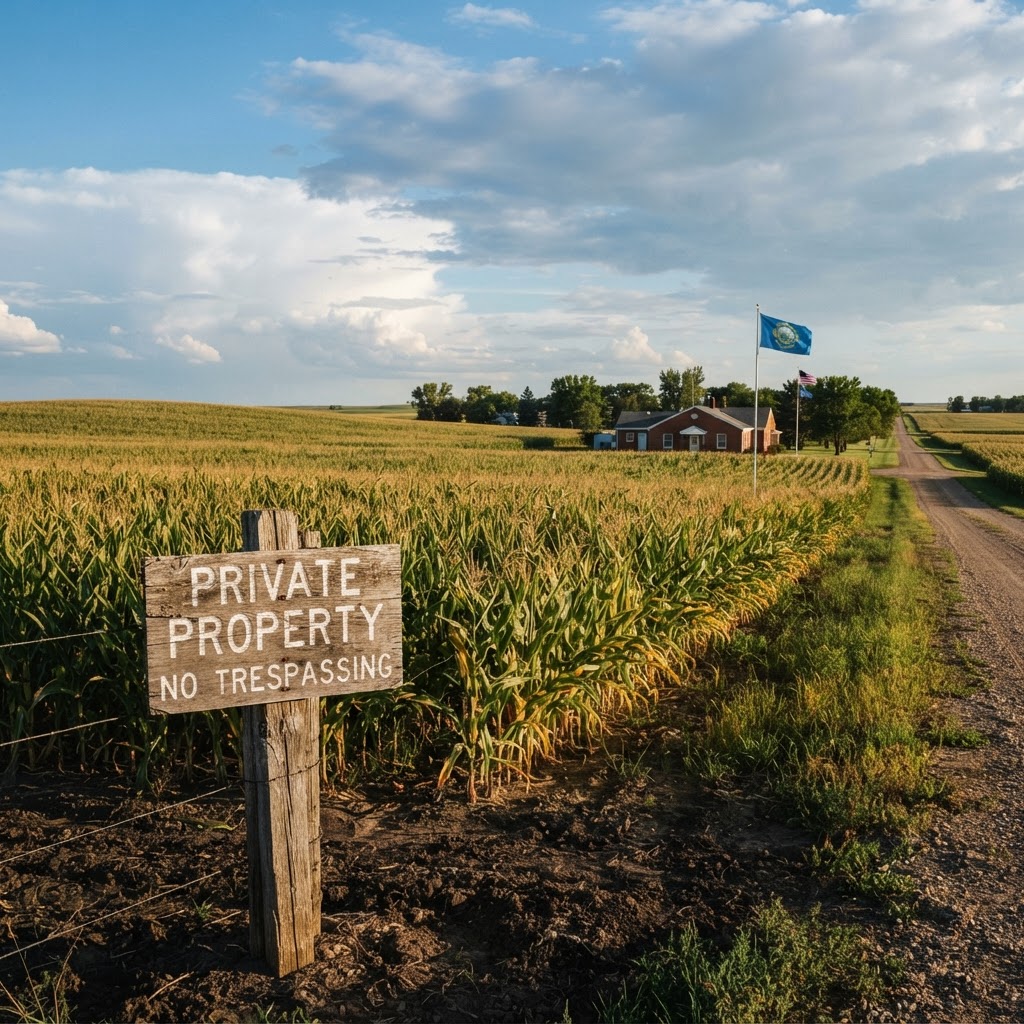
The quiet halls of the Spink County Courthouse in Redfield have become an unlikely front line in a high-stakes battle over constitutional rights and local sovereignty. Within the last 48 hours, local discussions have intensified as county commissioners and residents grapple with the implementation of Senate Bill 201—a controversial piece of legislation that many fear effectively muzzles local voices in favor of corporate interests.
At the heart of the conflict is the proposed construction of massive carbon dioxide pipelines intended to traverse the fertile soil of the South Dakota prairie. While developers argue these projects are essential for the future of the ethanol industry and the broader /category/economy, a growing coalition of farmers and conservative activists see a dangerous overreach by the state government in Pierre.
The Erosion of Local Zoning
For decades, South Dakota counties have utilized zoning ordinances to ensure that industrial projects do not infringe upon the safety or livelihoods of their residents. However, SB 201, often referred to by its supporters as the 'Landowner Bill of Rights,' contains provisions that preempt these local rules. It grants the South Dakota Public Utilities Commission (PUC) the final authority to override county-level setbacks and regulations if they are deemed 'unreasonably restrictive.'
In Spink County, where agriculture is not just a business but a way of life, this shift feels like a betrayal. During recent meetings, citizens have expressed outrage that their elected local officials—the people who know the land best—are being sidelined by a three-member board in the state capital. This tension highlights a core concern for the /category/america-first movement: the preservation of local control against centralized bureaucratic power.
Property Rights vs. Corporate Mandates
The debate has also reignited concerns over eminent domain. While the new state law attempts to provide some financial sweeteners to landowners, it does little to address the fundamental objection of those who simply do not want the pipeline on their property. For many in the Midwest, the right to exclude others from one's land is a sacred principle.
Opponents argue that carbon capture companies, bolstered by federal tax credits, are being given preferential treatment at the expense of the average citizen. This perceived alliance between big government and big business has turned the pipeline issue into a litmus test for conservative leadership in /states/south-dakota. Is the government's role to facilitate industrial expansion, or is it to protect the individual’s right to be left alone?
A Growing Grassroots Movement
Spink County is not alone in its resistance. From Brown County to McPherson, local boards are exploring every available legal and legislative avenue to protect their authority. There is a burgeoning effort to refer the new laws to a statewide vote, allowing the people of South Dakota to decide if they want to cede their local power to the state government.
Local leaders are also keeping a close eye on the courts. Legal challenges regarding the constitutionality of state preemption are expected to mount. As the state prepares for the next phase of pipeline permit applications, the resolve of local commissions will be tested. Many commissioners feel they are being placed in an impossible position: follow the new state mandate or stand with the neighbors who elected them to protect their community's interests.
The Path Forward
As the sun sets over the fields of Redfield, the residents of Spink County remain vigilant. They understand that the outcome of this struggle will echo far beyond their county lines. It is a question of whether the 'South Dakota way'—characterized by independence and self-governance—can survive the pressures of national energy policy and corporate lobbying.
The fight for property rights and local control is far from over. For those who believe that the best government is the one closest to the people, the stand being taken in South Dakota's small-town meeting rooms is a vital defense of the American tradition.
Why This Matters
This dispute represents a critical juncture for property rights in the United States. When state governments preempt local zoning to favor industrial projects, they weaken the very foundations of private ownership and community self-determination. For supporters of an America First agenda, protecting the farmer from the heavy hand of state-sanctioned corporate expansion is essential to maintaining the integrity of the heartland and the freedom of its citizens.
Comments (0)
Take Action
This country is worth fighting for. Get involved today.