
Lubbock Pushes Back as Federal Climate Rules Threaten Oil, Cotton, and the South Plains Economy
In Lubbock, where oilfield jobs, cotton fields, and reliable power keep the South Plains moving, local leaders say Washington’s climate agenda is raising costs and squeezing the industries that built West Texas. Residents here see EPA overreach and Biden-era energy policy as a direct threat to jobs, food production, and economic freedom.
Nathaniel Brooks
Senior Staff Writer
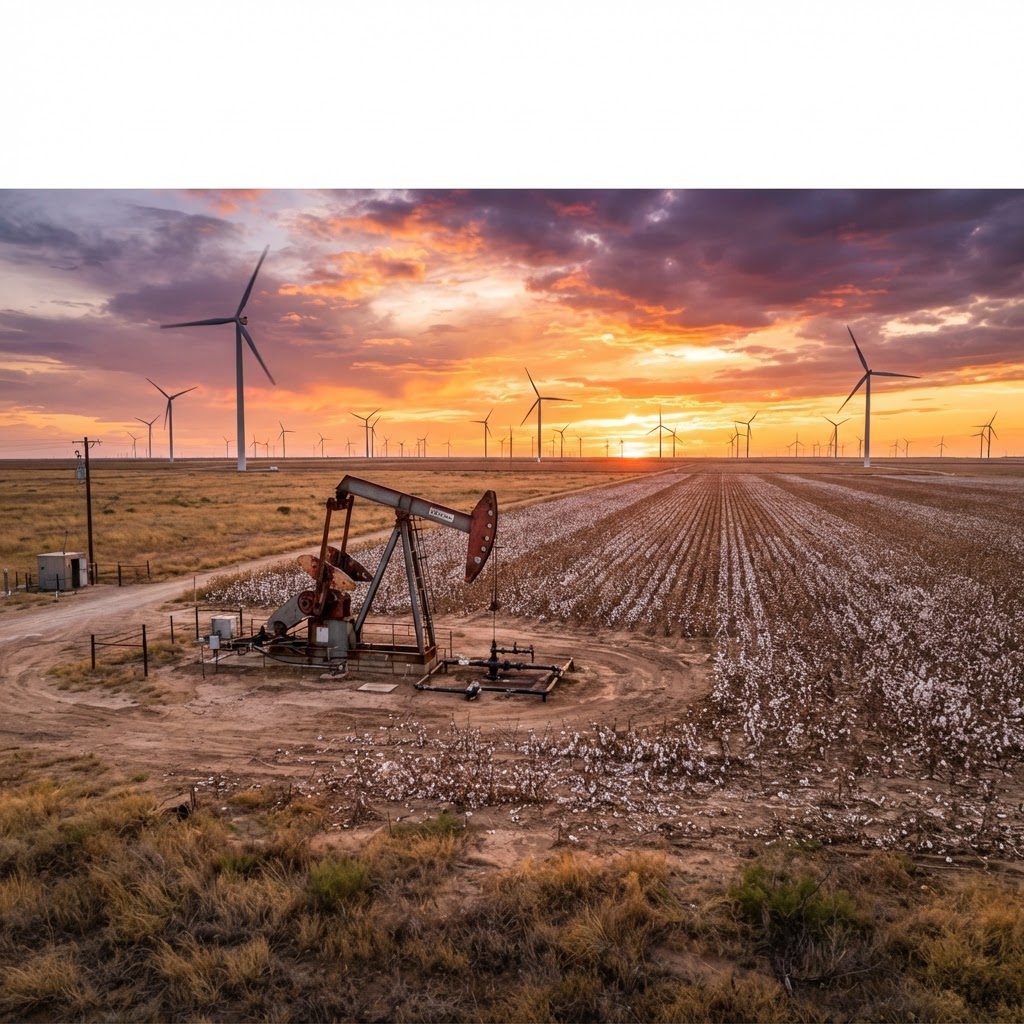
LUBBOCK, Texas — In a city of roughly 260,000 people on the South Plains, the fight over federal climate policy is not an abstract debate playing out in Washington hearing rooms. In Lubbock, it is about whether families can afford their power bills, whether farmers can keep diesel in their tractors, and whether oilfield workers can count on a paycheck next month.
Long known as a regional center for agriculture, energy services, and transportation, Lubbock sits at the crossroads of two industries that have helped feed and fuel America for generations. Cotton, cattle, grain, and the broader farm economy remain central to the region, while oil and gas activity across West Texas supports local trucking firms, equipment suppliers, welders, mechanics, and small businesses throughout the city.
Now, local officials, ranchers, and energy advocates say those industries are facing a mounting assault from federal climate mandates, EPA rulemaking, and a broader Biden administration agenda they argue is openly hostile to domestic energy production.
“Washington may call these rules ‘transitions,’ but here in West Texas, they look a lot like layoffs, higher prices, and less freedom,” said Mark Holloway, a fictional Lubbock County commissioner who has been vocal about federal energy policy. “The people paying the price are not lobbyists in D.C. They are roughnecks, truckers, cotton growers, and working families.”
A Regional Economy Built on Energy and Agriculture
Lubbock does not sit in the middle of a coastal tech corridor insulated from the consequences of bad federal policy. It sits in a working region where fuel, water, fertilizer, electricity, and transportation costs can make or break a year.
While the city itself is known for Texas Tech University, healthcare, and retail, the broader economy is deeply tied to the fortunes of the Permian Basin and the agricultural production of the South Plains. That means any rule that increases energy costs, complicates compliance, or restricts production hits West Texas with particular force.
Among the policies drawing criticism from local leaders and business owners are:
- stricter EPA emissions rules affecting oil and gas producers
- methane-related federal fees and compliance mandates
- tougher power plant regulations that threaten grid reliability
- vehicle emissions standards critics call a backdoor EV mandate
- environmental permitting delays that slow pipelines and infrastructure
- broader climate policies that raise diesel, fertilizer, and electricity costs
For farmers, those costs stack up quickly. Irrigation systems rely on affordable power. Farm equipment depends on diesel. Fertilizer and chemical inputs are energy-intensive to manufacture and transport. When Washington targets fossil fuels, Lubbock-area producers say the consequences show up in every acre planted and every bale shipped.
Susan McAlister, a fictional South Plains agricultural economist and conservative policy analyst, said the federal government often talks as if energy and agriculture can be regulated separately.
“Out here, they are inseparable,” McAlister said. “If the EPA makes it harder to produce American oil and gas, the cost of running a farm rises. If power becomes less reliable, irrigation suffers. If diesel costs more, food costs more. That is not theory — that is basic economics.”
EPA Overreach Meets West Texas Reality
Much of the frustration in Lubbock centers on the belief that unelected federal regulators are imposing sweeping economic changes without accountability to the communities most affected.
Critics point to EPA actions targeting methane emissions, power generation, and industrial operations as part of a larger climate agenda designed to phase down fossil fuels regardless of the economic damage. In a place like Lubbock, where industries run on affordable and reliable energy, that agenda is seen not merely as misguided, but as punitive.
Local business leaders say the burden does not fall only on major energy firms. Smaller contractors, independent producers, equipment suppliers, and family-owned service companies are often the first to feel the squeeze from new compliance costs. When margins shrink, hiring slows. Expansion plans are shelved. Investment goes elsewhere.
Daniel Reeves, a fictional energy attorney based in West Texas, said federal agencies have increasingly relied on regulation to achieve policy outcomes Congress never clearly authorized.
“The constitutional problem is real,” Reeves said. “Americans do not elect EPA administrators to redesign entire sectors of the economy. Yet that is exactly how many people in Lubbock see these climate rules — a top-down attempt to force political preferences onto communities that depend on oil, gas, and agriculture.”
The concern is especially sharp in Texas, where memories remain fresh of grid emergencies and price spikes. For many West Texans, the lesson is clear: dependable baseload power matters, and any federal rule that pressures coal or natural gas generation deserves close scrutiny.
That skepticism has only deepened as Washington continues to champion costly energy “transitions” while Americans still rely overwhelmingly on oil, natural gas, and traditional power generation to live, work, and move goods.
Local Families Say They Are Already Paying the Price
To many Lubbock residents, this issue is not ideological first and economic second. It is both.
When policymakers in Washington raise the cost of energy, conservatives here argue, they are also raising the cost of family life itself. Higher utility bills mean less money for groceries. Higher fuel prices mean longer work commutes hurt more. Higher farm costs eventually mean higher prices at the store.
That pressure lands especially hard in a city where many households live on working- and middle-class budgets, and where surrounding rural communities do not have the luxury of opting out of truck travel, irrigation demand, or energy-intensive production.
Pastor Caleb Denton, a fictional Lubbock faith leader who works with blue-collar families, said the moral dimension of the debate is often ignored.
“When government deliberately makes the essentials of life more expensive, it is families and churches who end up carrying the burden,” Denton said. “An America First energy policy should protect the people who produce, build, and feed this country — not punish them to satisfy elite climate politics.”
That America First argument is gaining traction well beyond partisan circles in West Texas. It is rooted in the idea that the United States should use its own abundant natural resources, strengthen domestic production, lower costs, and keep strategic industries out of the hands of foreign adversaries.
For Lubbock, that means backing policies that expand drilling, streamline permitting, preserve grid reliability, and defend farmers from regulatory burdens that undermine American food security.
The Fight Ahead for West Texas
Lubbock’s message to Washington is becoming harder to ignore: federal climate policy may win applause in activist circles, but it is losing support in places that still power and feed the nation.
City and county leaders across the region are increasingly aligning with state officials and policy groups calling for tighter limits on federal overreach, stronger protection for domestic energy, and a regulatory system that respects both the Constitution and economic reality.
No one in Lubbock expects the political fight to end soon. But many here believe the stakes are too high to stay quiet.
If the federal government continues to treat oil, gas, and production agriculture as liabilities rather than strategic assets, West Texans warn the damage will not stop at county lines. It will ripple across the nation in the form of higher prices, weaker energy security, and a more fragile economy.
In Lubbock, where patriotism still means making things, growing things, and powering things, the verdict on Biden-era climate policy is already in: Washington is pushing an agenda that asks working Americans to sacrifice more while getting less in return.
And on the South Plains, that is a fight worth having.
Comments (0)
Take Action
This country is worth fighting for. Get involved today.